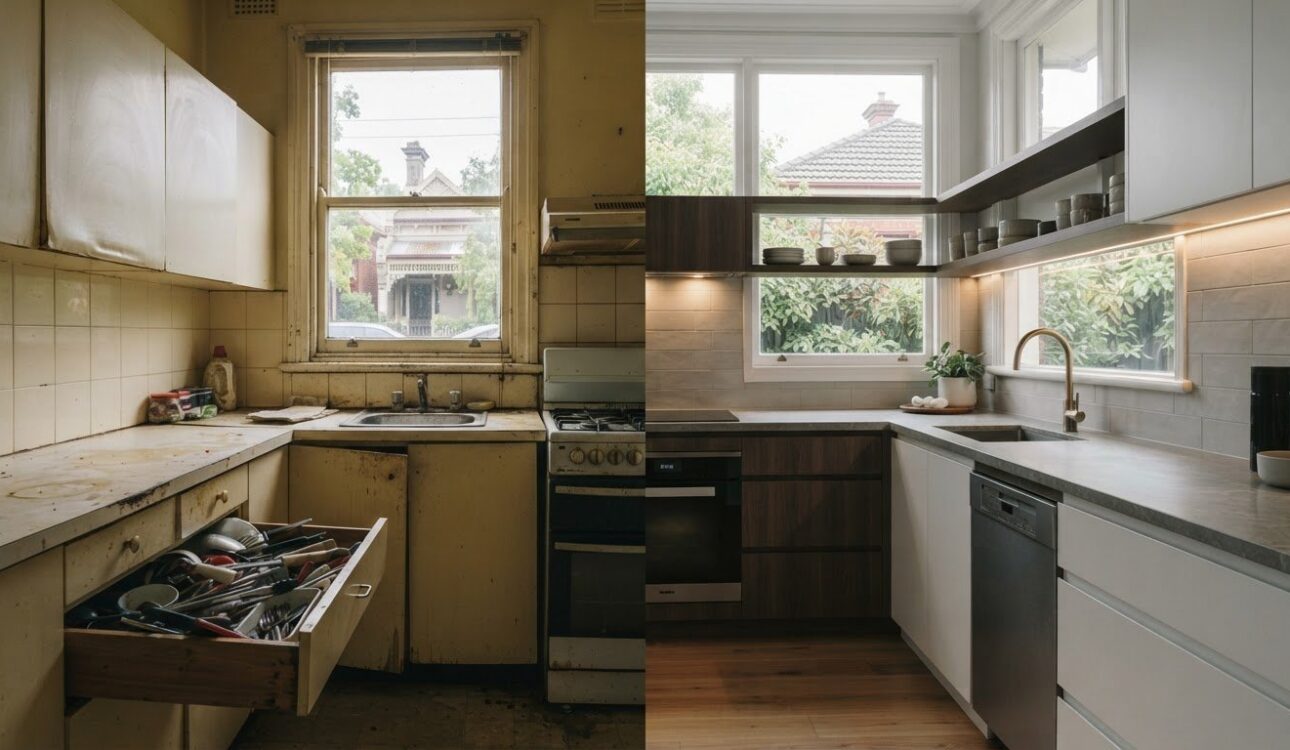
A dated kitchen doesn’t always need a full renovation, but repeated repairs can be a sign that the problem runs deeper than worn finishes. If you’re weighing up the signs you need a new kitchen, it can be difficult to tell whether a tired surface is cosmetic or your layout, storage and fixtures no longer work for your household.
It’s worth pausing before committing to a major project. This practical checklist will help you assess your kitchen’s condition, spot everyday frustrations and decide whether a targeted update may be enough or a broader renovation deserves consideration. You’ll know what to inspect, from cabinet wear and benchtop damage to awkward work zones and a lack of useful storage.
We’ll also look at how to prepare for a conversation with a renovation professional in Melbourne or elsewhere in Victoria, so you can explain what isn’t working and ask informed questions about the scope. Perfect FIT Interior supports kitchen projects from 3D design and measurement through to bespoke cabinetry and installation. Start with the checklist, then use what you discover to clarify the next step for your home.
Key Takeaways
- One dated surface doesn’t automatically mean you need a complete kitchen replacement; assess the overall condition and how well the space works.
- Look for patterns across damage, awkward workflows, limited storage and recurring repairs to identify signs you need a new kitchen.
- Compare each problem with possible repair, refresh or renovation options before choosing a broader scope.
- Photograph concerns and note daily frustrations so you can clearly explain your priorities when planning a kitchen renovation in Melbourne or Victoria.
- Separate essential function and condition needs from style preferences to make your next design discussion more focused.
Signs You Need a New Kitchen: Start With This Homeowner Checklist
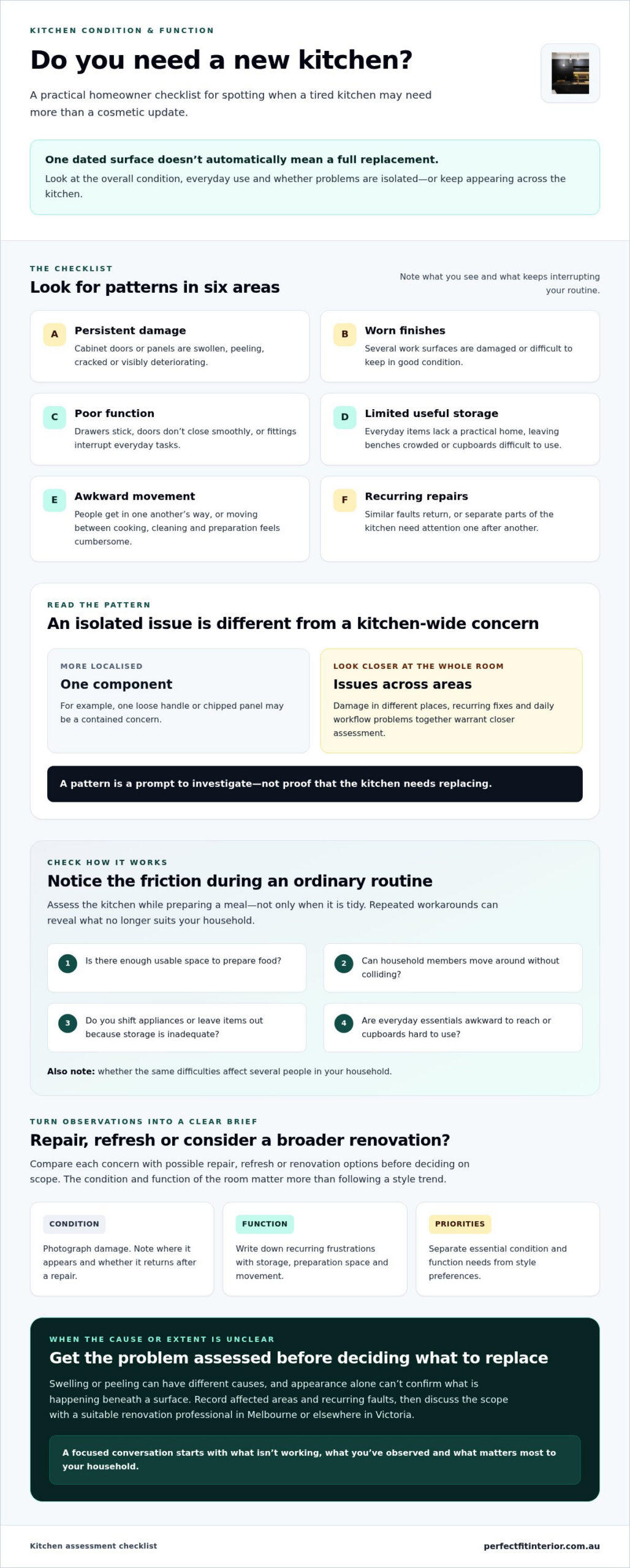
A dated benchtop or tired splashback doesn’t automatically mean your whole kitchen needs replacing. Look beyond appearance: are problems isolated, or do damage, awkward use and repeated fixes keep showing up across the room? A pattern of issues deserves closer assessment than one cosmetic concern.
Use this checklist to note what you’ve noticed:
- Persistent damage: Cabinet doors or panels are swollen, peeling, cracked or visibly deteriorating.
- Worn finishes: Surfaces across several work areas are damaged or difficult to keep in good condition.
- Poor function: Drawers stick, doors don’t close smoothly, or kitchen fittings regularly interrupt everyday tasks.
- Storage limits: Essential items have no practical home, leaving benchtops crowded or cupboards difficult to use.
- Awkward movement: People get in one another’s way, or moving between cooking, cleaning and preparation areas feels cumbersome.
- Recurring repairs: Similar faults keep returning, or separate parts of the kitchen need attention one after another.
Deciding whether you need a new kitchen means assessing its condition and function, not following a style trend. The question is whether the room remains sound and practical for your household, not whether its finishes match the latest look.
Which visible signs suggest your kitchen is wearing out?
Look closely at cabinet edges, the areas around the sink and surfaces exposed to regular use. Swelling or peeling may be limited to one spot, or it may appear across several cabinets and work areas. Check whether doors and drawers move smoothly and sit properly when closed. Is the damage isolated, or does it repeat across the kitchen? If you can’t identify the source or extent, seek a professional assessment before deciding what to replace.
Which everyday frustrations belong on your checklist?
Notice how the room works during a normal meal preparation, not just when it’s tidy. Is there enough usable space to prepare food? Can household members move around without colliding? Do you regularly shift appliances, leave items out because storage is inadequate, or take extra steps to reach everyday essentials? These workarounds may feel minor on their own, but recurring friction can show that the layout no longer suits your routines.
Record whether several people in your household experience the same difficulties. If storage or layout problems persist, bespoke cabinetry in Melbourne may be one option to discuss. For a broader perspective on planning a home improvement project, consider how the kitchen fits your wider plans for the home. A clear record of damage and daily frustrations can help a renovation professional assess the problem before you settle on a design direction.
When Kitchen Damage and Daily Friction Point to a Bigger Problem
A single loose handle or chipped panel may be straightforward to address. The picture changes when repairs keep recurring, damage appears across different areas and the layout makes ordinary tasks harder. These issues don’t prove that you need a replacement, but together they’re a reason to look at the kitchen as a whole.
A localised fault affects one component; a broader problem shows up across multiple areas or keeps disrupting everyday use. One sticking drawer is different from several drawers that are difficult to open, crowded preparation space and storage that routinely gets in the way. Considering the combination can help clarify whether a small repair may be enough or a wider renovation discussion is warranted.
How can repeated damage change the renovation decision?
Repeated or widespread damage is a prompt to investigate, not a diagnosis. Peeling finishes or swelling can have different causes, and appearance alone can’t confirm what’s happening beneath a surface. Note where the damage occurs, whether it returns after a repair and whether nearby areas are also affected. If the source or extent is uncertain, ask a suitable professional to assess it before choosing finishes or deciding what should be replaced.
When does an inefficient layout become a meaningful sign?
Consider what happens during normal routines. Do people have to wait to reach the sink or cooktop? Is preparation space blocked by appliances or stored items? Are frequently used cupboards awkward to access, even after you’ve reorganised them? Compare the kitchen’s current setup with how your household actually cooks, cleans and stores essentials. Persistent workarounds, such as moving items before every meal or using another room for storage, may point to a mismatch between the layout and your daily needs.
Make a short record before discussing changes. For each issue, note:
- Location: where the damage, bottleneck or storage difficulty occurs.
- Frequency: how often it interrupts cooking, cleaning or putting things away.
- Impact: who it affects and what workaround the household uses.
This detail helps separate an isolated inconvenience from a pattern worth addressing. It also gives a renovation professional a clearer picture of your priorities. If you’re considering budgeting for your kitchen remodel, first define the problems your project needs to solve. A general budgeting guide can inform your research, but the scope depends on the work identified. For a next step, explore kitchen renovation services in Melbourne and consider how an assessment could help clarify the scope before you settle on design choices.
Repair, Refresh, or Replace: Which Kitchen Problems Need More Than a Makeover?
Not every worn surface calls for a full renovation. If the concern is limited and the existing cabinetry, layout and work areas remain suitable, a targeted update may be worth exploring. But if several problems overlap, changing one finish might leave the main frustrations untouched. Use the comparison below to organise your questions, not to make a final diagnosis from a distance.
| Observed issue | Possible scope | What to assess before deciding |
|---|---|---|
| One chipped or tired finish | Local repair or a surface update | Is the damage isolated? Are surrounding surfaces and components still in suitable condition? |
| A single door, drawer or fitting is faulty | Attention to that component | Is it the only problem, or part of repeated issues across the cabinetry? |
| Several cabinet fronts look worn | A refresh may be considered, subject to suitability | Are the cabinet structures sound and compatible with the proposed update? |
| Storage, movement and work areas all cause difficulty | Assess the broader kitchen renovation scope | Would a surface change resolve the daily problems, or would the layout and storage still fall short? |
This table is a discussion aid, not a remote diagnosis or a guarantee that a particular option will suit your kitchen. The right scope depends on the actual condition of existing components and what you need the room to do.
When might a targeted kitchen update be worth exploring?
A small area of finish wear or one component needing attention may be a candidate for a focused update if the rest of the kitchen remains functional and suitable. Some providers promote options such as worktop overlays or replacement doors. These approaches aren’t automatically appropriate: the condition, dimensions and compatibility of existing elements need to be assessed, and they shouldn’t be assumed to be available from every renovation provider.
What suggests you should assess the whole kitchen?
Look for connected issues: cabinetry that limits access, storage that doesn’t suit your needs, cramped movement and work areas that make cooking awkward. Ask yourself: if the most visible defect were fixed, would the everyday frustrations remain? If so, it may be useful to discuss the kitchen as a complete space rather than choose a finish first. Explore Melbourne kitchen renovation services as you consider the broader planning conversation.
When several signs you need a new kitchen appear together, gather details about each concern before deciding on a design direction. A considered assessment can help distinguish a limited update from a more comprehensive renovation plan.
How to Assess Your Kitchen Before Planning a Melbourne Renovation
A little preparation can make a renovation conversation more focused. Gather clear examples of what isn’t working, what needs attention and what you’d like the room to do better. This helps you distinguish essential function and condition concerns from preferred style changes before discussing a design direction with a local Melbourne or Victorian renovation professional.
- 1. Photograph the problem areas. Capture damaged finishes, cabinet doors and drawers, work zones and storage pinch points. Include wider views so each concern can be understood in the context of the whole kitchen.
- 2. Record everyday friction. Note recurring inconveniences, such as clearing the bench before preparing food, moving items to reach a cupboard or having to wait for space to use the sink. Include how often each issue interrupts your routine.
- 3. Group related concerns. Separate condition issues from layout, storage and movement problems. This makes it easier to see which concerns may be connected.
- 4. Sort needs from preferences. List essential improvements first, such as accessible storage or more usable preparation space. Record preferred colours and finishes separately so style choices don’t obscure practical priorities.
Before speaking with a renovation professional, bring your notes and consider which concerns could be addressed individually and which may depend on wider changes. Ask how measurement and design can help test possible cabinetry or layout decisions, and what needs assessment before the scope is clear. If storage or joinery is a central concern, explore cabinet-making services in Melbourne as one relevant part of your planning research.
Which questions help clarify a renovation’s scope?
Ask what information is needed to assess the existing kitchen, how design and measurement inform the proposed work, and how cabinetry, materials and installation will be coordinated. If you’re unsure whether visible damage is limited or part of a broader issue, seek a professional assessment before choosing finishes or committing to replacement work. Clear answers can help you understand the proposed scope without settling on every design detail at the outset.
With your priorities documented, you can have a more informed discussion about a Melbourne kitchen renovation and the options that may suit your home in Victoria.
Explore kitchen renovation services
Your Next Step When the Checklist Points to a New Kitchen
If damage, recurring repairs and everyday usability concerns are appearing together, it may be time to discuss whether a broader kitchen project makes sense. That doesn’t mean you need to commit to a complete replacement straight away. An assessment can help clarify which problems matter most, what might be addressed individually and how the project scope could support your household’s needs.
What can a kitchen renovation assessment help clarify?
Bring your notes and photos to the discussion. They can help identify priorities, such as improving storage or addressing a layout that makes everyday tasks harder. Ask how measurement and design can make proposed layout and cabinetry decisions clearer before you settle on a direction. If storage is a key concern, custom cabinetry in Melbourne may be relevant to discuss. A considered planning conversation can help connect practical needs with design choices.
When several signs you need a new kitchen appear together, use the assessment to understand how they relate before choosing finishes or focusing on a single feature. Clarifying the scope first helps keep the project centred on the issues you want to resolve.
How can you explore a Melbourne kitchen renovation?
Perfect FIT Interior is a Melbourne cabinetry and renovation firm with over 18 years of industry experience. Its project support spans 3D design and measurement through material procurement, bespoke cabinetry and installation. This end-to-end approach can help connect early planning with the practical decisions involved in shaping a kitchen around your priorities.
You don’t need every design choice finalised before starting a renovation discussion. Share what isn’t working, what you want the kitchen to do better and which concerns you’d like assessed.
Explore kitchen renovation services
Make Your Next Kitchen Decision With Confidence
One worn finish doesn’t automatically mean it’s time for a new kitchen. The more telling signs you need a new kitchen are often a combination of persistent damage, recurring repairs and everyday frustrations that a small update may not resolve. Assess the whole space, record what’s getting in the way and separate essential improvements from style preferences before deciding on a scope.
A professional assessment can help you understand which concerns may be addressed individually and whether a broader renovation is worth exploring. Perfect FIT Interior brings over 18 years of cabinetry and renovation experience, with project support from 3D design and measurement through to installation. That process can help turn your priorities into a clearer plan for a kitchen that better suits your home in Melbourne or Victoria.
Ready to discuss what isn’t working in your kitchen? Contact Perfect FIT Interior to explore kitchen renovation services and clarify a practical next step for your Melbourne home.
Frequently Asked Questions
What are the most common signs you need a new kitchen?
Common signs you need a new kitchen include recurring damage, storage that’s difficult to use, an awkward layout and daily workarounds that keep interrupting household routines. One cosmetic issue alone doesn’t automatically mean replacement. Consider whether several concerns overlap and whether repairs would solve the underlying problems, not just improve appearances. If you’re unsure how extensive the damage is, ask a renovation professional to assess it before deciding on a scope.
How do I know if my kitchen cabinets need replacing?
Damaged finishes, swollen areas, doors that don’t operate properly or storage that no longer meets your needs may warrant a closer assessment. These signs don’t confirm that every cabinet needs replacing. Check whether the issue affects one unit or appears across multiple cabinets, and consider how well the existing storage works for your household. A cabinetry professional can assess the units and help you discuss whether a repair or broader renovation scope may be appropriate.
Can I renovate my kitchen without replacing everything?
Yes, a targeted update may be worth exploring if the concerns are limited and the existing kitchen components remain suitable. Some providers promote options such as replacement doors or worktop overlays, but these aren’t universal solutions. First assess the condition and compatibility of what you already have. Then compare the proposed update with the problems you want to solve. If storage, layout or several damaged areas remain unresolved, discuss whether a broader project may better suit your needs.
Is a dated kitchen a reason to replace it?
No, an older style by itself doesn’t prove that your kitchen needs full replacement. Consider whether the space also has persistent damage, inadequate storage, awkward movement or other functional issues. If the layout and existing components still suit your household and the main concern is appearance, you could discuss targeted updates before committing to a larger project. Focus on how the kitchen performs day to day, as well as how you’d like it to look.
What should I check before planning a kitchen renovation in Melbourne?
Before planning a Melbourne kitchen renovation, document visible damage, everyday frustrations, storage needs and household priorities. Photograph affected areas and note which problems recur during cooking, cleaning or putting things away. Then discuss project scope, measurement, design, cabinetry, materials and installation with a local renovation professional in Melbourne or Victoria. This preparation can help clarify what matters most before you choose a design direction. Keep essential functional needs separate from preferred colours, finishes and other style changes.
How long should a kitchen last before it needs replacing?
There isn’t one fixed lifespan that determines when a kitchen needs replacing. Materials, maintenance, condition and patterns of use vary from home to home, so assess how the kitchen performs now rather than relying on its age alone. Persistent damage, recurring repairs or a layout that no longer suits your household may justify a professional assessment. That review can help establish whether a targeted repair or a broader renovation discussion is more appropriate.
Should I repair or replace a damaged kitchen benchtop?
The right option depends on the benchtop’s condition, where and how extensively it’s damaged, and whether other kitchen problems remain unresolved. A single surface issue may call for a targeted assessment, while related cabinetry, storage or layout concerns could affect the wider project scope. Don’t assume an overlay or replacement is suitable for every kitchen. Ask a renovation professional to assess the benchtop in context before deciding whether repair or replacement makes sense.
Disclaimer
All right reserve for Perfect Fit Interior – InnovateX Group PTY LTD