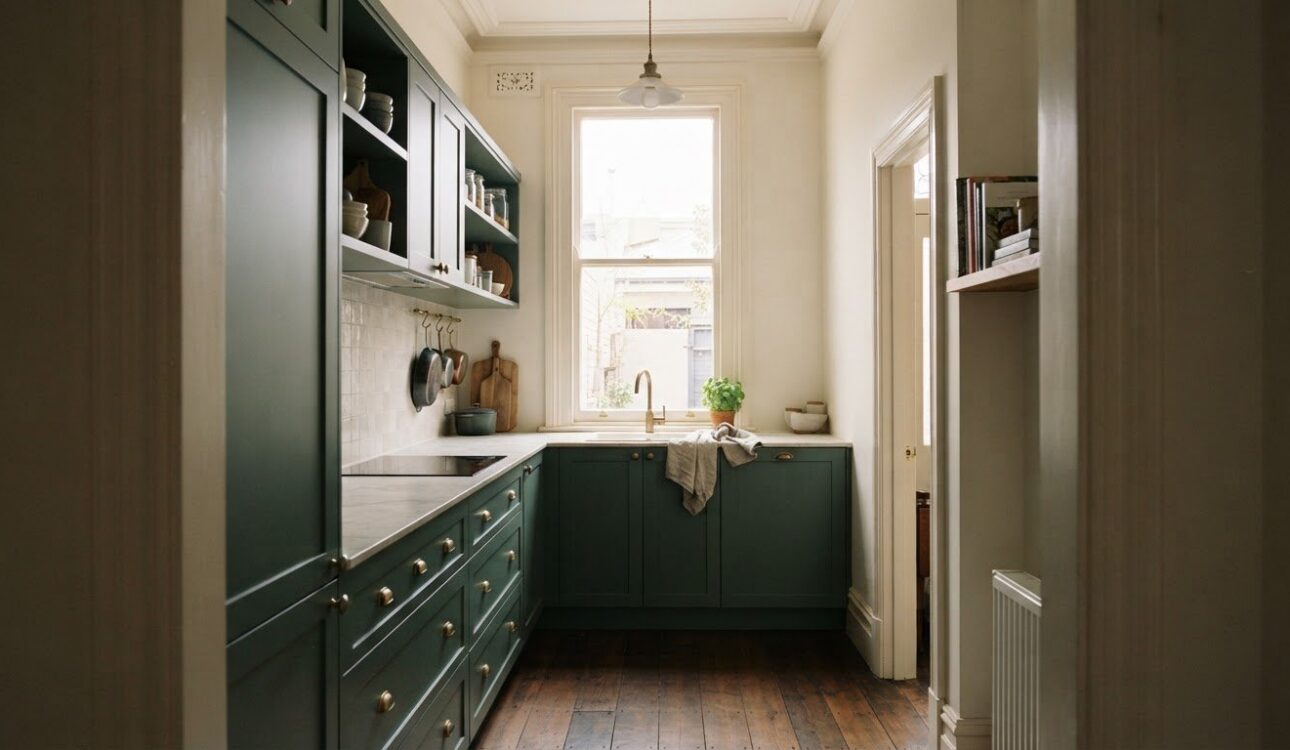
A Shaker kitchen doesn’t need ornate detailing to make an impression. Its defining feature is a cabinet door with a flat, recessed centre panel framed by simple lines. That profile gives shaker cabinets a look that can feel classic or contemporary, depending on the finishes around them.
If you’re weighing Shaker against flat-panel or more traditional cabinetry, the details matter. Door profile, colour, hardware and overall kitchen design shape the result. Shaker cabinets bring framed character, while flat-panel doors create a cleaner, more minimal look.
This guide explains what defines a Shaker-style kitchen, how colours and hardware influence its appearance, and which factors affect renovation costs. You’ll also see how shaker cabinets compare with flat-panel and traditional styles, helping you consider which direction best suits your Melbourne home and renovation plans.
Key Takeaways
- Recognise the recessed-panel door and clean frame that define this classic kitchen style.
- See how profile details and overall design choices can make a kitchen feel more traditional or more current.
- Explore how colour, finish and hardware work together to shape the room’s character.
- Understand which design and renovation decisions influence overall cost, without relying on a one-size-fits-all figure.
- Compare framed, flat-panel and traditional cabinet styles to decide which best suits your Melbourne renovation.
So what is a shaker style kitchen?
A Shaker-style kitchen is recognised by framed doors with flat, recessed centre panels. Its simple geometry can suit both classic and contemporary kitchens, depending on the surrounding finishes.
Shaker Cabinetry Across Kitchen Styles
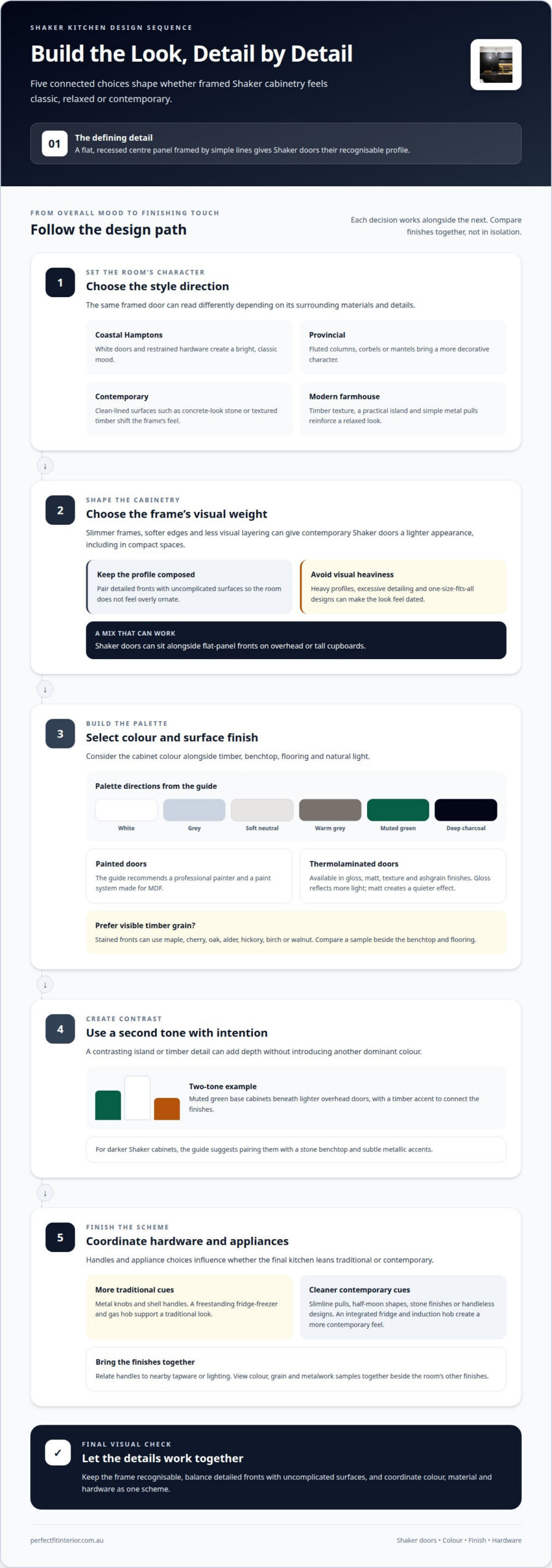
Shaker cabinetry adapts to different kitchen styles because its framed fronts add detail without dictating the whole room’s look. In coastal Hamptons kitchens, white doors and restrained hardware can create a bright, classic mood. Provincial kitchens can take a more decorative direction, with fluted columns, corbels or mantels adding visual richness.
For a contemporary Melbourne kitchen, pair the door profile with clean-lined surfaces, such as concrete-look stone or textured timber. The frame remains recognisable, while the surrounding materials shift its character. This flexibility helps you choose a style that relates to your home, rather than treating every Shaker kitchen as identical.
Shaker Cabinets in Modern Farmhouses
In a modern farmhouse kitchen, Shaker doors provide familiar framed detail while keeping the cabinetry visually composed. Timber textures, a practical island and simple metal pulls can reinforce the relaxed character of this style. Brass or black cup pulls, for example, lean towards a cosy country look.
The balance matters. Combine detailed fronts with uncomplicated surfaces, rather than adding decoration to every element. That contrast lets the cabinetry contribute warmth without making the room feel overly ornate.
Shaker Cabinets for Modern Australian Kitchens
Yes, this style can suit modern Australian kitchens and compact spaces. Slimmer frames, softer edges and less visual layering give contemporary Shaker doors a lighter appearance. In a smaller kitchen, a restrained profile and coordinated finishes can keep the cabinetry from feeling visually busy.
When comparing Australian suppliers, look closely at the door construction, finish options and available profiles. Consider how the cabinet dimensions fit your layout, and whether the chosen fronts work with your benchtop and appliances. For a Melbourne renovation, Melbourne cabinetry design and installation can help bring those details together.
Design Choices That Can Feel Dated
Heavy profiles, excessive detailing and one-size-fits-all designs can make a Shaker kitchen feel dated. Modern versions often use slimmer frames and pair Shaker doors with flat-panel fronts on overhead or tall cupboards. Appliance choices also shape the result: a freestanding fridge-freezer and gas hob support a traditional look, while an integrated fridge and induction hob create a more contemporary feel.
Choose each detail in relation to the room. A decorative mantel may suit a provincial kitchen, but feel out of place beside minimal cabinetry and discreet storage.
Cleaning and Maintaining the Doors
For routine cleaning, wipe the door fronts with a soft cloth and mild soapy water, then dry them with a clean cloth. Pay particular attention to the recessed panel and frame edges, where dust or cooking residue can collect. Avoid abrasive scouring that could mark the finish.
Popular Shaker cabinet colours and hardware
Colour and hardware influence whether shaker cabinets feel classic, relaxed or contemporary. Consider the door finish alongside the timber, benchtop and natural light in your kitchen. Looking at these elements together helps you choose a coordinated palette rather than selecting each detail in isolation.
Modern Colours and Contrasting Finishes
White and grey remain popular choices for Shaker fronts. Modern palettes can also include soft neutrals, warm greys, muted greens and deep charcoals. A contrasting island or timber detail adds depth without introducing another dominant colour. For a refined scheme, pair darker shaker cabinets with a stone benchtop and subtle metallic accents.
Hardware gives the palette another design cue. Metal knobs and shell handles can emphasise a traditional feel, while slimline pulls, half-moon shapes, stone finishes and handleless designs suit cleaner contemporary schemes. Relating handles to nearby tapware or lighting helps the finishes feel intentional.
Unpainted Finishes and Colour Selection
Unpainted doors let the material’s own grain and tone contribute to the kitchen’s character. Timber options used for stained fronts include maple, cherry, oak, alder, hickory, birch and walnut. Each species has a distinct grain appearance, so consider how its sample looks beside the benchtop and flooring before settling on a colour.
For doors intended to be painted, use a professional painter and a paint system made for MDF. Thermolaminated Shaker doors are also available in gloss, matt, texture and ashgrain finishes. These surfaces change how a colour appears: gloss reflects more light, while matt creates a quieter effect. Textured and ashgrain finishes add surface detail.
For a two-tone scheme, decide which cabinets will carry the stronger colour before choosing handles. Muted green base cabinets beneath lighter overhead doors, for example, create contrast while keeping the palette controlled. A timber accent can help connect the finishes. View samples together, since the colour, grain and metalwork all influence the overall impression.
Pantone named Classic Blue its Colour of the Year for 2020. A saturated shade like this can make a confident choice for shaker cabinets, balanced with a restrained benchtop and simple hardware. In a Melbourne kitchen, consider the room’s existing finishes and light as you compare samples. The right combination lets the door profile and colour work together without competing for attention.
For a Melbourne project, Melbourne cabinetry design and installation can bring the selected finishes into a cohesive kitchen scheme.
Definition and recessed-panel construction
Shaker cabinets are recognised by a door with a framed border and recessed centre panel. The design’s clean geometry can suit different kitchen styles, while the specific construction affects how each door sits against the cabinet.
Shaker Design and Recessed Panels
A traditional Shaker door is assembled from five pieces: two horizontal rails, two vertical stiles and a central panel. The rails and stiles create the frame around the recessed centre, giving the front depth without applied ornament. This construction makes the profile easy to recognise across both doors and drawers.
Modern shaker cabinets may use a routed profile in a single door rather than the traditional assembled frame. Moisture-resistant EO MDF is one material used for these contemporary doors. The distinction matters when comparing appearance and construction: the visible frame can look similar, even though the way it is made differs.
Overlay, Inset, and Frameless Options
Overlay and inset describe where the door sits in relation to the cabinet opening. Overlay doors cover some or most of the cabinet face, while inset doors sit within the opening. The choice changes the visible spacing and alignment across a run of cabinetry, shaping the overall look.
Frameless cabinetry has no face frame and is also known as full-access or European cabinetry. Shaker-style fronts can be used with overlay, inset or frameless construction. These terms describe different design decisions: the door profile identifies the style, while the cabinet construction affects how the door meets the cabinet box.
Can you retrofit Shaker doors onto existing kitchen cabinets in Australia? Yes, if the cabinet boxes are suitable and the replacement doors match the existing dimensions, hinge positions and clearances. Those measurements help determine whether the doors and drawer fronts will align properly with the existing layout.
Before replacing fronts, the cabinet structure and opening details need to be assessed together. A new door profile may change how adjoining doors meet or how handles clear nearby walls and appliances. Matching the hinge position and opening direction also matters, particularly beside corners or tall cabinetry.
For a cohesive result, consider how the chosen construction repeats across the kitchen. Consistent frame proportions help maintain visual rhythm, while mixed door and drawer-front designs can create deliberate contrast. Shaker cabinets can therefore be specified around both the desired appearance and the practical limits of the existing cabinetry.
Careful measurement and attention to joinery details make the difference between a set of replacement fronts and a finished-looking renovation. The door profile, cabinet opening and hardware all need to work together, so the final design feels integrated with the kitchen rather than added as an afterthought.
Budget, versatility and resale appeal
Shaker cabinetry can suit different budgets and kitchen designs, but the final project cost depends on its specifications. Its adaptable profile can also support a cohesive look beyond one decorating trend.
Budget Considerations for Shaker Cabinets
The budget depends on the door material, construction, finish, hardware, cabinet layout and installation work. Painted MDF fronts, timber doors and different overlay or inset choices involve different materials and detailing. The price depends on the project and is provided after a quote request, with these specifications shaping the overall cost.
Scope matters, too. Replacing doors on suitable existing cabinets differs from changing the cabinetry layout or renovating the whole kitchen. For example, retaining cabinet boxes may reduce the amount of replacement work, while new storage or a revised island changes the project requirements. Comparing like-for-like specifications gives a clearer view of what each design includes.
Versatility Across Kitchen Designs
A Shaker profile is versatile because its framed fronts can be paired with finishes ranging from painted neutrals to stained timber. White doors with simple metal pulls can create a restrained look, while darker fronts and contrasting hardware make a stronger design statement. This flexibility helps the cabinetry sit comfortably in both contemporary and country kitchens.
The surrounding elements guide the style. For a country feel, cup pulls and timber accents add warmth; for a contemporary scheme, combine clean surfaces with discreet handles. A carefully selected door profile can also connect the kitchen to adjoining living areas without repeating every finish exactly.
Resale Appeal and Shaker Cabinets
A restrained door design can appeal to people with different tastes because it doesn’t depend on elaborate ornament. Neutral painted cabinet doors, paired with practical storage and coordinated finishes, can give a kitchen a considered appearance. That broad visual appeal may help a future buyer picture their own furniture and colour choices in the space.
However, no cabinet style guarantees a higher resale price. The kitchen’s condition, layout, workmanship and relationship to the rest of the home all affect how it presents. A well-planned dream kitchen should serve your daily needs first, rather than relying on an assumed future return.
Advantages and Drawbacks
The main advantages are a recognisable profile, broad design flexibility and the option to choose painted or timber finishes. The recessed panel adds detail without the heavier decoration of some traditional doors.
The trade-off is that the frame’s edges and recessed panel can collect dust or cooking residue more readily than a flat front. Detailed profiles may also feel too decorative in a minimal kitchen. Weigh those cleaning and styling considerations against the character you want before settling on the design.
Shaker versus flat-panel and traditional cabinets
Choosing between these cabinet styles changes the kitchen’s visual rhythm. Compare the door detail first, then consider how it works with the room’s finishes and overall design.
Shaker and Flat-Panel Cabinet Differences
A Shaker door has a framed profile and recessed centre, while a slab door is completely flat, without rails or stiles. That difference gives a Shaker kitchen more visible structure, while flat-panel fronts emphasise clean lines. The choice matters because cabinet doors cover large areas, shaping whether the room feels detailed or minimal.
For example, a contemporary kitchen can combine Shaker doors on lower cabinets with flat-panel fronts on overhead cupboards. This mixes framed character with a simpler upper run, without introducing a competing decorative style. Choose one approach throughout for a calm, consistent effect, or use the contrast deliberately to define separate zones.
Shaker and Traditional Cabinet Differences
Shaker cabinetry is itself a classic style, but its restrained frame differs from more ornate traditional designs. Traditional provincial details might include fluted columns, corbels or a mantel, while a simpler Shaker door keeps decoration focused on its recessed panel. The distinction helps you decide how much visual detail suits your home.
A kitchen with decorative mouldings and a statement mantel can carry a more elaborate traditional look. By contrast, Shaker fronts paired with understated surfaces give a classic impression with fewer layers. Neither choice is automatically more timeless; the surrounding materials and proportions determine whether the design feels cohesive.
Consider the room as a whole. Shaker framing introduces a repeating pattern across doors and drawers, while slab fronts create broader uninterrupted surfaces. In a compact layout, that difference can affect how busy the cabinetry appears. In a larger kitchen, the framed pattern can add definition across a long cabinet run.
For a balanced design, identify the effect you want before choosing door fronts. If clean lines are the priority, flat panels offer the least visible detail. If you want a little more character without extensive ornament, Shaker fronts provide a middle ground. Reserve decorative traditional elements for places where they complement the architecture, rather than layering them across every cabinet.
There’s also room to combine styles. A Shaker island with flat-panel overhead cupboards, for instance, can distinguish the central work area while keeping the perimeter visually simple. The key is to repeat a clear design cue, such as one finish or handle style, so the mix feels intentional.
For a Melbourne kitchen renovation, planning your kitchen design around your preferred cabinet style can help create a cohesive result. Choose flat-panel doors for uninterrupted simplicity, Shaker for framed detail, and traditional cabinetry for stronger ornament. Let your preferred level of detail guide the overall design.
Perfect FIT Interior
Perfect FIT Interior can incorporate Shaker cabinetry into a broader home renovation, bringing cabinet profiles, colours and kitchen layout together in a cohesive design. The team also undertakes bathroom renovation, supporting a considered approach to design across connected spaces.
Bring your preferred door style, finish ideas and layout priorities into the conversation. These details help shape a renovation plan around how you want your home to look and function.
Contact Perfect FIT Interior to discuss your renovation plans.
Shape a kitchen that feels like home
Your cabinet choice should support the way you want your kitchen to feel and function every day. Before settling on shaker cabinets, picture the whole room: how its style connects with adjoining spaces, which finishes feel right in your home, and how the layout serves your routines. That wider view can help turn a preferred door profile into a coherent renovation direction.
Perfect FIT Interior offers Kitchen Renovation Melbourne, Home Renovation and Bathroom Renovation. If you’re ready to discuss how your preferred cabinetry could fit into your kitchen plans, start a conversation about the design and renovation you have in mind.
A considered design can make your kitchen feel distinctly yours. Take the next step when you’re ready.
Frequently Asked Questions
What are shaker cabinets?
Shaker cabinets are kitchen cupboards with a simple framed door design, commonly chosen for its balance of character and restraint. In a Melbourne home, they can suit a traditional interior or a more contemporary renovation, depending on the surrounding finishes. Consider how the door profile relates to your benchtop, splashback and flooring, so the cabinetry feels integrated rather than selected in isolation.
How does slim shaker differ from classic shaker?
Slim Shaker uses a narrower frame and often softer edges, while classic Shaker has a wider, more prominent frame around its centre panel. The slimmer profile can give a kitchen a lighter, more contemporary appearance, particularly across a long run of cabinetry. Classic proportions create stronger definition. Compare samples beside your benchtop and wall finishes, since nearby materials affect how prominent each frame looks.
What are Shaker cabinets and what are their defining features?
They are cabinets distinguished by framed fronts and a recessed centre panel, with a practical, understated appearance. The design can be adapted through door proportions, finish and surrounding details, so two kitchens need not look alike. For instance, a restrained frame with discreet hardware reads differently from the same profile paired with decorative mouldings. Judge the whole cabinet arrangement, including drawer fronts and adjoining doors.
What materials are used for Shaker kitchen cabinet doors?
Common options include timber, 2 Pack painted finishes and vinyl wrap, also called thermolaminated. Modern doors may also use moisture-resistant EO MDF, with the profile routed into the surface. Each option creates a different finish and construction approach. For example, timber can show natural grain, while painted MDF offers a smooth colour surface. Compare door samples and consider how each material suits your preferred look.
How much do Shaker kitchen cabinets cost in Australia?
There isn’t one standard Australian price for a complete Shaker kitchen. The total depends on the cabinet dimensions, chosen material and finish, door construction, hardware, layout and installation scope. A replacement-door project differs from a renovation involving new cabinetry and a changed layout. For a useful estimate in Melbourne, define the design and project scope first, then request a quote based on those specifications.
Are Shaker cabinets more expensive than flat-panel cabinets in Australia?
Not necessarily. The door style alone doesn’t determine the final cost: materials, finish, construction, hardware, cabinet dimensions and installation all influence the project total. A painted Shaker door and a flat-panel door may have different specifications, so comparing style labels alone can be misleading. For a fair comparison, assess both options with the same kitchen layout, finish requirements and installation scope.
How do you choose colours and handles for Shaker cabinets?
Start by choosing a cabinet colour that works with your benchtop, flooring and natural light. White and grey are familiar options; muted green, warm grey or deep charcoal can create a more contemporary palette. Then select hardware to reinforce the look. Metal knobs or shell handles add traditional character, while slimline pulls or discreet designs create a cleaner effect. View finishes together before deciding.
Disclaimer
All right reserve for Perfect Fit Interior – InnovateX Group PTY LTD