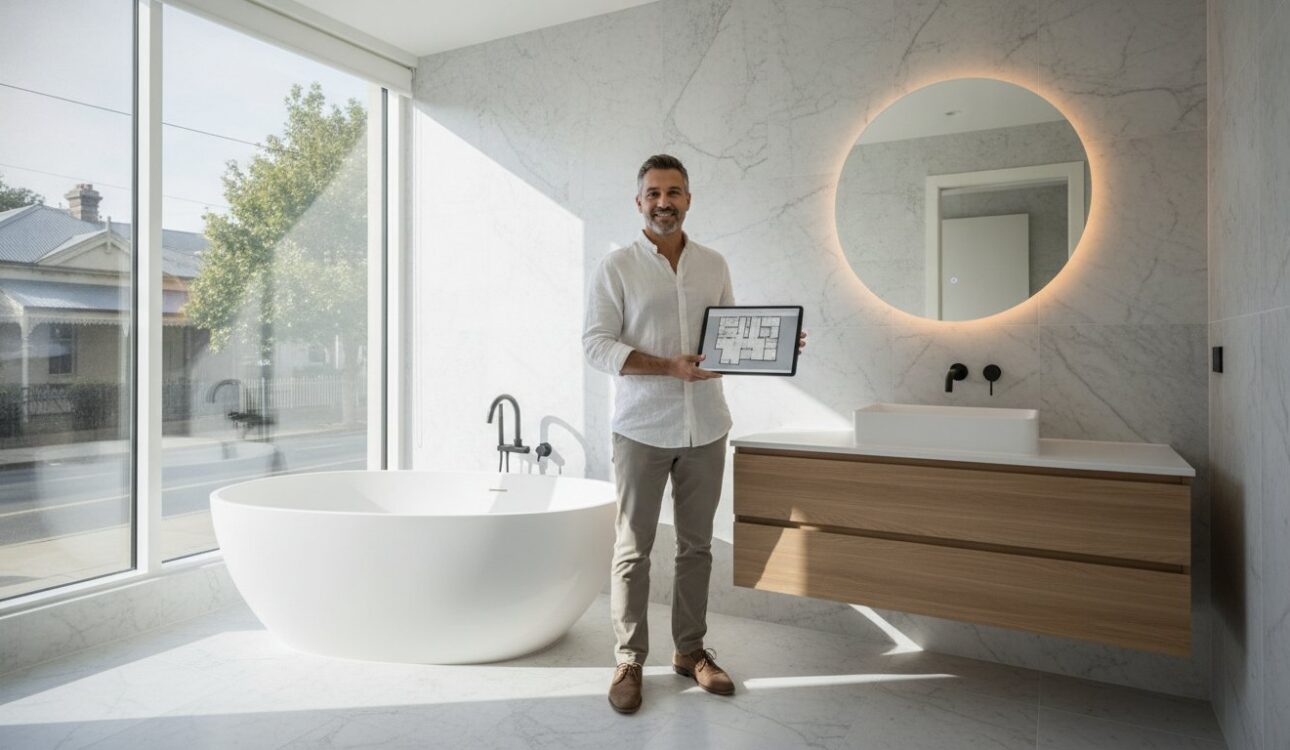
What if the most expensive part of your dream bathroom isn’t the artisan tiling or the bespoke cabinetry, but a missing piece of paper from your local council? It is a stressful reality for many Victorian homeowners who discover too late that their stunning new sanctuary lacks the necessary legal standing. You probably want to focus on selecting high-end finishes and optimizing your layout, but the confusion surrounding Bathroom Renovation Permits Victoria can often stall your inspiration. It’s natural to feel overwhelmed by the distinction between cosmetic updates and structural changes, especially when your home’s future insurance and resale value are on the line.
We believe that true luxury is built on a foundation of compliance and peace of mind. This guide will provide the clarity you need to move forward with confidence, offering a straightforward framework for permit requirements under current Victorian building standards. You’ll discover which specific certificates are mandatory for a legal renovation and how partnering with an experienced builder can remove the burden of paperwork from your shoulders. Let’s ensure your renovation is a seamless, value-adding investment in your lifestyle and your home’s long-term integrity.
Key Takeaways
- Identify whether your project is structural or cosmetic with our definitive guide to Bathroom Renovation Permits Victoria.
- Learn why mandatory compliance certificates for waterproofing and plumbing are essential for protecting your home’s insurance and future resale value.
- Stay ahead of the 2026 Victorian Building Regulatory Landscape and understand how recent legislative amendments impact your project’s legal standing.
- Discover how local council restrictions and heritage overlays in specific Melbourne suburbs can influence your renovation’s window placement and exterior design.
- See how an all-in-one renovation partner streamlines your journey by managing complex paperwork and ensuring technical compliance from the initial 3D design phase.
Understanding the 2026 Victorian Building Regulatory Landscape
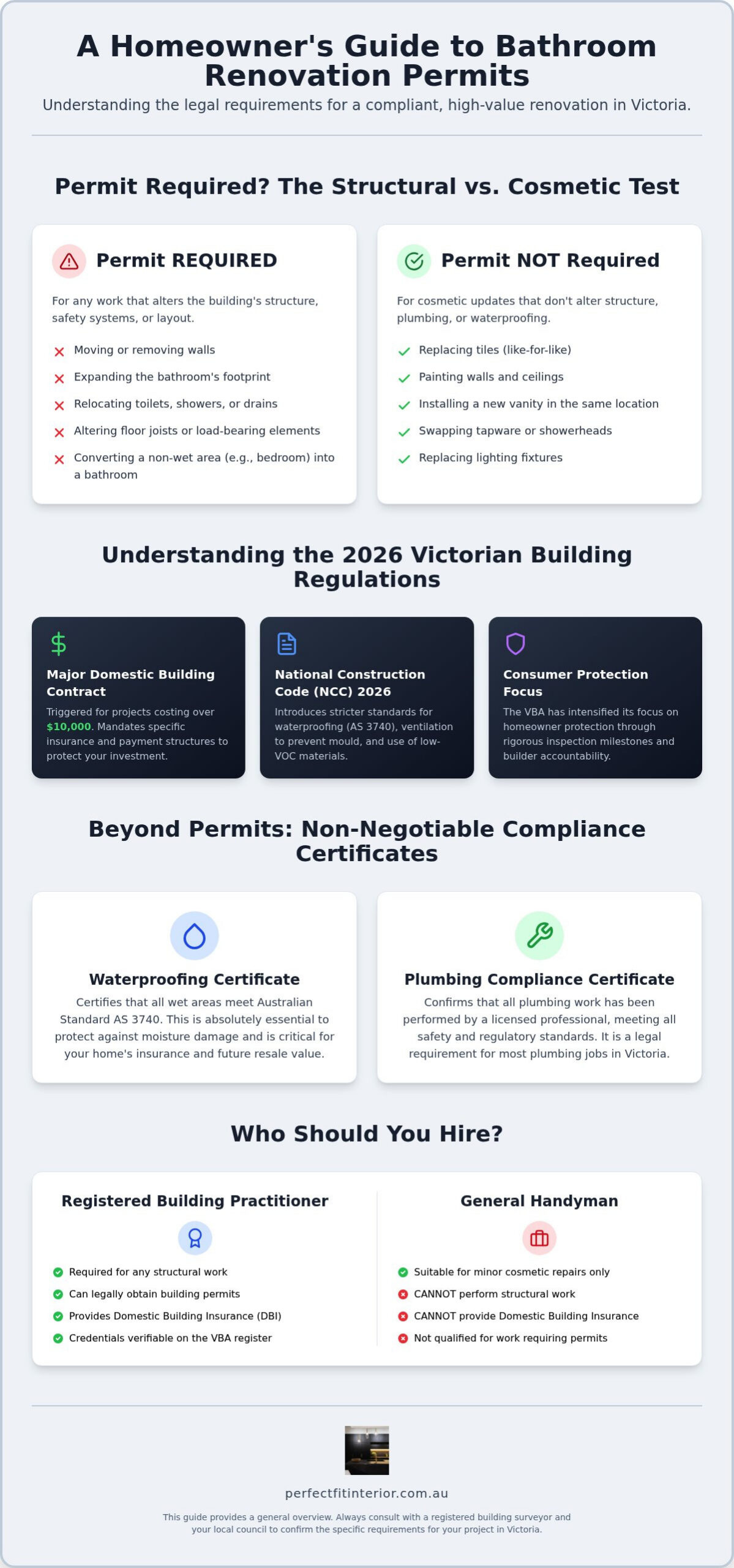
The regulatory environment for residential renovation has evolved significantly. In 2026, the Victorian Building Authority (VBA) has intensified its focus on consumer protection and structural accountability. Central to this shift is the full implementation of the Domestic Building Contracts Amendment Bill 2025. This legislation ensures that homeowners are better protected against non-compliant work by introducing more rigorous inspection milestones. If your project cost exceeds $10,000, it’s legally classified as a Major Domestic Building Contract. This classification is vital because it mandates specific insurance coverages and progress payment structures that safeguard your investment.
Applying for Bathroom Renovation Permits Victoria is no longer just a checkbox; it’s a commitment to 2026 standards that prioritize long-term structural health. Today’s regulations place a heavy emphasis on advanced waterproofing systems and energy-efficient designs. These aren’t just bureaucratic hurdles. They’re essential measures to ensure your high-end finishes aren’t compromised by moisture or poor thermal performance. Following these rules ensures your home remains a valuable, legal asset for decades to come.
The Role of the National Construction Code (NCC) 2026
The NCC 2026 updates have brought transformative changes to internal wet area standards. The revised AS 3740 waterproofing requirements now demand more comprehensive membrane coverage, particularly in open-plan “wet room” designs. Additionally, new ventilation mandates have been introduced to combat the specific challenges of the Victorian climate. These standards require high-performance extraction systems to prevent mould growth, ensuring your bathroom remains a healthy, pristine environment. Modern designs are also shifting toward sustainable, low-VOC materials that meet these updated environmental benchmarks while maintaining a sophisticated aesthetic.
Registered Building Practitioners: Why It Matters
There’s a profound legal distinction between a general handyman and a registered building practitioner. While a handyman might be suitable for minor repairs, any work involving structural alterations or extensive plumbing requires a registered professional to obtain Bathroom Renovation Permits Victoria. You can verify a contractor’s credentials directly on the VBA register. This step is non-negotiable for securing Domestic Building Insurance (DBI). Without a registered builder, you lose access to DBI, which protects you if a builder is unable to finish the work or fix defects. Choosing a partner that offers comprehensive home renovation services ensures that every technician on your site is fully licensed and insured, providing a seamless path to compliance.
Determining if Your Bathroom Project Requires a Building Permit
Deciding whether your project needs formal approval depends on a fundamental “Structural vs. Cosmetic” litmus test. In Victoria, the general rule is that if you’re altering the structural soul of the room or its essential safety systems, you must secure Bathroom Renovation Permits Victoria. A cosmetic update focuses on the surface level, leaving the footprint and load-bearing elements untouched. However, the moment you decide to expand the room’s boundaries or move a wall to create that open-plan master ensuite, you’ve crossed into territory that requires a registered building surveyor’s oversight. The Victorian Building Authority mandates these permits to ensure that any changes to your home’s skeleton remain safe and compliant with current standards.
Plumbing relocation is another common trigger for permit requirements. Swapping a tap is simple, but relocating a toilet or shower to a different wall often involves significant changes to the drainage and waste systems. These modifications can impact the structural integrity of the floor joists or the building’s overall plumbing stack. Similarly, converting a non-wet area, such as a spare bedroom or a laundry, into a new bathroom is always considered a major change. This process requires new waterproofing, specialized ventilation, and significant plumbing infrastructure that must be verified through a formal permit process to protect your home’s resale value.
Work That Generally Does Not Require a Permit
If your vision involves refreshing the aesthetics without moving the “bones” of the room, you can often proceed without a building permit. This includes like-for-like fixture replacements, such as installing a new toilet or vanity in the exact same position. Cosmetic updates like retiling, painting, and mirror installations are also exempt. You can also elevate your space by installing high-end custom cabinetry within your existing wall layouts. These artisanal additions provide a bespoke feel and maximize storage without triggering complex regulatory hurdles, making them an ideal choice for a stress-free transformation.
Work That Always Requires a Building Permit
Certain high-impact changes will always necessitate a permit to ensure long-term structural longevity. Removing or altering load-bearing walls is a primary example, as it directly affects the home’s stability. Other triggers include:
- Installing new windows or enlarging existing openings to invite more natural light.
- Structural floor reinforcement, which is often required when installing heavy stone baths or large-format concrete basins.
- External extensions that push the bathroom beyond the building’s original footprint.
For these complex projects, choosing a partner who understands the nuances of home renovation ensures that every structural detail is handled with meticulous precision and full legal compliance.
Beyond Building Permits: Mandatory Compliance Certificates
While securing Bathroom Renovation Permits Victoria grants you the legal right to begin your project, the journey to a fully compliant home doesn’t end there. There’s a vital distinction between a building permit and a compliance certificate. A permit is your “green light” for construction, but a compliance certificate is the documented proof that the work performed meets stringent Australian standards. In 2026, these documents are the primary safeguard for your home’s insurance validity and future market value. Without them, you may find your property’s Section 32 statement compromised when it’s time to sell, potentially deterring sophisticated buyers.
Electrical and plumbing works carry specific legal requirements in Victoria. Any plumbing work with a total value exceeding A$750, including materials and labor, must be accompanied by a Plumbing Compliance Certificate. This document confirms the work was completed by a licensed professional and complies with the VBA’s rigorous safety codes. Similarly, all electrical modifications, from installing heated towel rails to sophisticated LED lighting, must be verified with an Electrical Safety Certificate. These aren’t just bureaucratic exercises; they are your protection against fire hazards and electrical faults, overseen by Energy Safe Victoria.
Waterproofing Certification and AS 3740 Standards
In 2026, building inspectors have intensified their focus on the “wet area” envelope. Waterproofing failure remains the leading cause of structural damage in Victorian homes, making the AS 3740 certification more critical than ever. Attempting DIY waterproofing, especially in high-rise Melbourne apartments, is a high-risk gamble that can lead to catastrophic water ingress for neighbors. You must ensure your tiler or specialist is qualified to issue a formal certificate of compliance. A professional artisan will always provide this documentation, verifying that the membrane application is meticulous and capable of protecting your home’s structural longevity.
Plumbing and Electrical: The Licensed Trade Rule
Victorian law is incredibly strict regarding self-installed plumbing and electrical fixtures. The VBA mandates that only licensed tradespeople perform these tasks to ensure public health and safety. If you bypass this rule, you risk voiding your home insurance policy entirely, as most providers will not cover damage caused by unlicensed work. Choosing a partner that manages every detail of the full home renovation process ensures that every technician on your site is fully accredited. This collaborative approach guarantees that all mandatory certificates are filed correctly, leaving you with nothing to do but enjoy your new, high-performance sanctuary. Our meticulous management style removes the stress of tracking these documents, providing a seamless transition from the design phase to the final sign-off.
Navigating Council Rules and Heritage Overlays in Victoria
Council regulations often represent the most complex layer of any project. While Bathroom Renovation Permits Victoria primarily address safety and structural integrity, a planning permit focuses on land use and the aesthetic impact on the surrounding area. It’s a common misconception that all internal work is exempt from planning. If your property is subject to a heritage overlay or if you’re building close to a boundary, you’ll likely need council approval before your building permit can be finalized. For renovations involving boundary walls, you may need to seek “Report and Consent,” a process where the council evaluates how your project affects neighboring light and privacy.
Suburbs like Boroondara and Stonnington maintain some of the strictest requirements in Melbourne. In these prestigious areas, even small changes to external plumbing vents or the resizing of a window to suit a new shower layout can trigger a planning requirement. Failure to account for these nuances early can lead to costly stop-work orders and significant delays in your project timeline. Navigating these overlapping rules requires an experienced eye to ensure your design is both beautiful and legally sound.
Heritage Bathrooms: Balancing Style and Regulation
Maintaining the artisanal charm of a period home while integrating 2026 Melbourne interior design trends is a specialized skill. Heritage overlays often protect the external facade, which directly impacts your internal layout possibilities. For instance, you might be prohibited from moving an original window, forcing a creative rethink of your vanity or bath placement. In some instances, even internal alterations can trigger a heritage council review if they involve structural changes to a protected building. It’s essential to work with a team that understands how to blend modern luxury with these rigid historical protections.
Council-Specific Nuances Across Melbourne
Every Victorian council operates with its own set of bylaws and priorities. To start your journey, use the VicPlan tool to find your property’s specific overlays and zoning information. This data is vital for your building surveyor. You have the choice between a municipal surveyor from the local council or a private building surveyor. Most high-end renovators prefer private surveyors because they offer a more collaborative, streamlined service. They act as a bridge between your architectural goals and the legal requirements of Bathroom Renovation Permits Victoria, ensuring your project remains on track without unnecessary bureaucratic friction.
Explore our comprehensive council and permit management services
Ensuring a Seamless Renovation with Perfect FIT Interior
Transforming your bathroom into a luxury retreat shouldn’t involve a battle with bureaucratic red tape. At Perfect FIT Interior, we’ve spent over 18 years mastering the nuances of the Melbourne renovation market. We know that the prospect of Bathroom Renovation Permits Victoria can feel daunting for many homeowners. Our all-in-one methodology is designed to remove this anxiety entirely. We don’t just build beautiful spaces; we manage the entire ecosystem of your project. This includes coordinating licensed trades, filing for permits, and ensuring every compliance certificate is issued promptly. You receive a seamless experience that prioritizes your peace of mind and your home’s long-term value.
Strategic design often provides pathways to elegance that bypass complex structural approvals. Our specialization in high-end cabinetry allows us to maximize your existing footprint through clever, artisanal joinery. By optimizing the interior construction without altering load-bearing walls or external windows, we can often deliver a transformative result without the need for extensive Bathroom Renovation Permits Victoria. This customer-centric approach focuses on achieving your unique conceptual goals while maintaining a stress-free project timeline. We believe that professional proficiency should make premium offerings feel accessible rather than intimidating.
From 3D Design to Final Inspection
Our collaborative process begins with advanced 3D design technology. This tool is essential for visualizing your idealized environment before construction starts. It also serves a critical technical purpose by allowing our team to assess structural feasibility early. We identify potential permit triggers during the design phase, ensuring that your layout is both aspirational and legally sound. Whether we are installing a wall-hung vanity or a bespoke storage solution, every element is crafted to meet the highest artisanal standards. You can learn more about how we integrate these elements by exploring our comprehensive renovation services.
Your Next Steps for a Stress-Free Bathroom Reno
Ready to realize your vision? The first step is a professional consultation to assess your specific permit requirements and design possibilities. We take the time to understand your lifestyle needs, providing a clear roadmap from inspiration to final action. If you’re considering updates to other parts of your home, don’t miss The Ultimate Guide to Melbourne Kitchen Renovations. Our meticulous approach ensures that every project we undertake is a significant investment in your personal well-being. Book your consultation today and transform your space with confidence.
Realize Your Ideal Bathroom with Confidence
Achieving a sanctuary that blends high-end aesthetics with structural integrity is a significant investment in your lifestyle. By distinguishing between cosmetic updates and structural changes, you protect your home’s value and ensure modifications meet 2026 standards. Securing mandatory compliance certificates for waterproofing and plumbing isn’t just a legal necessity; it’s a guarantee that your sanctuary remains safe. Navigating the requirements for Bathroom Renovation Permits Victoria becomes a seamless journey when expert-led innovation and meticulous craftsmanship guide the process.
With over 18 years of Melbourne renovation expertise, Perfect FIT Interior provides an all-in-one solution from 3D design to final installation. We offer a lowest price guarantee for high-end cabinetry, ensuring your project reflects artisanal precision. Our team manages the trades and the paperwork, allowing you to focus on your unique conceptual goals.
Start Your Compliant Bathroom Transformation with Perfect FIT Interior
Your dream space is within reach. Let’s work together to create a stunning, compliant environment that enhances your daily life and reflects your personal style.
Frequently Asked Questions
Do I need a permit to retile my bathroom in Victoria?
You don’t need a building permit to retile your bathroom, as this is classified as a cosmetic update. This exemption applies as long as you aren’t altering the room’s structural integrity or relocating essential plumbing fixtures. While a permit isn’t required, you must still ensure that all waterproofing work complies with current standards to protect your home’s structural longevity and insurance validity.
What happens if I renovate my bathroom without a required permit?
Renovating without a required permit can lead to local council fines, stop-work orders, and legal notices to rectify non-compliant work at your own expense. Beyond immediate penalties, unapproved work often voids your home insurance and creates significant hurdles during property resale. Most buyers require a Section 32 statement that confirms all structural changes were legally permitted and inspected by a registered building surveyor.
How much does a building permit cost for a bathroom renovation in 2026?
The cost of a building permit in 2026 includes the surveyor’s professional fees and a mandatory state government building permit levy. For any project valued over A$10,000, this levy is calculated at a rate of A$1.28 for every A$1,000 of the total project cost. Private building surveyors set their own service fees, so it’s best to obtain a quote based on your specific architectural plans and structural requirements.
Can I be my own owner-builder for a bathroom renovation?
You can act as an owner-builder in Victoria, but there are strict legal thresholds you must follow. If the total value of the work exceeds A$16,000, you must obtain a Certificate of Consent from the Victorian Building Authority. Even as an owner-builder, you are legally required to hire licensed tradespeople for all specialized plumbing and electrical tasks to ensure they issue the mandatory compliance certificates for their work.
How long does it take to get a building permit in Melbourne?
Obtaining a building permit in Melbourne typically takes between two and six weeks, depending on the complexity of your design and the responsiveness of your building surveyor. If your project requires a “Report and Consent” from the council or involves a heritage overlay, this timeline can extend significantly. Working with a professional team that manages Bathroom Renovation Permits Victoria ensures your documentation is accurate, which helps minimize potential delays.
Is a permit required to move a toilet or shower?
Yes, a building permit is generally required if you plan to move the location of plumbing fixtures like a toilet, shower, or bath. This is because relocating these items involves significant modifications to the home’s drainage and waste systems, which can impact structural integrity. Ensuring these changes are professionally permitted guarantees that your new layout meets National Construction Code safety standards and functions perfectly for years to come.
What is the difference between a building permit and a planning permit?
A building permit focuses on the construction, safety, and structural integrity of your renovation, while a planning permit relates to land use, zoning, and heritage overlays. Most internal bathroom renovations won’t require a planning permit unless they affect the building’s exterior. For the financial year 2026-2027, planning fees are calculated using a fee unit value of A$17.27, which helps determine the cost of various council applications.
Do I need a permit if my renovation costs less than $10,000?
You must obtain a permit for any structural work even if your renovation costs less than A$10,000. The A$10,000 threshold primarily relates to the building permit levy and the requirement for a Major Domestic Building Contract, not the permit requirement itself. Always consult with a registered building practitioner to determine if your specific scope of work triggers a legal requirement for Bathroom Renovation Permits Victoria.
Disclaimer
All right reserve for Perfect Fit Interior – InnovateX Group PTY LTD