
The best way to approach surviving financially through a renovation is to set aside a dedicated budget buffer before work begins. Keep it separate from planned project costs, and treat it as protection against unexpected expenses rather than extra spending money. A clear plan for meals and a practical temporary living space can also make day-to-day costs easier to manage.
Renovation plans can change as work progresses, especially when opening up a kitchen, bathroom or other part of a Melbourne home reveals an issue that needs attention. Preparing for that possibility helps you make considered decisions without letting each surprise throw your household budget off course.
This guide covers how to build a useful contingency buffer, prepare for unexpected expenses and keep everyday routines manageable. You’ll also find practical ideas for simple meals, a comfortable temporary space and common ways to finance a renovation in Australia. The aim is to help you plan for both your home and your finances while work is underway.
Key Takeaways
- Keep a contingency buffer separate from planned renovation spending so unexpected work doesn’t immediately disrupt everyday finances.
- Make meal routines easier by planning simple options and setting up a practical temporary food-preparation area.
- Allow for hidden issues by reviewing how a change to the renovation scope could affect your budget and priorities.
- Create a comfortable, low-disruption area at home to support daily routines while work is underway.
- Understand how construction loans, home-loan top-ups and unsecured personal loans structure renovation funding before choosing an approach.
1. Adding a contingency buffer to a renovation budget
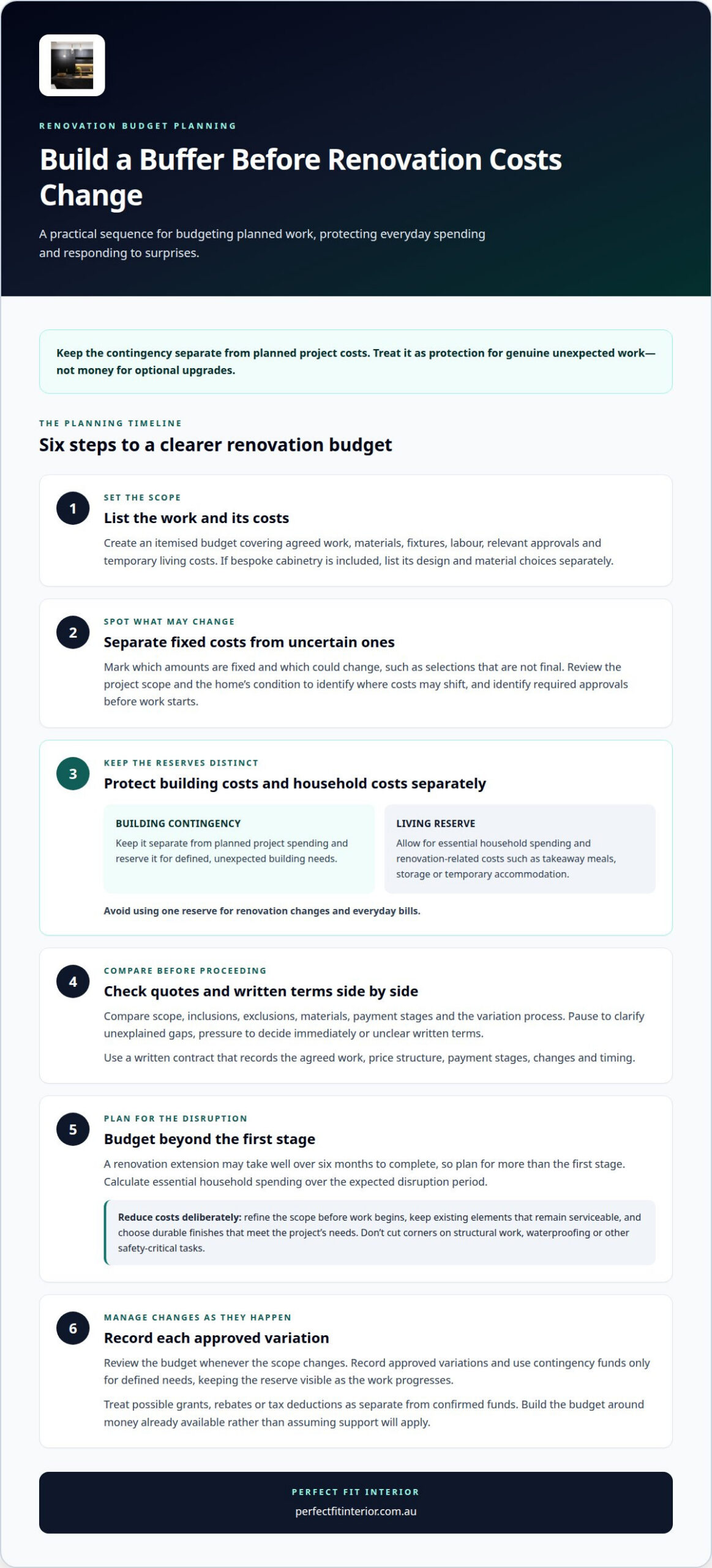
A contingency buffer gives your renovation budget room to absorb changes without immediately cutting essential household spending. Keep it separate from planned project costs, and don’t use it for optional upgrades. Set its size by reviewing the project scope, the home’s condition and which costs could change. A renovation extension may take well over six months to complete, so plan for more than the first stage.
Start with an itemised budget covering agreed work, materials, fixtures, labour, relevant approvals and temporary living costs. Mark which amounts are fixed and which could change, such as selections that are not final. If your budget includes bespoke cabinetry, list its design and material choices separately. Then decide how much of your savings to keep untouched for genuine surprises. Avoid using one reserve for renovation changes and everyday bills.
To compare builder quotes and reduce scam risk in Australia, line them up by scope, inclusions, exclusions, materials, payment stages, and variation process. Compare the work described in each quote, including any renovation services or components that may be excluded. Treat unexplained gaps, pressure to decide immediately, or unclear written terms as reasons to pause and clarify before proceeding.
Use a written contract that records the agreed work, price structure, payment stages, changes and timing. Permit requirements depend on the work and location, while consumer protections follow relevant rules and dispute pathways. Identify required approvals before work starts.
For living expenses, calculate essential household spending over the expected disruption period, then add renovation-related costs such as takeaway meals, storage or temporary accommodation. Keep this living reserve separate from the contingency for building work, so a surprise repair doesn’t use money set aside for groceries or rent.
Reduce costs by refining the scope before work begins, keeping existing elements that remain serviceable, and choosing durable finishes that meet the project’s needs. For cabinetry, consider whether retaining usable components fits the design before replacing them; custom cabinetry work may involve choices about layout and materials. Don’t cut corners on structural work, waterproofing, or other safety-critical tasks.
Grants, rebates and tax deductions depend on the work, property use, eligibility and current program conditions. Treat potential support as separate from confirmed funds, and build your renovation budget around money already available rather than assuming an incentive will apply.
Review the budget whenever the scope changes, record each approved variation and use contingency funds only for defined needs. This keeps the reserve visible and helps you make deliberate decisions as work progresses.
2. Accepting mess and simplifying meals during renovations
Renovation work can disrupt the routines that make home life manageable. Dust, tradespeople, packed cupboards and a kitchen temporarily out of action can complicate everyday tasks. Decide on simple alternatives for important routines before work begins. A meal plan and a designated place for daily essentials can reduce last-minute spending and frustration.
Start by identifying which cooking appliances and food storage will remain available. If the oven is out of action, a toaster, microwave or air fryer may help with simple meals. One family with three children under five used a makeshift kitchen with those appliances for three months. Their example highlights the value of planning meals around the equipment you can use, rather than assuming normal cooking will continue.
Choose a small set of repeatable meals that suit your temporary setup. Prepare breakfasts that need little washing up, keep lunch ingredients together and rotate easy dinners. Check which food needs refrigeration before shopping. Use a list based on the week’s meals to avoid buying ingredients that require appliances you can’t use.
- Store frequently used plates, cutlery, and pantry staples together.
- Keep a washing-up bowl and tea towels accessible if the sink remains usable.
- Set aside a clear bench or table for preparing food.
- Choose meals that use the appliances you can operate in the temporary setup.
Mess is easier to manage when the work area stays separate from daily living spaces. Keep essentials such as work clothes, school items and medication outside the renovation zone. Pack away belongings that would otherwise need repeated cleaning. A simple daily reset, such as clearing the table before dinner, can restore a useful surface without requiring you to tidy the whole house.
Agree on practical routines with everyone at home. Decide where bags go, which areas remain usable and when meals happen. If children need a quiet place for homework, set it up away from the work zone. Keep expectations realistic: temporary meal choices and visible mess are part of a project, not reasons to overspend on convenience food or replacement household items.
If a kitchen renovation will change your cooking layout, plan appliance positions and storage needs as part of the design. Exploring Melbourne cabinetry planning can help you consider how the finished kitchen will support everyday routines. For the renovation period, keep meals straightforward and protect a small, usable space for eating together.
Keep an area for everyday life, even while nearby spaces remain unfinished. One or two cosy, comfortable rooms can help if a renovation runs longer than expected. Choose a space where household members can rest, read or spend time together without feeling surrounded by work. Keep its furnishings practical and avoid using it for overflow storage if possible. Adjust the arrangement as work progresses, moving essentials when needed while preserving a calm place to recharge. The goal is not to keep the whole home spotless, but to maintain a comfortable base for daily life.
3. Allowing for surprise renovation expenses
A renovation can uncover problems hidden behind finished surfaces, such as damaged timber, outdated plumbing, or water ingress. Treat each discovery as a decision point, not automatic permission to expand the project. Ask for a clear description of the issue, its effect on the planned work, and the proposed response. This helps separate necessary repairs from optional upgrades before new costs are approved.
When a delay, cost overrun or unexpected repair arises, pause the affected work where practical and request a written explanation. Record what was found, the proposed work, how it changes the agreed scope, and its effect on timing and payment stages. Before approving a variation, compare the options against safety, durability and the remaining budget. This keeps decisions focused on the actual issue.
For example, if removing a bathroom fitting reveals a leak, first establish its source and extent. Separate the repair needed to address the leak from any upgrade you would like. This distinction helps protect funds for essential work while keeping design choices under your control. A plan for surviving financially through a renovation makes room for necessary repairs without treating every discovery as a reason to expand the project.
Keep a change log with the date, issue, decision and supporting documents. Photos of a concealed problem can help show what was uncovered, while written variation details record the agreed response. Update your project budget and household schedule after each approved change instead of relying on memory or informal conversations.
- Ask for the problem and proposed repair to be described clearly.
- Separate essential remediation from optional improvements.
- Record the variation and its effect on scope, timing, and payment.
- Update the budget before approving the next change.
Structural problems can have a substantial financial impact. That example isn’t a guide to your project’s likely cost; it shows why hidden conditions need careful assessment before work proceeds. The repair required depends on the nature, location and extent of the damage.
Delays can also affect living costs and the order of later work. If a repair holds up installation, clarify which tasks can continue and which depend on its completion. Use the revised sequence to adjust meal, access or temporary-room plans. Avoid making new purchases until the next stage is clear.
Surviving financially through a renovation also means protecting the quality of the finished work. Don’t approve a cosmetic finish over an unresolved structural or moisture problem just to keep the schedule moving. Base your decision on the cause, proposed remedy and how the repair supports the completed renovation.
4. Creating a temporary living space
Before renovation begins, choose at least one safe room with low dust and noise. A live-in renovation should have at least one such room. Make it a retreat from the work zone, with comfortable seating, chargers, medication and daily essentials. If it will also serve as a bedroom, keep the sleeping area clear and easy to reach.
Plan for one or two cosy, comfortable rooms if the project lasts longer than expected. A lounge and bedroom could provide a calm base while other areas are being renovated. Keep the setup simple: use furniture you already own, avoid buying temporary items without a clear need and leave enough room to move around comfortably.
Where the project allows, complete one room at a time. This can preserve a usable, calm area as work moves through the home. Agree on the next room before packing up the current one, and move only the essentials. For example, keep bedding and clothing together in labelled containers, ready to relocate if the work sequence changes.
- Choose a room away from the main renovation activity.
- Keep everyday essentials in one accessible place.
- Use existing furniture before buying temporary replacements.
- Keep walkways and doorways clear of stored belongings.
Consider how each household member uses the home during the day. Set aside a quiet spot for remote work, reading or children’s homework, using a table or desk you already have. If a pet needs a familiar resting place, put its bed and supplies in a room outside the work area.
Dust and noise can make an otherwise usable room uncomfortable. Keep its door closed where practical, and don’t store renovation materials or tools there. Add a simple daily reset to the household routine: return personal items to their place, clear the floor and prepare what the family needs for the next morning.
A renovation may run beyond the original plan, so create a temporary setup that can adapt. Store seasonal or rarely used belongings elsewhere in the home and keep frequently needed items close. If the project sequence changes, move the safe room’s essentials together rather than scattering them across unfinished areas.
Use the finished room as a dependable base, not extra storage. A clear bed, comfortable chair and familiar personal items can make home feel more settled during construction. Review the setup as each room becomes available, so the household can reclaim space gradually without repeatedly buying or moving unnecessary furnishings.
5. What are the best ways to finance a home renovation in Australia?
The right funding option depends on your renovation’s cost and timing, available equity and repayment capacity. In Australia, common options include a construction loan, a home-loan top-up, an existing redraw facility or an unsecured personal loan. Compare the total borrowing cost and repayment structure, not just how quickly you can access funds.
A construction loan can release funds progressively as renovation invoices arrive. Interest is charged on progress payments made until the loan is fully drawn. This structure may suit staged work, since you access funds as costs arise rather than borrowing everything at once. Consider how invoice timing, progress claims and household cash flow would work together.
A home-loan top-up may let you access additional funds without taking out a separate loan. Its suitability depends on available equity, lending terms and how repayments fit your budget. An existing redraw facility is another possible source of funds. The available redraw amount changes over time so that both the loan balance and available redraw reach zero at the end of the agreed loan term.
An unsecured personal loan doesn’t require collateral. It can provide a separate borrowing arrangement, but compare its repayment schedule and interest cost with other options. Personal loans often have a lower interest rate than credit cards, though the actual cost depends on the loan terms. Don’t treat a credit card limit as a renovation budget: an ongoing balance can make repayment planning harder.
For a useful comparison, set planned project costs beside your expected funding needs and household expenses. Then assess:
- Access: whether funds arrive upfront or in stages.
- Interest: how interest is calculated as funds are drawn.
- Repayments: the required payment amount and schedule.
- Flexibility: whether the loan structure suits changing invoice dates.
- Purpose: whether the borrowing covers renovation work or daily expenses.
Keep renovation borrowing separate from ordinary household spending. For example, if a construction invoice is due after a progress milestone, plan for that payment separately from groceries and utilities. This separation makes cash flow easier to track and shows how much of your available funds remains for later stages.
Before choosing, read the loan terms carefully and compare the full repayment commitment over the expected borrowing period. A lower initial payment doesn’t necessarily mean a lower overall cost. Match the facility to the project’s timing and your capacity to repay, and keep these financial priorities in mind as you plan.
When considering a construction loan, map expected invoices against when each amount would be drawn. The key distinction is between the total renovation budget and the funds accessed at each stage: interest is charged on progress payments made until the loan is fully drawn. Consider whether invoice and progress-claim timing aligns with how funds become available. This can help you judge whether progressive access suits the project better than borrowing the full amount at once, while keeping repayment commitments and household cash flow in view.
Perfect FIT Interior
Perfect FIT Interior can help you shape renovation plans around your household budget and routines. For a Home Renovation or Bathroom Renovation, a clear project scope and considered design decisions help you understand what the work involves before it begins. This creates a stronger foundation for planning priorities, daily life and funding needs alongside the renovation.
Bring your goals and practical concerns into the planning conversation, including how you’ll use the space and which decisions matter most. Perfect FIT Interior can turn those priorities into a considered renovation plan, aligning the design and work with your home and intended outcomes.
Contact Perfect FIT Interior to discuss your renovation plans.
Make your renovation plan work for you
Financial confidence comes from aligning the renovation you want with decisions your household can manage. Before moving from planning to commitment, define which outcomes matter most, which choices can wait and how much flexibility you want to preserve. This gives you a practical framework for surviving financially through a renovation without losing sight of the home you’re creating.
Perfect FIT Interior offers Kitchen Renovation Melbourne, Home Renovation and Bathroom Renovation. If you’re ready to shape your project around your priorities and budget, start a conversation about the space you want to create.
A considered plan is a strong first step towards a home that feels more functional, comfortable and distinctly yours.
Frequently Asked Questions
How can you budget for a renovation and include a contingency?
Build your budget around written quotes, separating confirmed project costs from flexible choices and a contingency reserve. Track each payment and approved change in a simple spreadsheet with columns for the item, quoted amount, amount paid and remaining funds. For example, list a fixture upgrade separately from essential repair work. Review the balance before approving changes, so optional decisions don’t quietly consume funds reserved for essential work.
Is it cheaper to stay in the home or rent elsewhere during a renovation?
Staying is cheaper when the home remains safe and usable, and the extra costs of disruption stay manageable. Compare accommodation costs with added expenses such as meals, transport, storage and laundry. If construction removes access to essential facilities or makes the living area unsuitable, temporary accommodation may offer better value and comfort. Compare costs over the expected work period, including how delays could affect household routines.
Disclaimer
All right reserve for Perfect Fit Interior – InnovateX Group PTY LTD