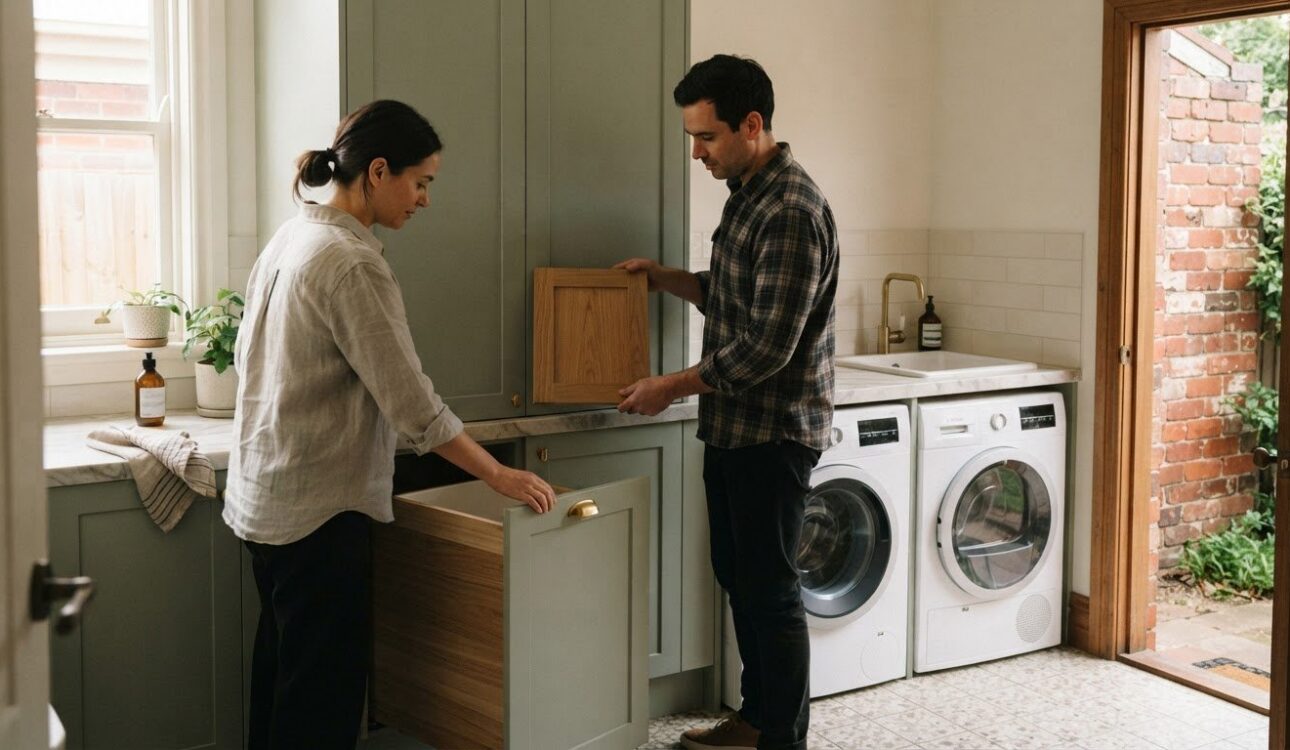
A renovation works best when both partners agree on what matters before decisions start piling up. Getting buy-in from your partner for a renovation means making the purpose, budget priorities and key design choices part of a shared conversation, not a series of surprises. Start with the outcome you both want, then work through the costs and choices together.
It’s understandable to have different priorities: one person may focus on practicality, while the other cares most about how the finished space looks and feels. Neither perspective has to win outright. A clear process can help you find common ground and make trade-offs without losing sight of why you’re renovating.
This article explains how to discuss your renovation budget, agree on materials and finishes, identify shared design preferences and handle disagreements constructively. You’ll also learn how to keep decisions connected to the project’s purpose, so each choice supports a home that feels considered, comfortable and right for both of you.
Key Takeaways
- Set shared budget priorities before choosing finishes, and make room for project costs beyond the most visible items.
- Compare materials by how they look, function and fit your renovation priorities to find options you can both support.
- Turn disagreements into practical trade-offs by identifying what matters most to each partner.
- Explore shared design preferences with visual references, then use them to guide decisions across the space.
- Keep the renovation’s purpose in view so individual choices contribute to the home you both want.
1. Renovation budgets and additional project costs
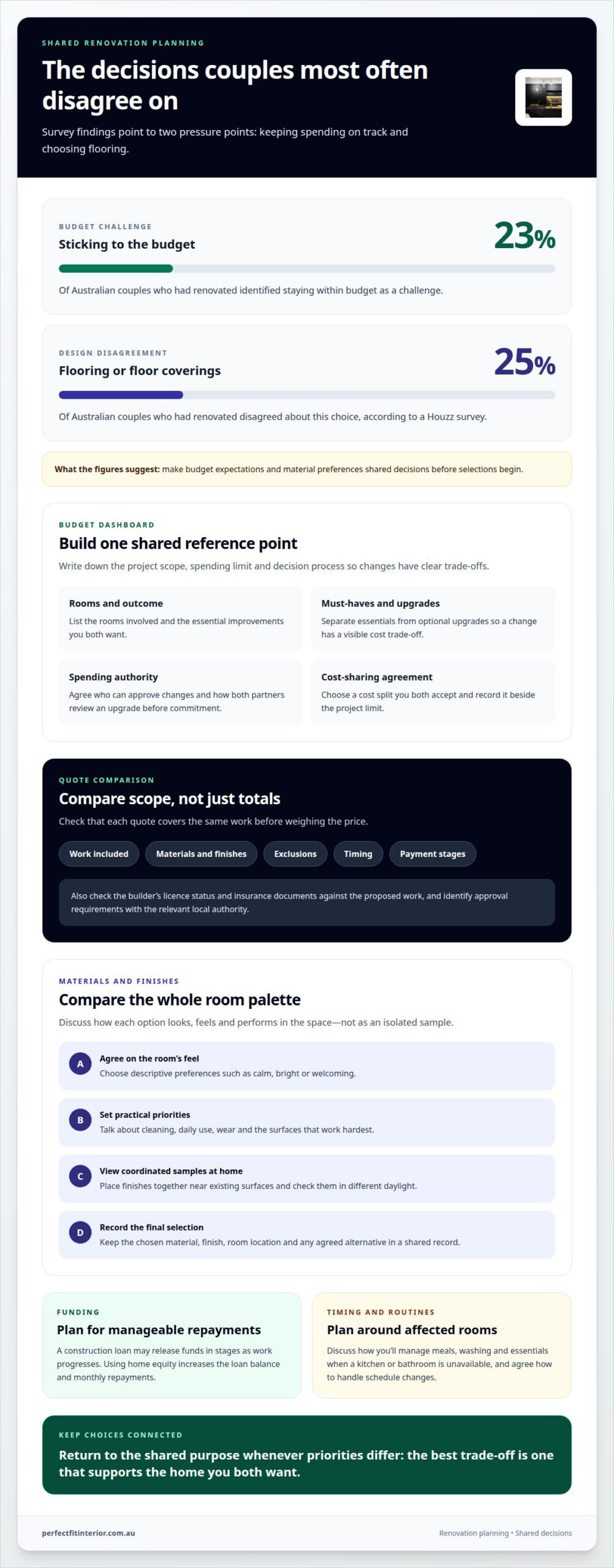
Start with a shared project brief: the rooms involved, essential improvements, preferred finishes and a clear spending limit. Separate must-haves from upgrades, so a design change has a visible trade-off. In a Houzz survey, 23 per cent of Australian couples who had renovated identified sticking to the budget as a challenge. A written budget gives both partners one reference point when choices change.
Plan funding around what you can manage, not simply the maximum you could borrow. A building and construction loan can release funds in stages as renovation work progresses, helping manage cash flow and reduce interest compared with borrowing the full amount upfront. Using home equity increases the loan balance and monthly repayments. Discuss how repayments fit your household budget before treating available equity as project money.
Compare renovation quotes by matching their scope line by line. Check whether each covers the same work, materials, finishes, exclusions, timing and payment stages. For example, compare two kitchen quotes only after confirming that both include the same cabinetry, flooring and installation tasks. Check the builder’s licence status and insurance documents against the proposed work, using relevant Victorian government information. This makes differences easier to understand than comparing totals alone.
There isn’t one approval checklist for every Australian home renovation. Requirements depend on the work and property, so identify any planning or building approval needs with the relevant local authority before committing to the scope or dates. Include approval-related steps in the project schedule instead of treating them as an afterthought.
Agree how you’ll divide costs and who can approve spending changes. Some couples split shared costs equally; others contribute according to an agreed share of income or available savings. The useful rule is one you both accept, recorded alongside a spending limit and a process for approving changes. For example, agree that neither partner commits to an upgrade until both have reviewed its cost and effect on priorities.
Plan timing around the rooms and routines affected. If a bathroom or kitchen will be unavailable, decide where you’ll prepare meals, wash and store essentials during that stage. Set key dates for selecting finishes and confirming access, then discuss together how you’ll handle schedule changes.
Starting before agreeing on scope, budget and responsibilities can lead to conflicting expectations, unplanned spending and rushed decisions. One partner may expect a complete room transformation while the other expects essential repairs only. Write down the shared outcome, agreed limit and who makes each decision before work begins. That simple record gives both partners a stable basis for discussion if project details shift.
2. Agreeing on products, materials and finishes
Choose finishes by comparing how they look, feel and perform in the room. A Houzz survey found that 25 per cent of Australian couples who had renovated disagreed about flooring or floor coverings. That decision can shape the room’s overall character, so discuss what each person values before narrowing down samples. One partner might prioritise a warm appearance, while the other prefers a surface that suits everyday use.
Start with the room’s practical needs, then consider its visual effect. For a bathroom, compare how flooring, wall finishes and fittings work together as a complete palette. In a kitchen, look at cabinetry, benchtops and splashback samples side by side. Discuss cleaning, wear, texture and colour rather than judging each item alone. This keeps the conversation centred on how the space will function and feel.
Use physical samples where possible. A colour can look different under showroom lighting than it does beside your home’s windows, existing flooring or cabinetry. Place samples together in the room and view them at different times of day. For example, compare two benchtop samples beside the cabinet finish and flooring you’re considering. A shared reference makes preferences more specific than choosing from separate images.
Give each person a chance to explain their preference and the reason behind it. “I like this tile” is a starting point; “this tile brings warmth to the room” identifies what appeals. You may discover that both partners want a calm palette, even if one prefers lighter tones and the other favours deeper colours. Keep the shared quality, then compare options that express it in different ways.
- Agree on the room’s feel: Choose a few descriptive words, such as calm, bright or welcoming.
- Set practical priorities: Discuss cleaning, daily use and the surfaces that need to work hardest.
- Compare coordinated samples: View flooring, cabinetry and other finishes together.
- Record the decision: Note the selected material, finish and any agreed alternative.
For items with several visible finishes, decide which elements should match and which can provide contrast. For instance, cabinetry and flooring can share a complementary tone without being identical. A consistent palette connects the room, while considered contrast gives a feature surface a clear role. Talk through the overall combination before settling on individual selections.
Keep a shared selection record with photographs or sample descriptions, room locations and final decisions. If one option is unavailable or needs reconsideration, both partners can compare alternatives against the same preferences. This makes product choices a joint design process, rather than a series of isolated decisions.
Keep the shared record alongside the wider property decisions. The couple planned to use a tenants-in-common agreement for the property. An agreed property value of AUD 900,000 and a required loan of AUD 700,000 produce an LVR of 77.78%. The estimated new loan is AUD 400,000 to refinance an AUD 200,000 mortgage and pay an agreed AUD 200,000 former-partner payout. An AUD 400,000 loan against a property valued at AUD 600,000 produces an approximate loan-to-value ratio of 66.67%.
3. Compromising on disagreements
Disagreement is common during renovation decisions. In a survey of Australian homeowners who had renovated, 69 per cent of couples reported disagreements. Getting buy-in from your partner for a renovation starts with treating those differences as decisions to work through, not proof that one person’s taste should prevail. Agree on a fair way to discuss choices before a difference stalls the project.
Separate the preference from the reason behind it. If one partner wants white walls and the other prefers a deeper colour, ask what each choice should achieve. One may want a brighter-feeling room; the other may want warmth or character. Once you understand those goals, compare options that address both, such as a restrained feature wall or a softer neutral shade.
Wall paint can be a particular point of difference: 24 per cent of couples in the survey disagreed about it. Rather than treating one colour as the only possible answer, consider the room’s existing light, fixed finishes and the atmosphere you both want. A sample on the wall makes the discussion more concrete than debating colour names alone.
Use a simple decision process to keep each disagreement focused:
- Name the decision: Identify the exact choice, such as a wall colour or fitting.
- Explain the priority: Each partner gives a reason without dismissing the other’s preference.
- Find the shared goal: Agree on the function or feeling you both want.
- Compare alternatives: Look for options that meet the shared goal in different ways.
- Record the agreement: Note the selected option and any conditions attached to it.
Compromise doesn’t require splitting every choice down the middle. One partner might choose pendant lights while the other selects a mirror, provided both choices suit the overall direction. For a more consequential decision, agree on criteria first, then compare options against them. This keeps the conversation focused on the project, not on whose taste wins.
In the survey, 59 per cent of couples considered compromise the best way to resolve renovation disagreements. Make that practical by identifying which decisions are essential, flexible or open to reconsideration. If neither option works for both people, pause and explore another alternative instead of forcing an immediate choice. Getting buy-in from your partner for renovation work means both people can see their priorities reflected in the agreed outcome.
Keep the conversation about the project, not personal criticism. Replace “you always choose impractical things” with “I’m concerned this option won’t suit our routine.” If the discussion gets heated, agree when to return to it, with the relevant samples or plans. A calm, specific exchange helps both partners stay involved and reach decisions they can support.
4. Finding shared design preferences
Agreeing on a renovation’s style can be difficult when you picture different outcomes. In a Houzz survey of Australian homeowners who had renovated, 32 per cent of couples disagreed about agreeing on style. Start by describing how you want the renovated room to feel and function. Words such as calm, bright or welcoming create a useful starting point beyond labels like modern or classic.
To agree on renovation priorities and a shared vision, each partner can name the improvements that matter most and explain why. Then identify the outcomes you both want, such as a brighter kitchen or a more restful bathroom, and use those shared goals to guide design choices.
Visual references can make those preferences easier to compare. In the Houzz survey, 39 per cent of couples said tools to better visualise the end result would have made the process smoother. Gather examples of whole rooms, not just isolated details, and discuss what appeals in each image. One partner may like the light-filled layout, while the other prefers its natural textures. Naming those features helps reveal overlap.
Turn that common ground into a short design brief you can revisit as choices arise. Include the room’s purpose, the feeling you want and features you both value. For example, a couple planning a kitchen might agree on an open, uncluttered look while preferring different details. That shared direction allows individual selections to vary without making the overall space feel disconnected.
- Describe the outcome: Choose words that capture how the room should feel and work.
- Collect references: Save images that show complete spaces and specific features.
- Explain preferences: Identify the detail that appeals, such as natural light or clean lines.
- Find common ground: Record the qualities that appear in both partners’ choices.
- Use the brief: Compare later design decisions against the agreed vision.
Furniture can also shape the design conversation. In the Houzz survey, 29 per cent of couples disagreed about furniture. Discuss which existing pieces should stay, where they need to fit and what the room must accommodate. For instance, a dining table may influence circulation through an open-plan area. Planning around real household needs connects the visual direction to everyday living.
Keep the brief flexible enough to guide decisions without prescribing every detail. If one partner prefers restrained finishes and the other wants a bolder feature, preserve the shared palette and choose one focal point together. Revisit your references and room priorities before changing direction. A common vision gives each partner a meaningful voice while bringing separate preferences into one considered design.
Where practical arrangements affect renovation plans, clarify expectations before making commitments about the home. Keep those discussions distinct from choices about finishes and furnishings, while recognizing that both can shape what is feasible. Returning to the shared brief can help partners keep agreed priorities in view as they discuss the home and the changes they hope to make.
5. Keeping the renovation’s purpose in mind
A clear purpose helps couples judge individual decisions against the life they want at home. Write one sentence describing the change you both want, such as creating a calmer bathroom or making a kitchen easier to use. Keep that statement visible during design discussions. When a new idea comes up, ask whether it supports that shared outcome or simply adds another preference.
Houzz found that more than 92 per cent of Australian homeowners who completed renovations agreed the result was worth the experience. In the same survey, 67 per cent felt more comfortable after completing their project, while 54 per cent said they felt happier. These findings point to outcomes beyond appearance. Comfort, ease and enjoyment can help clarify which design decisions matter most to your household.
Translate the renovation’s purpose into everyday situations. If the goal is a more functional kitchen, describe the routines that currently feel difficult. Perhaps meal preparation needs clearer bench space, or storage should make frequently used items easier to reach. If you’re updating a bathroom for comfort, identify what would make it more pleasant to use each day. Specific examples keep the conversation tied to the project’s purpose.
Use a short decision filter when new choices or changes arise:
- Purpose: Does this choice address the need that prompted the renovation?
- Daily use: Will it improve a routine you both identified?
- Shared value: Does it support an outcome you both care about?
- Trade-off: What existing priority would need to change?
This filter also helps distinguish an essential improvement from a tempting extra. For example, a striking feature may suit the design but do little to solve the storage problem that prompted a kitchen project. Discuss whether the feature strengthens the agreed vision or competes with a more useful improvement. Both partners can then assess the same purpose instead of arguing from separate preferences.
Keep a simple record of the original need and the decisions that address it. If the renovation’s scope begins to drift, revisit that record together. The Houzz survey found that 49 per cent of homeowners felt more organised after their renovation. A clear connection between purpose and choices can help you stay organised as decisions accumulate.
Not every benefit will be measurable before work begins. Focus on the routines, comfort and practical changes you both expect to notice. That gives you a meaningful way to review each proposed adjustment without expecting every detail to appeal equally to both partners.
If professional input would help translate your shared purpose into design decisions, explore renovation design support.
Perfect FIT Interior
Perfect FIT Interior can help turn shared renovation priorities into a coordinated plan for your home. Explore renovation services when you’re ready to shape your ideas into a project plan. For decisions involving built-in storage, cabinet-making expertise can help connect cabinetry choices with the wider design.
When custom cabinetry is part of your plans, cabinetry design and installation can bring practical details into the renovation conversation. Contact Perfect FIT Interior to discuss your project.
Make your next renovation decision together
Getting buy-in from your partner for a renovation is less about reaching identical opinions and more about building a decision-making approach you can both trust. Choose one upcoming decision and agree how you’ll make it together. For example, each partner can explain their preferred outcome, identify what matters most, then consider the options against your shared purpose.
That practical habit can carry into the next stage of planning. Keep a record of decisions you both support, and return to it when new ideas arise. If you’d value professional guidance to shape your shared vision into a considered renovation plan, contact Perfect FIT Interior to discuss your project.
With a shared direction, you can move forward one considered choice at a time.
Frequently Asked Questions
How can I discuss a renovation with my partner without creating conflict?
Choose a calm time to talk rather than raising renovation plans during a stressful moment. Begin by asking what your partner thinks about the current space, then listen without jumping straight to solutions. For example, discuss a cramped entryway as a shared household issue, not as proof that one person’s idea is right. If emotions rise, pause and agree when to return to the conversation.
How can we compromise if one partner wants to renovate and the other does not?
Find out what is behind your partner’s hesitation before trying to persuade them. They may be concerned about disruption, uncertainty or the effort involved, rather than rejecting every possible improvement. Discuss a smaller first step, such as clarifying which rooms need attention, without committing to work. If you still disagree, set the topic aside and revisit it after you’ve both had time to consider your priorities.
Disclaimer
All right reserve for Perfect Fit Interior – InnovateX Group PTY LTD