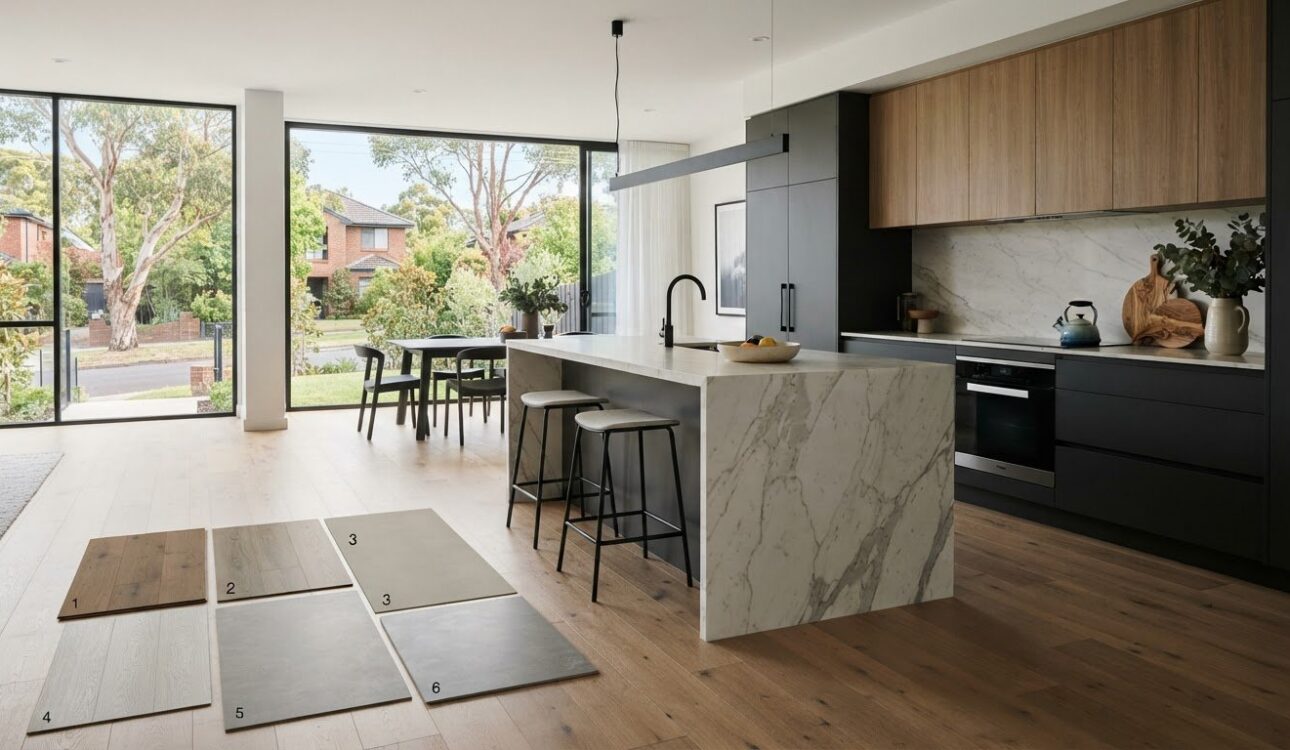
Low-maintenance kitchen floors need to cope with everyday cooking spills, dropped crumbs and foot traffic, while still suiting the look of your home. The floor that seems easiest to care for on a showroom sample may not be the best fit for your kitchen routine.
Materials differ in how they respond to moisture, marks and wear. There’s no single winner for every household: the right choice depends on how you use your kitchen, the cleaning routine you’re comfortable with and the look you want to achieve.
This guide compares common kitchen flooring options, including hybrid, vinyl, laminate, tile, timber and concrete, by cleaning needs, spill response, durability and design. You’ll see how different options may suit different routines and renovation priorities, and how to consider flooring alongside cabinetry for a cohesive Melbourne kitchen renovation. Use the trade-offs to narrow your choices, then check the care instructions for the specific product and finish you’re considering.
Key Takeaways
- Low-maintenance kitchen floors still need regular care; choose a material whose cleaning routine fits your household.
- Compare tile, vinyl, laminate and timber by spill response, routine cleaning and ongoing care before deciding.
- Match your flooring choice to how often you cook, the traffic through your kitchen and the look you want.
- Use suitable cleaning products and follow the care guidance for your floor’s material and finish.
- Plan flooring alongside cabinetry and layout to create a cohesive Melbourne kitchen renovation.
What makes a kitchen floor low-maintenance in a Melbourne home?
Low-maintenance flooring makes routine cleaning manageable; it doesn’t eliminate upkeep. Every kitchen floor needs loose debris swept or vacuumed, spills attended to and material-specific care. The practical difference is how easily those tasks fit into your day, and whether the floor’s ongoing needs suit your household.
Kitchen floors face a mix of crumbs, splashes and regular foot traffic. A family kitchen used for daily cooking may need more frequent attention than a space used occasionally. In an open-plan home, crumbs and tracked-in dirt can also be more noticeable across adjoining living areas. The material matters, but so do the colour and finish, which can affect how visible everyday marks are between cleans.
There’s a broad range of flooring materials, each with different care considerations. Assess claims such as “easy care” against the cleaning routine and upkeep required for the specific product. The phrase doesn’t mean the same thing for every surface.
Which kitchen routines affect flooring maintenance?
Think about what happens in your kitchen during a typical week. Cooking from scratch, a busy household, pets coming in from outside and a direct connection to living areas can all increase crumbs, spills or tracked-in dirt. These factors don’t automatically rule out a material, but they help clarify which demands matter most to you.
- Frequent cooking: Consider how readily you can wipe up food and drink splashes.
- Children or pets: Think about the extra debris and everyday traffic your floor may see.
- Open-plan living: Consider whether visible crumbs across connected spaces would bother you.
Separate your practical priorities from broad product claims. Is quick spill clean-up most important, or are you more concerned about dust and crumbs showing between cleans? Knowing your priority makes it easier to compare flooring options on the things you’ll notice every day.
Does low maintenance mean durable or stain-proof?
No. A floor that’s straightforward to clean isn’t automatically scratch-proof, damage-proof or resistant to every stain. Performance can vary with the material, finish and installation, so don’t treat one feature as a guarantee of overall durability.
Check the care instructions for the exact flooring you’re considering. They can explain suitable cleaning methods and any periodic or finish-specific care, which may differ from everyday sweeping and wiping. For a Melbourne kitchen renovation, coordinate flooring with cabinetry and the room’s layout to create a cohesive design. Explore cabinet-making in Melbourne as part of planning those elements together.
How do common kitchen flooring materials compare for cleaning and care?
Flooring maintenance depends on the material and finish, so compare the care routine for the exact product you’re considering rather than relying on a broad category label. This table offers general guidance. Product construction, finish and manufacturer instructions can change what’s suitable.
| Flooring | Routine cleaning | Spill response | Care needs and trade-offs |
|---|---|---|---|
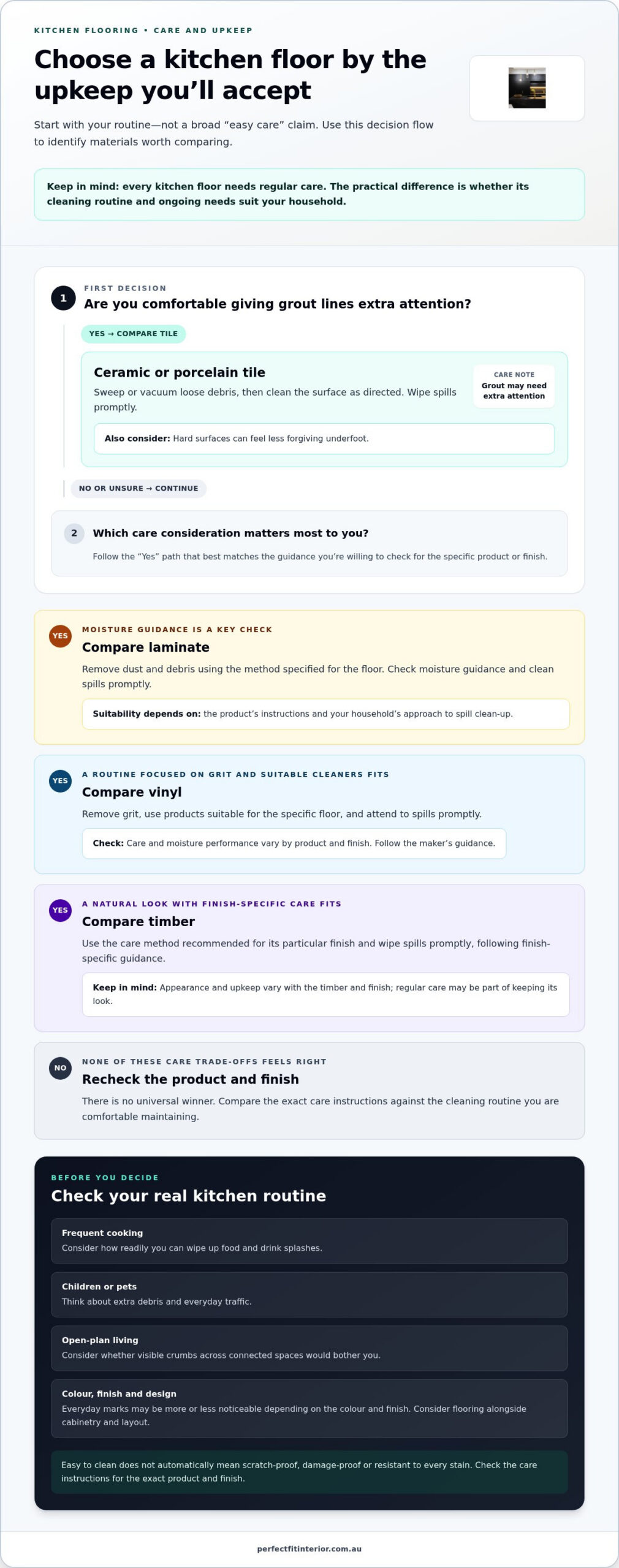
| Ceramic or porcelain tile | Sweep or vacuum loose debris, then clean the surface as directed. | Wipe spills promptly; grime can collect in grout lines. | Grout may need extra attention. Hard surfaces can feel less forgiving underfoot. |
| Vinyl | Remove grit and clean with products suitable for the specific floor. | Attend to spills promptly and follow the maker’s guidance. | Care varies by product and finish; avoid assuming every vinyl floor has the same moisture performance. |
| Laminate | Remove dust and debris, using the cleaning method specified for the floor. | Check moisture guidance and clean spills promptly. | Suitability depends on the product’s instructions and the household’s approach to spill clean-up. |
| Timber | Use the care method recommended for its particular finish. | Wipe spills promptly, following the finish-specific guidance. | Appearance and upkeep vary with the timber and finish; regular care may be part of keeping its look. |
Are tile and vinyl practical choices for busy kitchens?
Both can suit a busy kitchen, but their upkeep isn’t identical. Tile’s surface can be straightforward to wipe, while grout lines may need more focused cleaning. Vinyl’s routine often centres on removing debris and cleaning as directed, but performance and care requirements depend on the specific product. For either option, check the manufacturer’s cleaning advice before choosing products or methods.
What care do laminate and timber kitchen floors need?
Before choosing laminate, read its moisture guidance and understand how spills should be handled. Timber brings a natural look, but care depends on the finish, so don’t assume all timber floors respond alike. Weigh the look you want against the routine you’re willing to maintain. For additional context on flooring performance, Consumer Reports’ flooring recommendations discuss factors such as wear and stain resistance.
There’s no universal winner. The right balance is the one that suits your kitchen’s use, preferred appearance and care routine. If you’re planning a broader Melbourne renovation, you can consider flooring as part of the overall project through kitchen renovation services.
Which low-maintenance kitchen floor suits your household best?
The best choice isn’t automatically the material with the simplest-sounding care claim. It’s the floor whose cleaning routine and appearance suit how your kitchen is used. Start by identifying the messes you deal with most, then consider your preferred look and how much ongoing care fits your routine.
- Frequent cooking: Prioritise how easily you can manage splashes and food spills. Check the care guidance for the exact floor you’re considering.
- Busy household or pets: Think about foot traffic, tracked-in dirt and how noticeable crumbs or everyday marks may be between cleans.
- Limited time for cleaning: Compare routine cleaning with any additional material-specific care, then decide what feels manageable.
- Design-led renovation: Consider the floor’s colour and finish alongside cabinetry, layout and the overall style of your kitchen.
How should busy households prioritise cleaning and spills?
Use your real routine as the guide. List the tasks you face most often, such as sweeping crumbs, wiping spills or cleaning around a dining area. Then compare flooring options against those demands and check that their care instructions suit your usual approach. A household that cooks frequently may prioritise spill response, while an open-plan home may care more about how visible debris is across connected spaces. Different routines call for different priorities.
How can flooring balance a polished look with everyday care?
Colour, pattern and finish affect how noticeable dust, crumbs and splashes appear. Consider the kitchen’s lighting and how the flooring will sit beside cabinetry, benchtops and adjoining rooms. Reviewing these finishes together helps shape a cohesive scheme around your household’s needs. Explore Melbourne custom cabinetry as part of that design conversation.
For a broader view of how flooring and cabinetry can fit into the renovation, explore Melbourne kitchen renovation services. Coordinating these decisions helps balance the look you want with the care routine you’re comfortable maintaining.
How do you keep kitchen flooring clean and looking its best?
A simple routine starts with three habits: remove loose food and dirt, deal with spills promptly, and follow the care guidance for your exact floor. These steps help keep everyday mess manageable without assuming every surface can be cleaned in the same way.
Use the flooring manufacturer’s care instructions for the exact material and finish. That’s the best guide to suitable cleaning products, tools and methods. Advice can differ between products, even within the same flooring category, so don’t rely on a general tip if it conflicts with the instructions for your floor.
What should a simple weekly kitchen-floor routine include?
Build floor care around the kitchen habits you already have. Regularly remove loose crumbs and tracked-in dirt, and attend to spills as they happen. Then use only the cleaning approach recommended for your floor. A consistent routine makes everyday cleaning easier to manage without requiring a complicated schedule.
- Clear loose debris: Remove food particles and dirt as part of regular kitchen tidying.
- Respond to spills: Clean them promptly using the method advised for the flooring.
- Check before cleaning: Follow the manufacturer’s guidance for products, tools and moisture.
Which common cleaning mistakes should homeowners avoid?
Don’t assume a product or method is suitable simply because it works on another surface. Cleaning products, tools and the amount of moisture a floor can tolerate vary by material and finish. Avoid using a method that conflicts with the manufacturer’s instructions, and check those instructions before adding a new product to your routine.
Care planning can start before installation. During a Melbourne kitchen renovation, consider how the recommended routine fits your household alongside the flooring’s appearance, cabinetry and layout. This helps you plan a finished space around both your style and the practical work of keeping it looking its best. Low-maintenance kitchen floors are easiest to live with when the product’s care instructions fit your everyday habits.
Flooring and Cabinetry for Melbourne Kitchen Renovations
A kitchen feels considered when its finishes work together. Flooring sets the visual foundation, while cabinetry shapes the room’s colour balance, storage and overall character. The layout and household routine matter too: a coordinated scheme should still suit how you cook, move through the space and care for the floor.
It helps to discuss flooring and bespoke cabinetry as connected design decisions rather than separate choices. Compare samples in relation to one another, and consider how their tones and textures will sit alongside the benchtop, lighting and adjoining living areas. For ideas on custom joinery, explore Melbourne custom cabinetry.
Why coordinate flooring with kitchen cabinetry?
Floor and cabinet colours can create a calm, unified palette or introduce purposeful contrast. Their appearance also affects how open or visually busy a kitchen feels. Alongside style, consider everyday use: the route between the cooking and sink areas, the amount of traffic through the room and the care routine that suits your household. Low-maintenance kitchen floors are most practical when their look and upkeep support the overall design.
What does an integrated renovation process help organise?
Planning flooring within the broader renovation helps align material choices with cabinetry, measurements and the room’s layout. Perfect FIT Interior manages projects from initial 3D design and measurement through to final installation, bringing key decisions into one considered process. The firm brings over 18 years of renovation and cabinetry experience to Melbourne projects.
This joined-up approach helps you think through how the finished elements will meet and work together, while keeping the design grounded in the way your household uses the kitchen. Explore the Melbourne renovation services for a broader view of the project.
Choose a Kitchen Floor That Works for Everyday Life
The right floor isn’t simply the one that promises the least effort. Low-maintenance kitchen floors are a practical match for your household when their everyday cleaning needs, spill response and ongoing care fit your routines. Compare materials by the upkeep you’re comfortable with, then weigh their appearance against how they’ll work with your kitchen’s cabinetry and layout.
Planning these choices together can help create a kitchen that feels cohesive as well as functional. Perfect FIT Interior brings over 18 years of renovation and cabinetry experience to Melbourne projects, with a process that spans initial 3D design and measurement through final installation. Flooring and bespoke cabinetry can be considered as part of the broader renovation, so your choices contribute to one considered result.
With a clear sense of your household’s priorities, you can create a welcoming kitchen that looks right and feels manageable to care for.
Frequently Asked Questions
What is the easiest kitchen flooring to keep clean?
No single kitchen flooring type is easiest for every home; routine cleaning depends on the surface and its care instructions. Tile can be wiped clean, though grout may need extra attention. Vinyl, laminate and timber each have product- and finish-specific cleaning needs. Low-maintenance kitchen floors are those whose everyday care suits your habits, so compare spill response and routine cleaning, then check the manufacturer’s guidance for the exact option.
Is vinyl flooring a good choice for a low-maintenance kitchen?
Vinyl can be a practical low-maintenance kitchen choice because its routine care may be straightforward: remove loose debris, clean spills promptly and use the method recommended for the product. However, vinyl types and finishes differ, so don’t assume all handle moisture or cleaning products alike. Before choosing, read the manufacturer’s instructions for the exact flooring and consider whether its required care fits your household’s cooking and cleaning routine.
Can you use laminate flooring in a kitchen?
Laminate may be suitable for some kitchens, but check the moisture guidance for the specific product before deciding. Handle spills according to the manufacturer’s directions, as cleaning methods can vary by construction and finish. Don’t assume every laminate floor tolerates the same amount of moisture or is maintained in the same way. Compare its instructions with your household’s routine, especially if cooking and frequent spills are part of daily life.
Are tiles difficult to maintain in a kitchen?
Tiles aren’t necessarily difficult to maintain: the tile surface may be cleaned as directed, while grout lines can need separate attention because food residue and dirt may collect there. Care also depends on the particular ceramic or porcelain tile, its finish and the products recommended for it. Consider both regular surface cleaning and grout upkeep, then follow the flooring maker’s instructions rather than applying one routine to every tile.
How do you clean kitchen flooring without damaging it?
Start by checking the manufacturer’s instructions for the exact material and finish. Remove loose debris and attend to spills promptly, using only products and methods recommended for that floor. Avoid assuming that a cleaner, tool or amount of water safe on one surface will suit another. If guidance is unclear, consult the product documentation before cleaning, so your routine supports the floor rather than risking damage.
What kitchen flooring hides crumbs and everyday marks best?
Flooring with mixed tones or a pattern may make crumbs and everyday marks less immediately noticeable than a plain, uniform surface, but there’s no guarantee. Lighting, finish and the type of debris all affect what you see. Consider the kitchen’s natural and artificial light, plus how often the space is used. A finish that looks forgiving in a sample may appear different across your room, so assess it in context.
Should kitchen flooring be chosen before cabinets?
Choose flooring and cabinetry as part of the same renovation plan rather than treating them as unrelated decisions. Their colours, textures and relationship to the kitchen layout shape the overall result, while household routines influence practical choices. In a Melbourne kitchen renovation, coordinated design and measurement can help align those decisions through installation. Perfect FIT Interior brings over 18 years of cabinetry and renovation experience to projects that span initial 3D design and measurement through final installation.
Disclaimer
All right reserve for Perfect Fit Interior – InnovateX Group PTY LTD