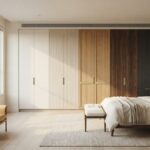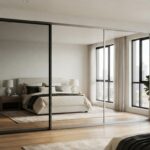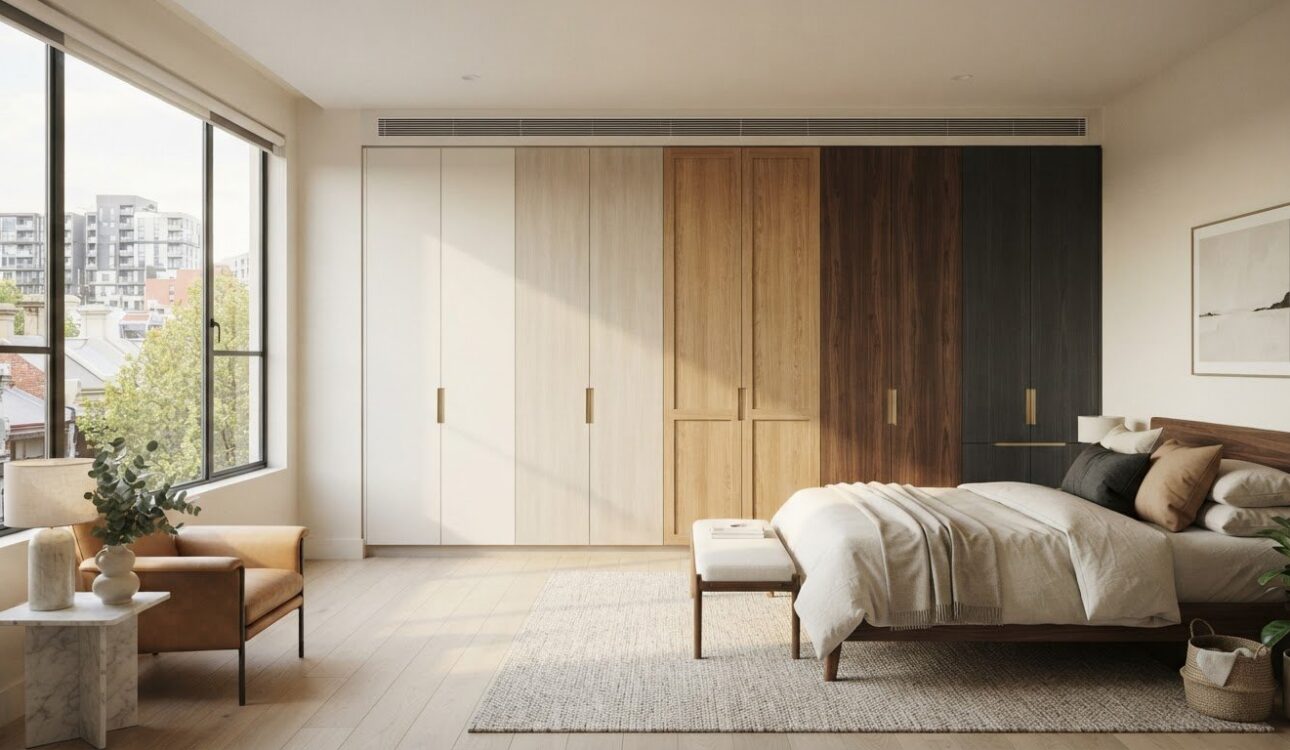
The most practical wardrobe finish isn’t always the one that looks most like natural timber. For Melbourne homes, timber wardrobe finishes range from understated matte and wood-matte surfaces to timber-look melamine, oak, walnut and black ply, and the right choice depends on the look you want and how much upkeep suits your routine. Melamine can usually be cleaned with a quick wipe using a soft cloth, while natural timber’s care needs depend on its timber type, finish and construction.
A wardrobe influences the feel of a bedroom every day, so it’s worth considering appearance alongside maintenance. A smooth matte finish creates a calm, contemporary look; wood-matte and timber-look melamine offer a timber-inspired effect, while oak and walnut show natural grain and colour variation. Black ply gives the room a darker, more distinctive look.
This guide compares each finish and explains how their care differs, so you can narrow down an option that feels right for your Melbourne home. You’ll also learn what to consider when choosing a finish for hinged or shaker-style doors, and how the overall design can shape the final result.
Key Takeaways
- Match the finish to your door style: smooth surfaces suit a clean, contemporary look, while shaker profiles bring more detail.
- Compare matte and wood-matte options by the atmosphere you want to create, then consider how each will sit with the rest of the room.
- Timber-look melamine offers a timber-inspired appearance without solid wood; its surface can usually be cleaned with a soft cloth.
- Oak, walnut and black ply create distinct visual effects, while natural timber’s grain and colour variation make each piece individual.
- Choose a finish with upkeep in mind: care needs vary according to the timber, finish and construction.
Finishes for hinged and shaker wardrobe doors
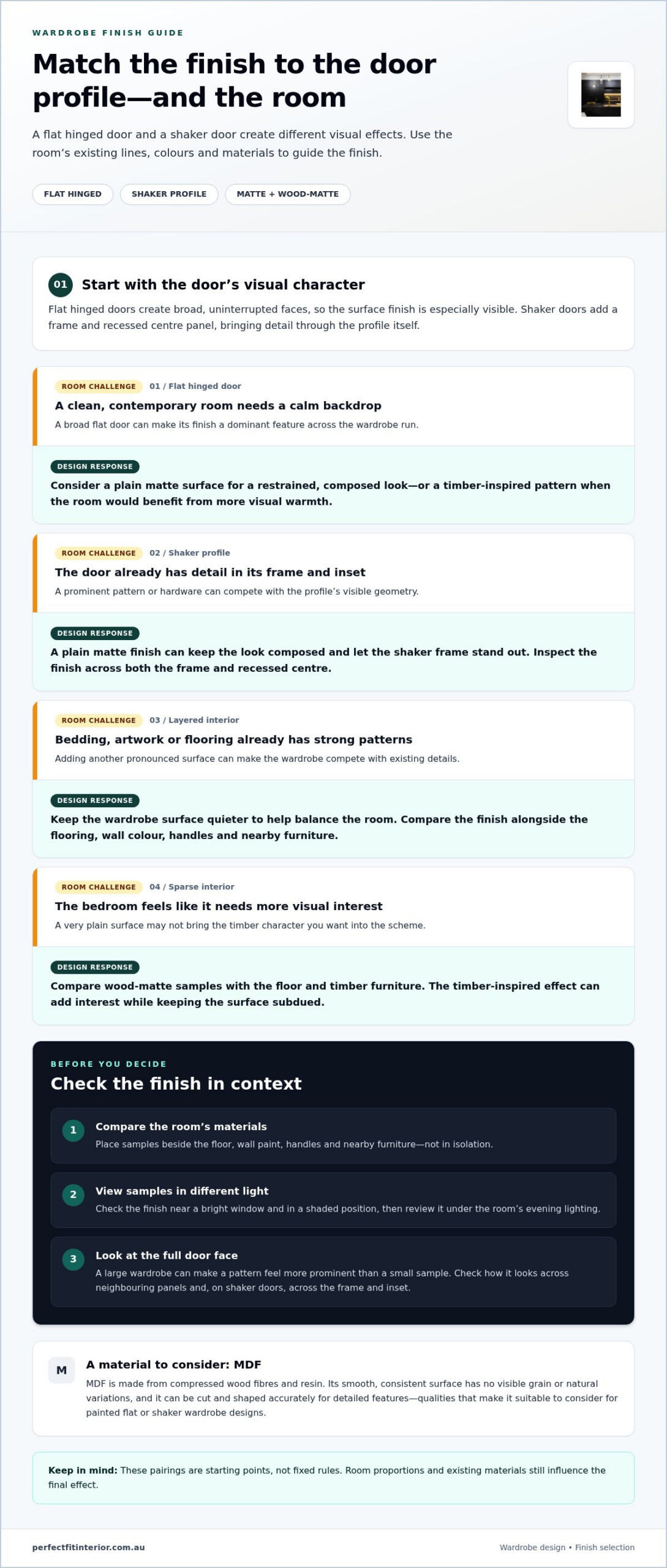
Choose a finish that suits the door profile and the room’s existing lines. A flat hinged door works well in a pared-back bedroom with simple furniture. A shaker door adds a frame and recessed centre panel. The finish then shapes the overall effect, from quiet and seamless to more decorative. Consider wall colour, flooring, handles and nearby furniture together, rather than choosing a wardrobe surface in isolation.
When closed, hinged doors create broad, uninterrupted faces, making the surface finish especially visible across a wardrobe run. Matte can keep the look restrained, while a timber-inspired pattern introduces visual warmth. A shaker profile already adds detail through its frame and inset panel. A restrained finish lets that geometry stand out without competing patterns or prominent hardware.
MDF is an engineered wood product made from compressed wood fibres and resin. Its smooth, consistent surface has no visible grain or natural variations, making it suitable for painted wardrobe designs. MDF can also be cut and shaped accurately for detailed features. These qualities make it a practical material to consider when comparing flat hinged doors with shaped shaker profiles.
Think about the profile before settling on a finish. A flat panel provides a clean backdrop for a pronounced grain pattern, such as an oak-inspired look. A shaker panel combines a recessed centre with a visible border, so a plain matte surface can create a composed appearance. These pairings are starting points, not fixed rules. Room proportions and existing materials still influence the final effect.
Use a simple selection sequence. First, decide whether the room feels contemporary, classic or layered. Next, note its dominant colours and timber tones. Then compare finish samples beside the floor, wall paint and handles. For example, a pale floor and light walls can work with a softly coloured matte door. Darker furniture may call for a contrasting surface or a coordinated timber tone.
Scale matters too. A large wardrobe can make a strongly patterned finish look more prominent than a small sample suggests. Check the pattern across the full door face, including how it meets neighbouring panels. On shaker doors, inspect the frame and inset together. The finish should look cohesive across both areas, rather than appearing interrupted around the profile.
For Melbourne homes, a cabinet maker in Melbourne can coordinate the door profile, finish and surrounding cabinetry in one design. Bring together reference images and samples of nearby materials. This gives the design a clear visual direction, whether the bedroom calls for crisp flat doors or a more traditional shaker outline.
Before deciding, compare the door style in the room’s actual lighting. Daylight and bedroom lighting can change how colours and surface patterns appear. View the finish beside the intended handles and adjacent materials. The best match supports the room’s style across the complete door, not just as a small colour sample.
Matte and wood-matte surfaces
Matte surfaces give wardrobe doors a low-sheen appearance rather than a reflective gloss. In a bedroom with pale walls and simple bedding, that restrained finish can support a calm, contemporary scheme. Wood-matte surfaces add timber-inspired character while keeping the overall effect subdued. Compare timber wardrobe finishes with the room’s flooring, wall colour and larger furniture before choosing. A finish that looks subtle on a small sample may feel more prominent across a full wardrobe.
Consider how light reaches the wardrobe throughout the day. A door beside a bright window can look different from one in a shaded corner. Check a sample in both positions, then compare it under the room’s evening lighting. This practical step reveals whether the finish reads as warm, cool, flat or softly textured. It also helps you coordinate the doors with bedside tables, flooring and handles.
Matte and wood-matte aren’t interchangeable descriptions. Matte refers to a low-sheen look; wood-matte suggests a timber-like appearance with a similarly restrained surface effect. Patterns and textures vary between finishes. One wood-matte sample, for example, may show a pronounced grain effect, while another appears more even. Inspect the actual surface, not just its name or a small image, before settling on a design.
Use the room’s existing details to guide the choice:
- For a minimal bedroom: Pair a plain matte door with simple handles and uncluttered furniture.
- For a warmer scheme: Compare wood-matte samples with the floor and timber furniture.
- For a layered interior: Keep the wardrobe surface quieter when bedding or artwork already has strong patterns.
- For a dark palette: View the sample beside the wall colour to judge contrast and visual weight.
Finish selection also affects how the whole door reads. On a wide, flat panel, a consistent matte colour can make the wardrobe feel visually composed. Wood-matte introduces a timber cue without making the door’s surface the only focal point. If the bedroom includes patterned curtains or distinctive flooring, a less pronounced finish can help balance those features. If the room feels sparse, a timber-inspired surface can add visual interest.
Bring together finish samples, flooring references and handle choices before finalising the palette. A cabinet maker in Melbourne can help coordinate wardrobe details with the room’s overall cabinetry design. Review the options as timber wardrobe finishes at the wardrobe’s intended position, then assess them from the doorway and beside the bed. Those viewpoints show whether the finish complements the room rather than competing with it.
Melamine finishes that imitate natural timber
A timber-inspired melamine finish can give wardrobe doors a wood-like appearance without using solid wood. The decorative surface is bonded to a board substrate, offering a timber look alongside other wardrobe design choices. For example, a warm oak-style appearance can complement neutral walls, while a darker timber pattern can contrast with pale flooring.
Look beyond the colour name when comparing samples. Grain direction, contrast and pattern scale affect how a door reads across its full width. A fine, subtle pattern can sit quietly beside patterned bedding, while a bold grain effect may become a stronger feature on a large wardrobe. View samples vertically, as they’ll appear on the doors, and compare them beside the bedroom’s floor and furniture.
Melamine is a surface category, not a single timber appearance. Available designs can imitate natural timber without using solid wood. Careful sample comparison matters: two wood-inspired surfaces can create noticeably different moods. Consider whether the room calls for a pale, understated effect or a deeper, more expressive look. Then check how the chosen pattern relates to existing timber furniture, rather than matching just one item.
Use a simple comparison process before choosing:
- Set the palette: Note the wall colour, flooring and largest furniture pieces.
- Compare the grain: Place samples beside those materials and assess pattern scale.
- Check the door area: Imagine the finish across the full wardrobe, not just a small swatch.
- Review the room’s light: Compare the sample where the wardrobe will stand.
For example, a bedroom with pale flooring and plain bedding can accommodate a more visible timber pattern. If the room already has pronounced grain in its flooring or bedside tables, a quieter melamine design may create better balance. These are visual guidelines, not strict rules. The aim is to create a considered relationship between the wardrobe and the room’s existing finishes.
Melamine wardrobe surfaces are usually easy to clean with a quick wipe using a soft cloth. This simple routine makes them practical for people who prefer uncomplicated care. Follow the surface’s care guidance and use a soft cloth rather than treating the wardrobe like unfinished timber. Cleaning habits should suit the actual surface and its finish.
Before making a final selection, compare the sample with handles, skirting and nearby furniture. A wood-like finish can tie those details together or introduce deliberate contrast. Check the pattern at the wardrobe’s full scale and from the bedroom entrance. This final view helps reveal whether the melamine design supports the room’s overall palette or draws attention away from it.
Oak, walnut and black ply finishes
Wardrobe finish options in Australia include oak, walnut and black ply, alongside timber-look melamine, matte and wood-matte. Oak and walnut are natural timber choices; black ply offers a distinct, dark look. Natural timber wardrobes show grain patterns and colour variations, giving each one a distinctive appearance.
Oak can suit a bedroom where the design calls for a clear timber presence. Consider how its grain sits beside the floor, bedside tables and wall colour. If those elements already have strong patterns, a quieter surrounding palette can help the wardrobe feel balanced. In a simple room, the timber surface can become a deliberate focal point.
Walnut offers another natural timber direction. Rather than choosing by name alone, compare the actual grain and colour variation with the bedroom’s other finishes. View a walnut sample beside the floor and existing furniture. The combination should feel intentional, whether you want the wardrobe to blend with nearby timber or stand apart.
Black ply creates bolder contrast. It can anchor a light bedroom, especially where pale walls and restrained furnishings leave room for a darker feature. In a room with dark furniture, compare tones carefully so the wardrobe relates to those pieces instead of disappearing into them. Handles and nearby wall colours also influence how strongly the finish stands out.
Use this selection sequence to compare the three directions:
- Identify the room’s anchor: Choose the floor, bed or largest furniture piece as your reference.
- Set the intended effect: Decide whether the wardrobe should blend, complement or contrast.
- View the grain: Compare oak and walnut samples against the anchor material.
- Test the contrast: Place black ply beside the wall colour and nearby furniture.
- Review the full composition: Consider handles, doors and surrounding finishes together.
Natural timber variation is part of the design, not an inconsistency to eliminate. Different areas can show varied grain patterns or colour, making each wardrobe distinctive. This quality suits homeowners who value an individual appearance. A considered palette can use those variations as a feature, coordinating the wardrobe with other materials without demanding an exact match.
For a calm scheme, pair timber grain with simpler surrounding surfaces. For a more expressive bedroom, coordinate the wardrobe with another visible timber feature or use black ply as deliberate contrast. Before deciding, view samples in the intended room and assess them beside flooring, walls and furniture. That comparison makes the choice practical as well as visually considered.
Timber finishes and maintenance needs
Care depends on timber type, finish and construction. Choose with the surface, room conditions and upkeep routine in mind.
Choosing Finishes for Hardwood and Softwood
Hardwood and softwood wardrobes can have clear finishes or stains, depending on the desired appearance and protection. A clear finish keeps the grain visible, while stain changes its colour. Timber species and surface preparation affect the result. Compare a sample on the same timber before choosing, especially if matching existing furniture matters.
For either timber type, consider how the wardrobe will be used. The finish should suit the surface and cleaning routine, rather than being chosen by timber category alone. Check that the product is intended for indoor timber furniture. This helps avoid assuming one coating will behave identically on every hardwood and softwood surface.
Indoor Safety, VOCs and Regulations
Choose an indoor-use finish with clear information about its VOC emissions and application directions. Low odour alone doesn’t establish low VOC levels. Compare product information directly, and follow ventilation and handling instructions during application. Appearance, such as a clear or matte surface, doesn’t indicate emissions.
Australian standards and regulations may apply depending on a product’s type and intended use. Don’t infer compliance from the timber species or finish name. Consider the product’s stated application and compliance information together. For indoor wardrobes, this distinction matters because a finish’s appearance doesn’t explain whether it suits the intended use.
Preparing, Applying and Curing Finishes
Prepare a timber wardrobe by cleaning the surface, removing dust and sanding as appropriate for its condition. Apply stain or finish evenly, following the product directions. Drying and curing times vary by product and application conditions, so follow the label’s stated intervals before recoating or handling the surface. Dry to the touch and fully cured are different stages.
Staining can produce uneven colour if timber absorbs it inconsistently or preparation varies. Sealing can also change the timber’s appearance or affect a later coat’s adhesion if products are incompatible. Test the complete stain-and-sealer combination on a discreet sample first. Keep the application sequence consistent across visible panels to reduce differences between doors.
Humidity and Temperature Effects
Humidity and temperature influence how finishes dry, while timber can respond to changes in moisture. In a humid room, drying may take longer; warmer or cooler conditions can also affect application and curing. Follow the product’s stated environmental guidance and avoid applying it outside those conditions. Don’t estimate drying time from another product’s label.
In an Australian home, consider the actual room conditions during finishing, not just the season. Keep the wardrobe away from damp areas while the coating dries. Allow airflow as directed by the product instructions. These steps help the finish dry under suitable conditions and reduce the risk of uneven results or premature handling.
Explore wardrobe cabinetry design in Melbourne
Perfect FIT Interior: Home Renovation
Perfect FIT Interior can help when a wardrobe finish is part of a broader home renovation. If you’re updating a bedroom alongside other areas, consider how its colours, materials and finishes relate to the overall design. A coordinated plan can help your choices feel consistent throughout your home.
For a wider project, Perfect FIT Interior offers home and bathroom renovations. Bring your preferred finish direction and planned changes into the conversation. This is a useful next step when separate design decisions need to work together as part of a home renovation.
Contact Perfect FIT Interior to discuss your renovation plans.
Plan a wardrobe that feels at home
Before settling on a finish, create a simple design brief for your bedroom. Gather a room photo, note the colours and materials you want to keep, and describe the atmosphere you’re aiming for. Compare timber wardrobe finishes as part of a connected palette, rather than in isolation. This gives your design conversation a clear starting point and helps connect the wardrobe with the wider home.
If the project extends beyond the bedroom, Perfect FIT Interior offers kitchen, home and bathroom renovations in Melbourne. Bring your preferred timber wardrobe finishes and planned changes into the conversation. A broader renovation plan can help align decisions across the spaces you’re updating, while keeping your priorities at the centre.
Bring your ideas together one considered choice at a time to shape a home that feels distinctly yours.
Frequently Asked Questions
How do oil, wax, varnish and lacquer compare for timber wardrobes?
Oil and wax usually leave a more natural-looking surface, while varnish and lacquer form a protective coating. Oil can enrich visible grain, and wax adds a softer sheen but may need periodic renewal. Varnish creates a more noticeable surface layer; lacquer typically gives a smooth, even appearance. The right option depends on the timber, desired look and care routine. Always follow the specific product instructions.
How do you clean, maintain and repair a finished timber wardrobe?
Dust the wardrobe with a soft, dry cloth, then use a lightly damp cloth for marks if the finish permits. Dry the surface promptly, and avoid abrasive pads or harsh cleaners that could dull or damage its coating. For a scratch, identify the existing finish before using a repair product. Test it in an inconspicuous spot first; matching the coating helps avoid a visible patch.
Disclaimer
All right reserve for Perfect Fit Interior – InnovateX Group PTY LTD