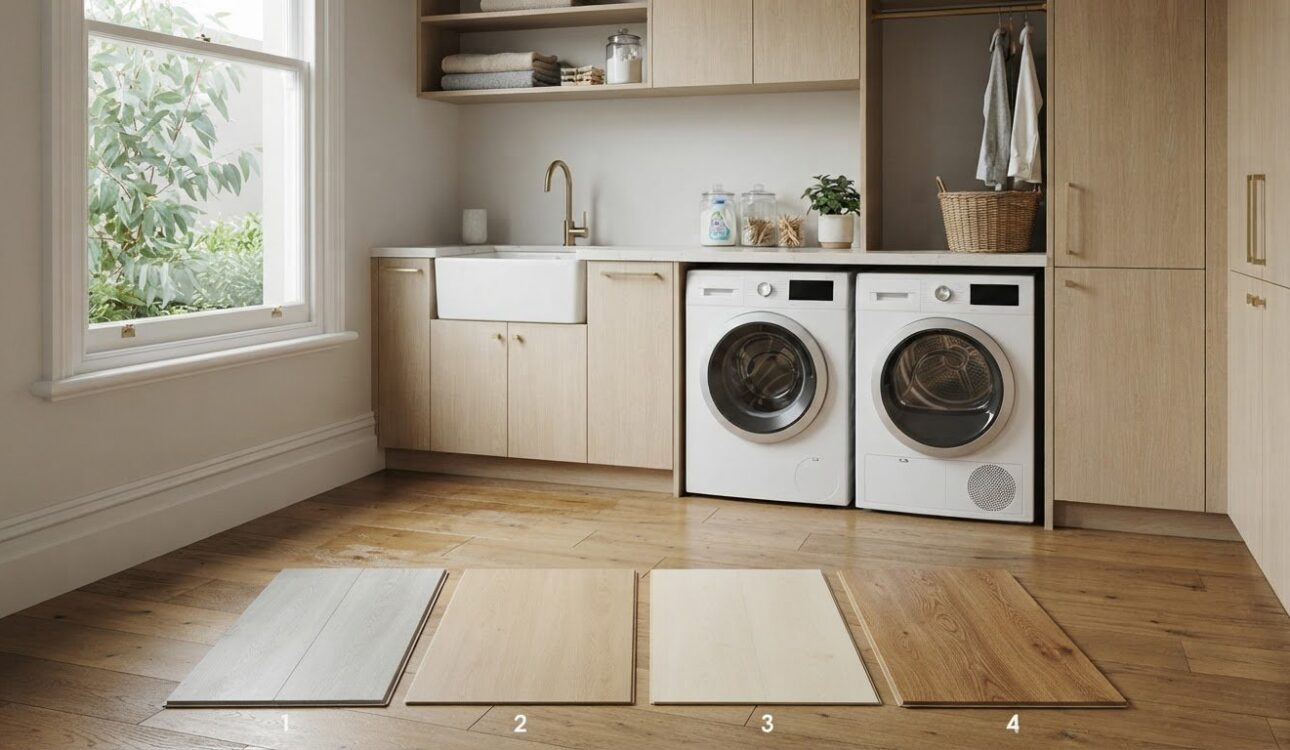
Hybrid flooring can suit a standard Australian laundry, but it isn’t the right choice for every room. Hybrid flooring may suit some laundries, but its suitability depends on the room and how much moisture the floor may face. A laundry designed as a wet area, or one with a floor waste, needs closer attention to waterproofing requirements. The best laundry room flooring options depend on how the space is used and how much moisture the floor may face.
It makes sense to want a floor that looks considered, feels comfortable underfoot and stands up to everyday laundry tasks. The challenge is balancing those priorities: water can damage some plank materials at the joins, while natural wood brings distinctive warmth but needs more protection from moisture and appliance vibration.
This comparison explains how hybrid, vinyl, laminate and medium-toned hardwood differ in moisture resistance, installation and upkeep. You’ll see where each material may work well, what to watch for in a laundry and why oak or maple may appeal if you’re drawn to real timber, despite the extra care it can require.
Key Takeaways
- Choose flooring for the room’s moisture exposure: a laundry with a floor waste or designed as a wet area calls for a different approach from a standard laundry.
- Compare vinyl by its format as well as its surface: seams, edges and installation affect how water may reach the subfloor.
- Hybrid planks can suit a standard laundry, while laminate needs care around spills and appliance leaks.
- Match installation and cleaning methods to the flooring material, and wipe up water and detergent promptly.
- If you’re considering real timber, oak or maple with a protective finish offers a more durable direction than softer pine.
Are vinyl planks waterproof?
Some vinyl products resist water well, but a waterproof plank alone doesn’t make the entire floor waterproof. Among laundry room flooring options, vinyl stands out for its affordability, low maintenance and resistance to scratches and stains.
Sheet Vinyl Flooring
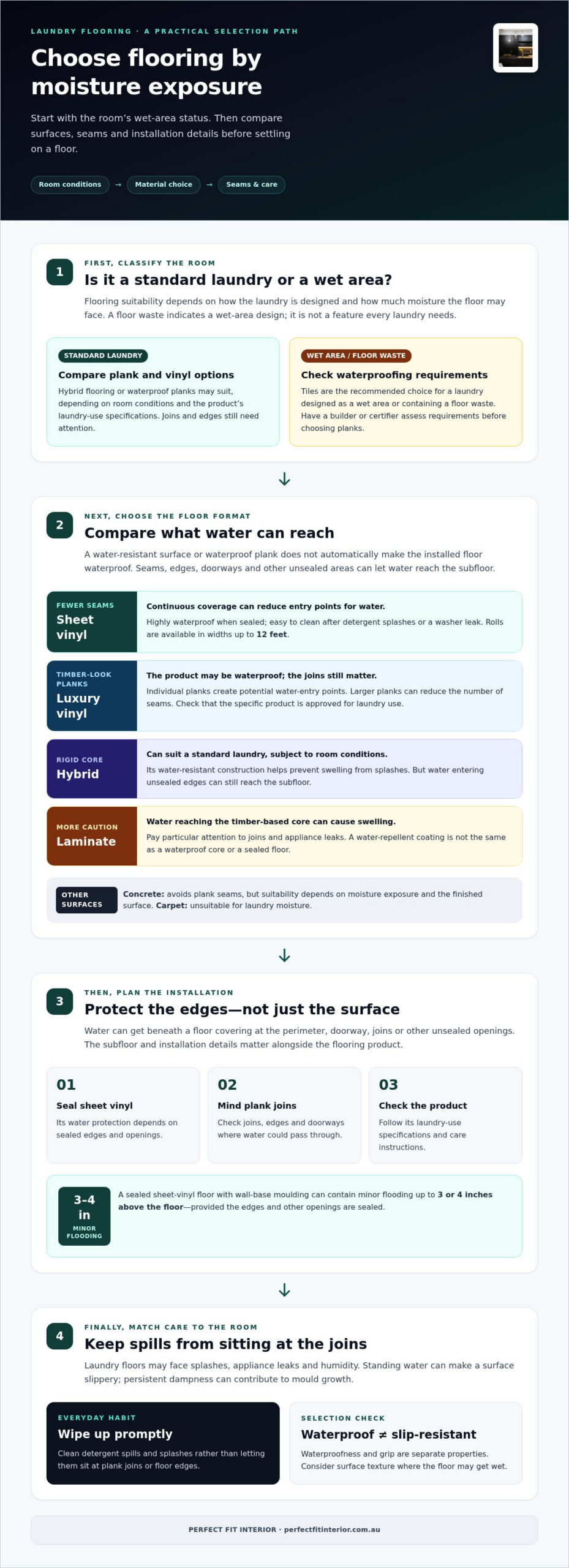
Sheet vinyl is laid in a continuous piece, so it has fewer seams than separate planks or tiles. That reduces opportunities for water to seep through the floor covering, making sheet vinyl a highly waterproof choice for laundry rooms. Rolls are available in different widths, up to 12 feet wide.
Its broad surface is easy to clean after detergent splashes or a washer leak. A sealed sheet-vinyl floor with wall-base moulding can contain minor flooding up to 3 or 4 inches above the floor. That protection depends on the installation being sealed at the edges and other openings.
Luxury Vinyl Plank Flooring
Luxury vinyl planks create a timber-look floor using individual pieces rather than one continuous sheet. Luxury vinyl flooring is described as 100-percent waterproof, but water can still pass through joins, edges, doorways or other unsealed areas and reach the subfloor.
Unlike sheet vinyl, planks have joins that create potential entry points for water. Choosing larger planks can reduce the number of seams. Check that the specific product is approved by its manufacturer for laundry use, as water resistance varies between vinyl products.
Vinyl’s stain resistance helps manage detergent spills and splashes, while its low-maintenance surface is easier to care for than carpet. Wood-look planks offer a timber appearance without the same vulnerability to water as natural wood. Wipe up detergent spills promptly rather than letting them sit at a plank join.
“Waterproof” describes the product, not every part of the installed floor. Water may still reach the subfloor around the perimeter, at a doorway or through an unsealed edge. The subfloor and installation details therefore matter alongside the vinyl itself. In a Melbourne laundry, planning the floor edge where it meets cabinetry can support a neat finish; Melbourne cabinet-making services relate to that adjoining detail.
| Option | Water resistance | Seams | Upkeep |
|---|---|---|---|
| Sheet vinyl | Highly waterproof when sealed | Few, depending on room coverage | Easy to clean |
| Luxury vinyl planks | Product can be waterproof | Joins need attention | Low-maintenance and stain-resistant |
| Carpet | Unsuitable for laundry moisture | Not applicable | Detergent and lint are difficult concerns |
Choose sheet vinyl when minimising seams is the priority. Choose planks for a timber-look finish, while taking care around joins and edges.
Can you put hybrid flooring in a laundry?
Yes, hybrid flooring can suit a standard Australian laundry because its waterproof core handles splashes and appliance leaks. A laundry designed as a wet area needs a separate assessment, with waterproofing requirements guiding the floor choice.
Hybrid Flooring
Hybrid flooring pairs a timber-look surface with a rigid core, setting it apart from natural timber and softer vinyl planks. Its water-resistant construction helps prevent swelling from splashes, while its durable surface resists scratching and rapid temperature changes. Hybrid flooring may be a practical option for some laundries, depending on the room’s conditions and the product’s specifications.
Hybrid and vinyl planks can continue from a kitchen into a laundry, creating a connected look without a transition strip. The surface feels warmer and softer underfoot than tile, but joins still matter: water entering unsealed edges can reach the subfloor.
Tiles and Waterproof Planks
Tiles are the recommended choice for an Australian laundry designed as a wet area or containing a floor waste. Waterproof planks can suit a standard laundry, offering a warmer surface without grout lines to scrub or seal. However, plank joins and edges remain potential entry points for water, so the waterproof core alone doesn’t protect the whole floor assembly.
Waterproofness and slip resistance are separate properties. A waterproof label doesn’t guarantee grip, so consider surface texture when choosing flooring that may get wet.
Vinyl, Laminate, and Concrete
Vinyl can resist everyday spills, while laminate carries a greater risk of swelling if water reaches its timber-based core through the joins. Concrete avoids plank seams, but its suitability depends on the room’s moisture exposure and the finished surface. Tiles, vinyl, laminate and concrete differ in how water interacts with the material, not just in appearance.
For any product, follow its laundry-use specifications and care instructions. Don’t treat a water-repellent laminate coating as equivalent to a waterproof core or a sealed floor.
Laundry Moisture and Water Exposure
Washing machines and dryers expose laundry floors to splashes, leaks and humidity. Water reaching plank cores can cause swelling or warping, particularly at laminate joins. Standing water also creates a slippery surface, while persistent dampness can contribute to mould growth. Wipe up spills promptly and don’t let moisture sit at floor edges.
In Australia, waterproofing requirements should guide material choice in a wet-area laundry. A floor waste indicates that the room is designed as a wet area. Have a builder or certifier assess the requirements before choosing planks. Not every laundry needs a floor waste or graded falls: the room’s design and applicable waterproofing requirements determine the approach.
Laminate flooring risks
Laminate can balance style and practicality, but laundry moisture creates a specific risk. Its timber-based core can swell permanently if water enters through the joins. Even a small appliance leak may damage the floor, despite the surface looking dry. Unlike a waterproof plank, laminate depends on keeping water away from its vulnerable edges and seams.
Some laminate flooring has a water-repellent coating designed to help protect against moisture. That coating doesn’t make the whole floor waterproof. Water can still pass through joins or exposed edges and be absorbed by the core. A slow leak beneath a washing machine, for example, can go unnoticed until a plank starts swelling or lifting.
Suitability depends on how the laundry is used and how well spills and leaks are managed. A household that regularly handles wet washing, or has hoses and appliances near the floor, faces more exposure than a dry utility space. Laminate may suit a laundry where water is controlled, but it’s less forgiving if leaks go unnoticed or spills remain at the joins.
Reduce the risk with practical precautions. Wipe up water and detergent promptly, and inspect washing-machine hoses for leaks. A washing-machine pan adds protection by catching water before it spreads across the laminate. These steps can limit exposure, but they don’t change the material’s vulnerability if water reaches its core.
- Dry detergent splashes as soon as they happen, especially near plank joins.
- Look around the washer and hose connections for signs of escaping water.
- Use a washing-machine pan as an extra barrier against appliance leaks.
- Follow the laminate manufacturer’s cleaning and care directions.
Compare laminate with vinyl before choosing a finish. Vinyl is described as resistant to scratches and stains, while laminate’s main laundry concern is water entering its joins. Neither a “coated” label nor a timber-look finish tells you how flooring will perform after a leak. The product’s laundry-use specifications, edge details and care instructions matter more than appearance alone.
For a laundry with regular moisture exposure, choose a material suited to the conditions rather than relying on careful cleaning alone. If you choose laminate, plan to remove spills promptly and position a washer pan before installing or setting up the appliance. This makes the trade-off clear: laminate offers a practical, styled surface, but ongoing protection from water remains essential.
DIY installation and maintenance
Installation style and cleaning needs can shape the best floor for a Melbourne laundry. Floating planks are quick to install and may suit installation over an existing floor. Vinyl tiles are another DIY-friendly option, described as providing a waterproof surface. Before choosing either, compare the product instructions with the room’s expected moisture and everyday use.
Floating planks can make a flooring update more straightforward because each piece doesn’t need to be fixed individually. Their suitability over an existing floor depends on the product’s installation instructions. Read those directions before starting, then follow the specified cleaning method after installation. Quick installation doesn’t remove the need to manage water around joins.
Vinyl tiles may suit a DIY project, but maintenance varies between flooring materials. Use a cleaning product recommended by the floor’s manufacturer rather than assuming one cleaner suits every finish. Vinyl and sealed tile, for instance, may have different care instructions. Wipe water and detergent spills promptly on either surface, especially near seams and edges.
Some tile finishes need more scheduled upkeep. Terra cotta tiles require annual sealing to maintain their durable surface and help prevent water absorption. Cement tiles should be sealed before and after grouting to help reduce staining and water absorption. Linoleum is vulnerable to water damage, so its subfloor should be well sealed in a laundry.
For everyday cleaning, matt, textured flooring can help conceal lint, footprints and detergent splash marks between cleans. This finish can make the floor look tidier, but it doesn’t replace wiping up spills. A washing-machine leak or detergent puddle still needs prompt attention, whatever the surface texture.
- Check the manufacturer’s installation instructions before laying floating planks over an existing floor.
- Use only the cleaning product recommended for the installed flooring material.
- Wipe water and detergent spills promptly, including around the washing machine.
- Seal terra cotta annually, and seal cement tiles before and after grouting.
- Use protective pads under the washer and dryer to help appliances glide when moved.
Protective pads can make it easier to move a washer or dryer while helping prevent damage from dragging the machine across the finish. For timber-look flooring, follow its own care directions rather than treating it like natural timber. Even a floor that’s easy to clean needs appropriate maintenance to preserve its appearance and limit avoidable wear.
Medium hardwood laundry-room flooring inspiration
Medium-toned hardwood brings natural grain and warmth to a laundry, but real timber needs careful consideration. Water and vibration from washing machines or dryers can damage hardwood over time, making it less forgiving in a room with regular moisture. Oak or maple offers a more durable wood choice, and polyurethane can help protect the timber.
In a small laundry, lighter timber-look planks can make the room feel more open, especially if there’s no window. They offer a timber-inspired finish without the need to choose natural hardwood. If you prefer real wood, consider whether its appearance is worth the extra care around spills, appliances and moisture.
Oak and maple are more durable choices than softer pine, which is vulnerable to scratches and water damage. A polyurethane finish creates a protective seal, but it doesn’t make hardwood waterproof. Wipe up washing-machine spills promptly and avoid leaving damp laundry or wet items against the floor. A leak that reaches timber can still cause damage over time.
Underfloor heating adds another compatibility question. Choose a floor whose manufacturer permits installation with your specific heating system, and follow the stated installation and care instructions. Hardwood products vary, so don’t assume every timber floor performs the same way over heated subfloors.
Consider how the room works before settling on a medium-toned hardwood look. A washer and dryer bring vibration and the possibility of leaks; a laundry sink adds another source of splashes. A household that regularly washes muddy sportswear, for example, may need more spill management than one using the laundry mainly for dry storage. The finish can help protect the floor, but daily habits still matter.
For a practical design decision, separate the visual goal from the material choice. Bring the warmth of medium-toned timber into a small room with lighter timber-look planks, or choose oak or maple if real hardwood is the priority. Either way, keep the floor clear around appliances so leaks and spills are easier to spot and clean. Check the product’s care directions before choosing a cleaning method.
Use this quick guide to weigh the trade-offs:
- Small, windowless laundry: lighter timber-look planks can help the room feel more open.
- Real hardwood preference: oak or maple is a more durable wood choice than pine.
- Frequent washing and splashes: remember hardwood remains vulnerable to water damage.
- Underfloor heating: choose a product approved by its manufacturer for that system.
Choose the surface that suits both your design vision and the room’s moisture exposure. Medium hardwood can be a considered addition, but it requires more care than a water-resistant plank in a busy laundry. Promptly managing spills and protecting the timber finish are essential parts of living with natural wood. For your next step, explore flooring ideas for your Melbourne renovation.
Perfect FIT Interior: Home Renovation
Perfect FIT Interior can help incorporate flooring decisions into a broader home renovation, especially when the laundry connects with adjoining living spaces. Considering the floor alongside cabinetry, room layout and finishes helps create a cohesive result rather than treating each surface as a separate choice.
If your project also includes a bathroom, Perfect FIT Interior offers Bathroom Renovation to coordinate the wider design direction. With over 18 years of experience, the team manages projects from initial 3D design and measurement through to final installation. This can be useful when you’re planning several connected changes and want the details considered together.
Contact Perfect FIT Interior to discuss your Melbourne renovation, or visit perfectfitinterior.com.au.
Make the next design decision with confidence
Choose a floor that suits your household’s routines and the conditions in your laundry. The right laundry room flooring options can support everyday use while helping the space feel connected to the rest of your home.
Before settling on a material, consider how the room is used, how much moisture reaches the floor and which finish complements your home. A clear design direction makes it easier to weigh practical needs against the look you want.
With a considered choice, your laundry can feel both functional and beautifully finished.
Frequently Asked Questions
Should I put carpet in a laundry?
No, carpet isn’t a practical choice for a laundry. Unlike a hard, continuous floor, its fibres can hold lint and make small debris harder to remove during routine cleaning. Short-pile carpet may look tidy initially, but it still needs care around laundry products and frequent foot traffic. A hard-surface finish makes it easier to assess the floor and clean tracked-in dirt.
What flooring is best under a washer and dryer?
Choose flooring rated for laundry use and suitable for the appliance load. Glue-down vinyl planks are bonded to the subfloor, which helps them handle appliance vibration. Check the product’s installation specifications for its intended use and follow the stated requirements beneath each machine. Protective pads can help appliances glide when they need moving, reducing the need to drag them across the finished surface.
What is the best flooring for a utility room?
For a utility room used for storage, folding and household tasks, prioritise a finish suited to its exposure to water and cleaning needs. A timber-look floor can visually connect the room with nearby living spaces, while sheet vinyl minimises joins across the covered area. Consider the doorway, cabinetry edges and appliance positions before choosing a material, so the floor works with the whole layout.
What is the best subfloor for a laundry room?
No single subfloor material is best for every laundry. The key is a firm, even base suited to the selected floor covering and the room’s design. Before installation, remove loose debris and identify uneven or damaged areas that could affect the finished surface. Follow the flooring product’s instructions for preparation, including what to do if existing flooring remains in place.
What flooring materials are best for an Australian laundry room?
Compare vinyl, hybrid flooring, tiles and laminate against the room’s construction and expected use. Product approval for laundry use and its specifications matter more than a timber-look appearance or a water-resistant label alone. In a room with a floor waste, the wet-area design influences material selection. In a standard laundry, consider how the floor meets adjacent rooms and whether you want a continuous finish.
How much does laundry room flooring cost per square metre in Australia?
Cost per square metre depends on the flooring material, area covered and preparation needed before installation. The final amount can also vary with room edges, the condition of the existing floor and fitting complexity. Compare quotes on the same basis, with floor covering, preparation and installation clearly distinguished. This helps you assess the overall project rather than comparing a material-only figure with a fitted-floor amount.
How do you prepare and install flooring in a laundry room?
Begin by measuring the floor area and noting doorways, pipes, cabinetry and appliance positions. Remove loose debris, then prepare the base according to the chosen flooring’s instructions. Plan the layout before cutting, especially where planks or tiles meet doorways and fixed cabinetry. Follow the product’s specified fitting method and allow any required adhesive or finish to set before moving appliances back into position.
How do you maintain and repair common laundry floor materials?
Use the care method specified for the particular product, since a cleaner or repair approach suited to tile may not suit vinyl or timber. Inspect high-use areas near the laundry tub and appliance feet for visible wear. A damaged tile can sometimes be replaced individually, while a swollen laminate plank may need replacement rather than surface treatment. Match repair materials to the original floor type and finish.
Disclaimer
All right reserve for Perfect Fit Interior – InnovateX Group PTY LTD