The cabinet finish that looks perfect in a showroom can feel different in your Melbourne kitchen. Samples, screens and changing natural light can all affect how a colour appears, while texture and sheen shape the room’s overall look. Choosing cabinet finishes is about more than finding a shade you love: it’s about seeing how that choice works with your space and everyday routine.
If terms such as matte, gloss, laminate and timber veneer feel confusing, you’re not alone. A finish also needs to suit your kitchen’s lighting, surrounding materials and cleaning routine. The right choice balances the look you want with the way you use the room.
This guide compares common cabinet finish types and their visual differences, so you can narrow your options with confidence. You’ll learn what to consider when matching a finish to your kitchen’s style and practical needs, and how to assess samples in your actual space. With measured cabinetry and 3D design, you can visualise finish choices as part of your planned room and make more informed decisions for your custom kitchen renovation in Melbourne.
Key Takeaways
- Understand how a cabinet finish differs from the material beneath it, and why that distinction helps when comparing options.
- Explore how melamine, laminate, polyurethane, timber veneer and painted surfaces create different visual effects.
- Compare cabinet finishes by colour, sheen, texture and how they may suit your kitchen’s everyday use.
- Use a practical sample-testing checklist to assess options alongside your room’s lighting, style and surrounding finishes.
- See how measurement and 3D design can help you visualise custom cabinetry finishes in your planned Melbourne kitchen.
What Are Cabinet Finishes? Understand the Surface You See and Touch
A cabinet finish is the visible and tactile surface treatment on a cabinet door, drawer front or panel. It determines the colour, sheen and texture you see, while the cabinet’s substrate, or core, provides the structure beneath it. Put simply, the finish is what you see and touch; the substrate is what the finished surface is attached to.
This distinction makes it easier to compare options. A colour or texture describes the appearance of the finished face, while a board description refers to what lies underneath. They work together in the design, but they are not interchangeable terms.
How a cabinet finish differs from its underlying material
Picture a flat kitchen door front. The board forming the door is its substrate; the surface treatment on the outward-facing side is its finish. The front tells you about its visible colour and texture, but not necessarily what the door is made from beneath that surface.
That matters when you read product descriptions or compare samples. A finish name may describe a surface style, while the product details may also describe the core or construction. The terms do not mean every surface option is suitable for every substrate. Keep the two questions separate: what will the finished face look and feel like, and what is the door made from?
For a broader overview of cabinet components and surface terminology, see Kitchen cabinet finishes in Wikipedia’s kitchen cabinet article. Use that background to understand the vocabulary, then assess the actual finish samples relevant to your design.
Why finish changes the feel of a room
Finish influences the visual presence of cabinetry throughout the kitchen. Sheen affects how reflective or subdued a surface appears. Colour can make a bank of doors blend into the background or become a focal point, while texture adds another layer of visual character. Together, these elements help create a room that feels crisp, soft, understated or expressive.
The surrounding palette matters too. Cabinetry sits alongside flooring, benchtops, splashbacks and wall paint, so a finish that looks balanced on its own may feel different next to those materials. Compare how the surfaces work together instead of judging a sample in isolation.
- Sheen: Notice whether the surface appears reflective or muted in the room.
- Colour: Compare it with fixed elements such as the benchtop and floor.
- Texture: Decide whether a smooth or visibly textured surface suits the room’s design.
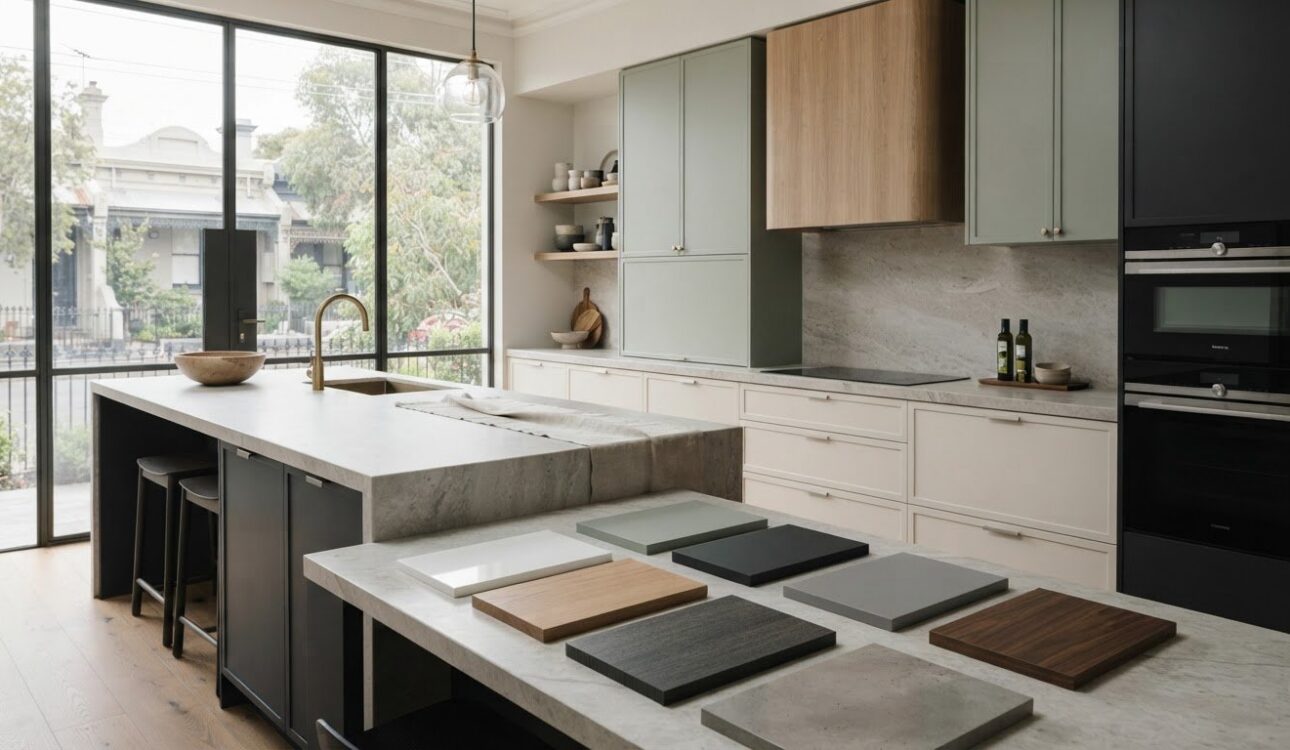
Lighting also changes perception. Daylight and artificial light can bring out different tones, and a small sample may not give the same impression as a larger area of cabinetry. View samples in the planned kitchen, beside key finishes and at different times of day. In a Melbourne renovation, a custom cabinet-making process can help coordinate surface choices with the room’s design rather than treating each door as a separate decision.
Cabinet Finish Types Compared: Melamine, Laminate, Timber and Painted Surfaces
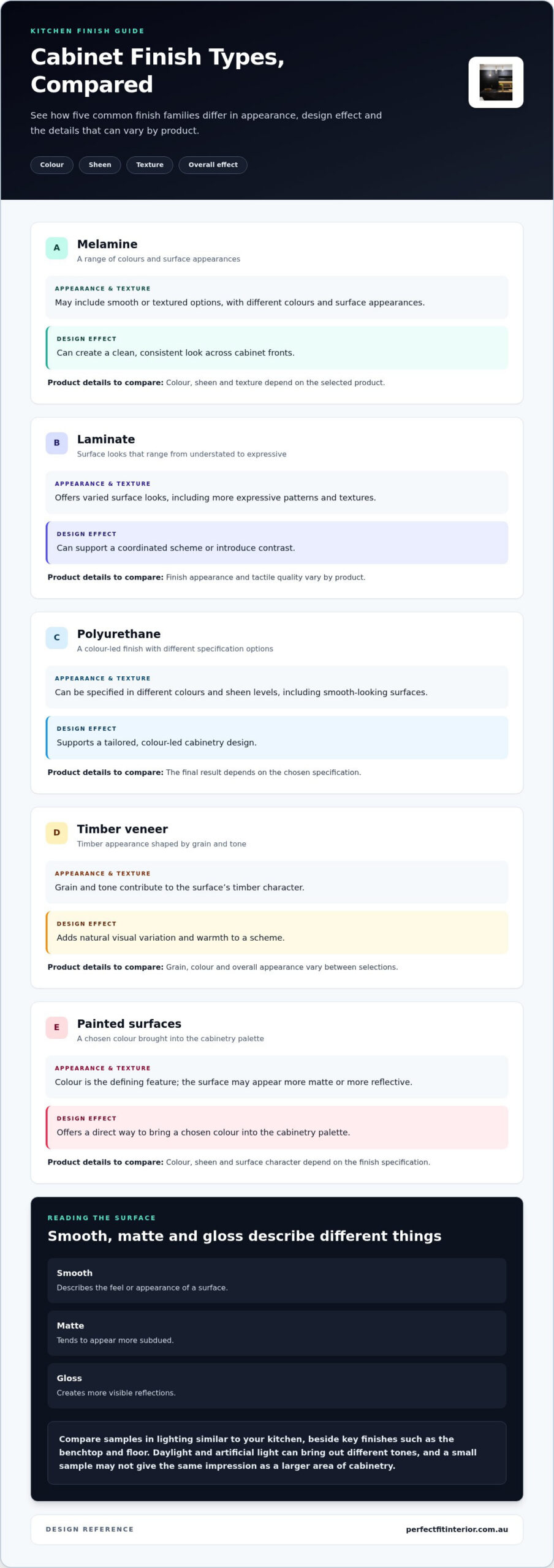
Finish names describe broad categories, not one guaranteed look. Options with the same label can differ in colour, sheen, texture and overall effect, depending on the specific product. Use the comparison below to identify what you want to explore, then compare samples and product details for your kitchen.
| Finish family | Appearance and texture | Design effect | What can vary |
|---|---|---|---|
| Melamine | Available in a range of colours and surface appearances, which may include smooth or textured options. | Can create a clean, consistent look across cabinet fronts. | Colour, sheen and texture depend on the selected product. |
| Laminate | Offers varied surface looks, from understated to more expressive patterns and textures. | Can support a coordinated scheme or introduce contrast. | The finish appearance and tactile quality vary by product. |
| Polyurethane | Can be specified in different colours and sheen levels, including smooth-looking surfaces. | Supports a tailored, colour-led cabinetry design. | The final result depends on the chosen specification. |
| Timber veneer | Shows a timber appearance, with grain and tone contributing to its character. | Adds natural visual variation and warmth to a scheme. | Grain, colour and overall appearance vary between selections. |
| Painted surfaces | Colour is the defining feature; the surface may appear more matte or more reflective. | Offers a direct way to bring a chosen colour into the cabinetry palette. | Colour, sheen and surface character depend on the finish specification. |
Smooth, matte and gloss cabinet finishes
“Smooth” describes the feel or appearance of a surface, while “matte” and “gloss” describe how it reflects light. A matte surface tends to appear more subdued; a gloss surface creates more visible reflections. These qualities can change the visual weight of a bank of cabinets, even when the colour is similar. Neither label alone tells you how a particular product will look in your kitchen or perform in use.
Compare options under lighting similar to your kitchen’s. A glossy sample may reflect a nearby window or pendant, while a matte sample may show a different depth of colour in the same spot. Ask to see the product specifications alongside the sample. For a general overview of types of kitchen cabinet finishes, Wellborn discusses several common finish categories.
Textured, woodgrain and painted cabinet finishes
Texture gives a surface a tactile quality, while a woodgrain appearance brings visible pattern and depth to a cabinet design. Painted surfaces put colour at the centre of the look, whether you’re aiming for a quiet neutral or a stronger accent. In each case, a sample is a guide to the selected product. The final appearance depends on its specific finish and specification.
Finish choice depends on appearance, room use and product specifications. Consider how a finish will sit beside your benchtop, flooring and walls, then narrow the options by the look and feel you prefer. If you’re shaping a coordinated kitchen scheme, explore custom kitchen cabinetry in Melbourne as part of your design planning.
How to Compare Cabinet Finishes for Appearance, Use and Upkeep
There isn’t one finish that suits every kitchen. A useful comparison weighs the look you want against the room’s lighting, surrounding palette and daily routines. Assess each sample against the same criteria rather than choosing by colour name or a small image alone.
Assess finish samples alongside the materials and lighting in the actual room. This makes it easier to judge how a finish may work as part of your kitchen, not just as a standalone swatch.
Match finish appearance to the room’s light and palette
Start with a physical sample. View it in the kitchen at different times of day and under the artificial lighting you expect to use. A colour can appear warmer, cooler, lighter or deeper as the light changes. Screens can help you narrow choices, but display settings and photography may shift the colour, sheen and texture you see.
Place the sample next to the benchtop, flooring, splashback and wall colour. Look at each pairing from across the room and up close. For example, a cabinet tone that seems neutral beside a white sample card may read differently against a warmer floor or patterned stone. Check whether the surfaces feel balanced together and whether you want the cabinetry to blend in or draw attention.
- Colour: Compare undertones and how they relate to fixed finishes.
- Sheen: Notice how much light the sample reflects in its intended position.
- Texture: Look closely and run a hand over the sample to understand its surface character.
Balance visual preferences with everyday care
Think about how the kitchen is used. A household where children regularly open lower drawers may have different priorities from a kitchen used occasionally for entertaining. Consider which doors and drawer fronts are handled most often, who uses them and how frequently. This helps you compare options against your own routine instead of looking for a universal winner.
Care requirements vary by product, so use the selected finish’s care guidance to understand its recommended cleaning approach. Don’t assume that two finishes with similar appearances have the same instructions. Follow the product-specific advice, including directions about suitable cleaning methods or materials.
To keep comparisons consistent, assess each shortlisted option using the same questions:
- Does its colour sit comfortably with the room’s fixed surfaces?
- Does the sheen suit the lighting and overall design?
- Does the texture feel right for the cabinetry’s location and use?
- Are the product’s care instructions a good fit for your household routine?
Use your answers to rank your priorities rather than chasing a perfect sample in isolation. For custom kitchen planning, a measured layout and 3D design can help you consider the selected finish in the context of the cabinetry and room.
How to Choose Cabinet Finishes: A Practical Sample-Testing Checklist
A sample is most useful when you judge it as part of the kitchen, not in isolation. Start with the room’s style, how the cabinetry will be used and the finishes already in place. Then narrow your options and test the shortlist in context. This step-by-step approach turns a broad range of cabinet finishes into a considered design decision.
Assess samples beside the room’s fixed finishes before making a final selection.
- Define the atmosphere you want. Decide whether the kitchen should feel calm and understated, warm and natural, or more expressive. Note your preferred colour direction and whether you want a smooth surface or more visible texture. These priorities give you a clear starting point before comparing samples.
- Map the room’s fixed elements. List the finishes that will remain, such as the benchtop, flooring, splashback and wall colour. If one element has a strong pattern or distinct undertone, include it in your comparisons. This helps you choose cabinetry that works with the full palette instead of competing with it.
- Factor in how the cabinetry is used. Think about which doors and drawers are handled most often, who uses them and how frequently. Consider each shortlisted product’s care guidance alongside your household’s routine. Keep the specific cleaning instructions with your notes rather than assuming similar-looking surfaces have identical requirements.
- Keep the shortlist focused. Compare a small group of options that fit your design direction. Include meaningful contrasts, such as different colours or surface textures, rather than several samples that look nearly identical. A focused shortlist makes differences easier to spot and discuss.
- Position samples like cabinet fronts. Hold or secure each sample vertically at approximately the height and position of the doors. Compare it beside the fixed finishes, not just on a benchtop or desk. Look from across the room to judge the overall effect, then move closer to inspect colour and texture.
- Review changing light. Check the samples in natural light at different times of day, then view them under the room’s artificial lighting. Note whether the colour seems warmer, cooler, lighter or deeper, and whether sheen changes the impression. Screen images can help with initial inspiration, but display settings and photography may not represent the installed finish accurately.
- Record and rank your choices. Write down what you notice about each option beside the benchtop, floor and wall colour. Rank your priorities, such as colour harmony, visual texture or alignment with everyday care. Revisit your notes before deciding so your final choice reflects the room and its use, not just a first impression.
For a custom kitchen, measured planning and 3D design can help place finish choices within the proposed cabinetry and room layout. That context makes it easier to carry your preferred direction into a considered Melbourne renovation.
Plan your Melbourne kitchen cabinetry
Plan Custom Cabinet Finishes with Perfect FIT Interior in Melbourne
A finish is easier to choose when you consider it as part of the kitchen design rather than as an isolated sample. Cabinetry dimensions, door placement and nearby surfaces all shape how a chosen colour or texture will sit in the room. Perfect FIT Interior brings measurement and 3D design into the planning stage, helping you consider finish choices in context.
Visualise cabinet finishes in a measured 3D design
Accurate measurements establish how the cabinetry fits the intended space, while a 3D design lets you view its arrangement before the project moves to installation. This makes it easier to think through how the cabinet fronts relate to the room’s layout, benchtop, flooring and other selected finishes. It also helps you discuss design priorities clearly, whether you want the cabinetry to blend with the palette or provide contrast.
A visualisation is a planning tool, not a substitute for assessing the actual product sample. Use it to understand the overall composition, then consider the selected finish alongside the materials and lighting in your kitchen. The custom cabinetry design process brings these decisions together, from initial room measurements to a considered design direction.
This helps connect your preferences with the practical proportions of the room. A finish that looks appealing on a small swatch may have a different presence across a full run of doors or a kitchen island. Seeing the cabinetry planned within the space can help you refine the balance between colour, surface character and the surrounding palette.
Move from finish selection to Melbourne installation
Once the design direction is taking shape, finish choices can be incorporated into a custom cabinetry project. Perfect FIT Interior brings over 18 years of cabinet-making experience in Melbourne to the process, with professional installation across Melbourne. The focus is on coordinating the cabinetry with the room so the finish supports the overall design rather than feeling like a separate decision.
A free consultation and free quotation are part of the project process. Use the consultation to discuss your kitchen, share the finish qualities you’re drawn to and consider how those choices fit into the broader renovation. For local project planning, explore the cabinet maker in Melbourne service.
Bring a shortlist, photos of the room or notes about the atmosphere you want to create. You don’t need every detail resolved before starting a conversation. Your preferred colours and samples can help shape a measured design discussion, while the planned layout offers a clearer context for considering the cabinetry as a whole.
Bring Your Kitchen Vision into Focus
Your next step is to turn your preferred direction into a concise design brief. Note the atmosphere you want the kitchen to create, the details you feel strongly about and where you’re open to fresh ideas. This gives your cabinetry project a clear starting point without requiring every decision before the design takes shape.
As you refine your cabinet finishes, think beyond a single sample. Consider the overall character you want the kitchen to express and how you’d like the cabinetry to contribute. A thoughtful brief makes it easier to discuss priorities, explore suitable options and shape a design that feels connected to your home.
Bring your ideas, questions or early inspiration. You can start with a clear preference or simply a sense of how you’d like the room to feel. Either way, a considered conversation can help you move from possibilities to a kitchen design that feels distinctly yours.
Start your Melbourne kitchen renovation with a clear plan for the finishes and cabinetry you want.
Frequently Asked Questions
What is the most popular finish for kitchen cabinets?
There’s no single finish that suits every kitchen. Smooth, matte, gloss, woodgrain and painted appearances each create a distinct effect, and preferences vary with the home’s style. Rather than choosing by trend alone, consider how you want the cabinetry to contribute to the room. Compare physical samples beside your benchtop, flooring and splashback, then review the selected product’s specifications and care guidance before deciding.
Are matte or gloss cabinet finishes better?
Neither is automatically better; the right option depends on the atmosphere you want. Matte surfaces tend to give cabinetry a softer visual impression, while gloss reflects more light and can appear polished. Think about how that effect will feel across the whole kitchen, not just on one door. A sample can help you compare the two in your room, and the product’s care instructions can guide your expectations for cleaning.
Are laminate and melamine cabinet finishes the same?
Not necessarily. Laminate and melamine are cabinetry surface options, but their names do not guarantee identical construction or specifications. Product details matter. For a useful comparison, look beyond the label and note the stated surface, colour, texture and sheen for each option. If two descriptions still seem difficult to distinguish, a cabinetry designer can help relate the product information to the intended door style and overall kitchen design.
How do I choose a cabinet finish that will not date quickly?
No finish can be guaranteed to feel timeless to everyone. A considered approach is to work with the home’s enduring features, such as flooring, benchtops and wall colours, then decide whether the cabinetry should blend in or become a focal point. Choose a look you enjoy living with rather than relying only on a current trend. This can also make it easier to refresh décor around the cabinetry later.
Can I mix different cabinet finishes in one room?
Yes, combining finishes can add contrast or help distinguish areas, as long as the choices feel connected. For example, you might consider one finish for the main cabinetry and a contrasting option for an island. Decide which surface should lead, then compare the alternatives for colour, sheen and texture. Viewing the combination in a 3D cabinetry design can help you judge how the choices relate across the room.
How should I clean finished cabinets?
Follow the care instructions for the specific cabinet surface, because cleaning guidance can differ between products. Before choosing, consider whether the stated care routine suits the way your kitchen is used, especially if cabinet fronts are handled often. Don’t assume that similar-looking surfaces respond to the same cleaners or cleaning methods. A sample shows appearance and feel, but the product information should guide maintenance.
Disclaimer
All right reserve for Perfect Fit Interior – InnovateX Group PTY LTD