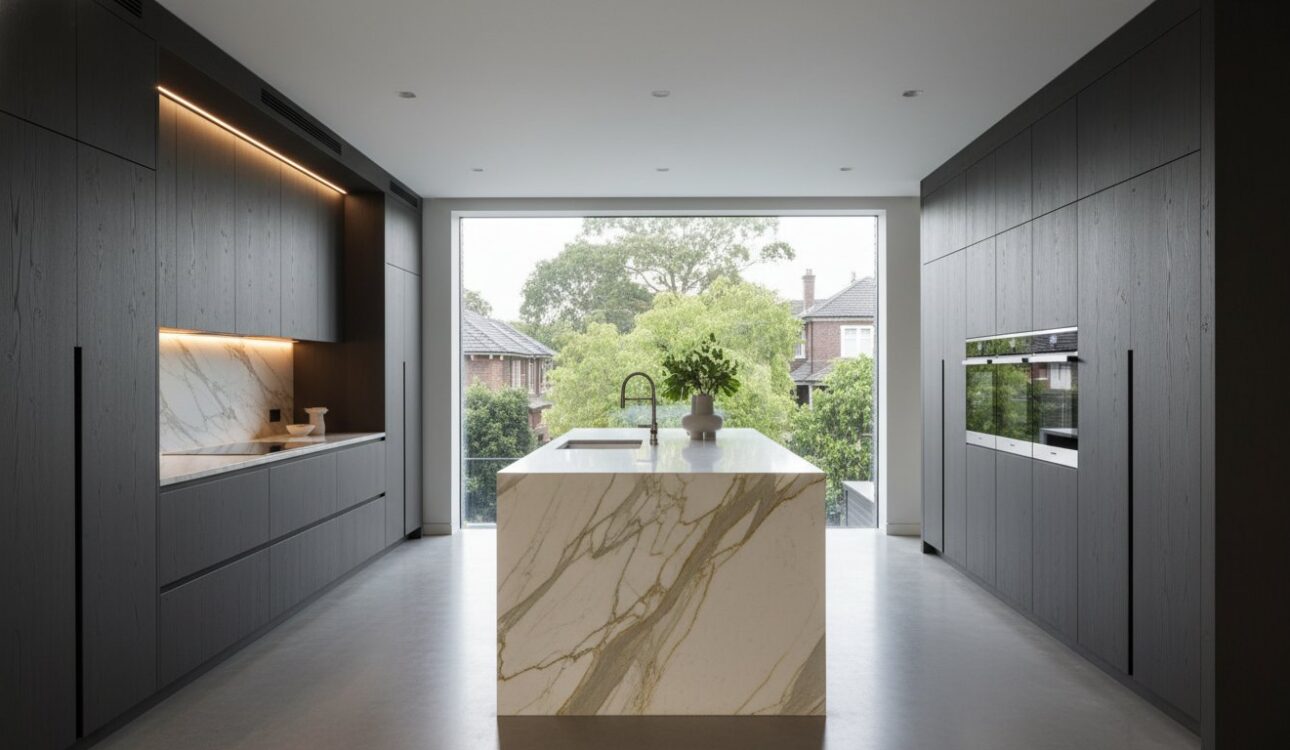
What if the most expensive mistake in your Melbourne home renovation is actually hiding in plain sight? It’s a common frustration for homeowners to discover that premium dinnerware doesn’t fit behind closed doors or that a high-end dishwasher sits awkwardly proud of the joinery. While the standard depth of kitchen cabinets in Australia is typically 580mm for bases, sticking strictly to standard measurements can often compromise the sleek, flush aesthetic you desire for a luxury Kitchen Renovation Melbourne.
You deserve a space where every millimetre is utilized with artisanal precision. We understand that a successful home renovation requires more than just beautiful finishes; it demands technical excellence. This article promises to help you master cabinet dimensions so you can maximize your storage footprint and achieve a seamless, integrated look. We’ll break down the essential measurements for base, wall, and tall units while highlighting the latest Victoria design trends. Whether you’re planning a comprehensive home renovation or a targeted bathroom renovation, these insights will give you total confidence when speaking with your cabinet maker in Melbourne. Let’s ensure your next Kitchen Renovation Melbourne is as functional as it is breathtaking.
Key Takeaways
- Understand why the standard depth of kitchen cabinets is typically 580mm to allow for the perfect benchtop overhang and a flush finish.
- Discover the ideal dimensions for overhead cabinets to ensure your large dinner plates fit perfectly without compromising head clearance.
- Learn why luxury Melbourne designs are shifting toward deeper 700mm benchtops to accommodate modern high-arc tapware and integrated appliances.
- Identify the optimal depth for walk-in pantries and kitchen islands to balance high-capacity storage with a comfortable room flow.
- See how custom joinery during a Kitchen Renovation Melbourne eliminates wasted space and solves the problem of protruding appliances.
Understanding Standard Kitchen Cabinet Depth in Australia
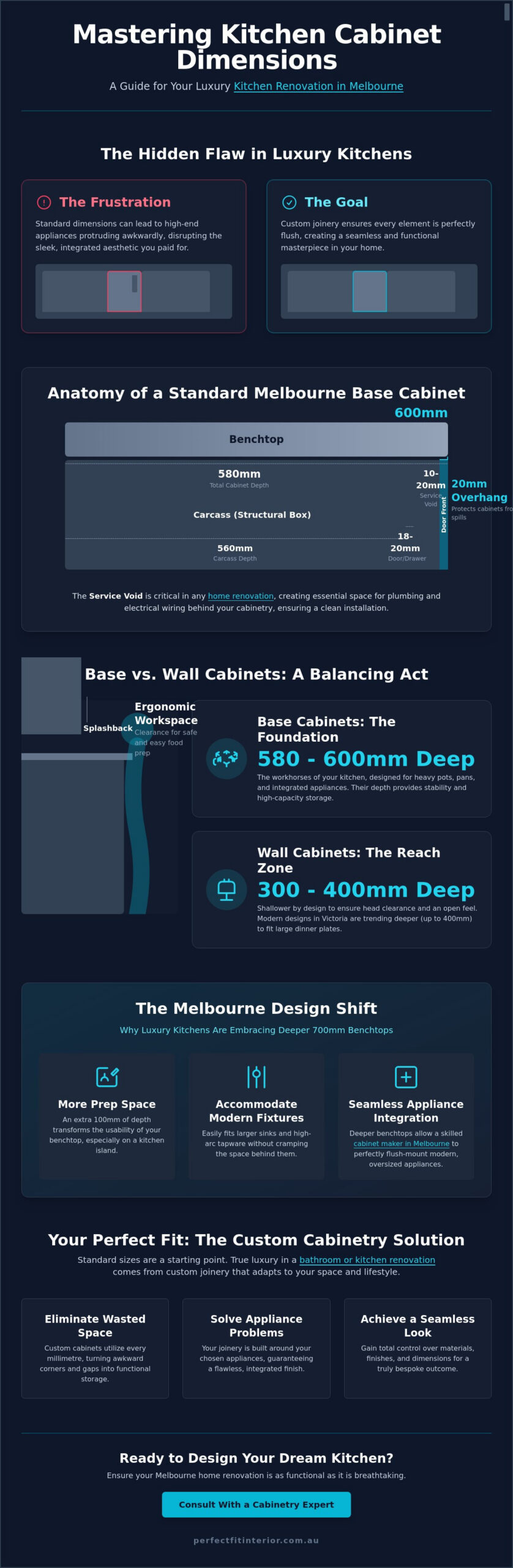
Standardisation in the Australian joinery industry isn’t just a matter of manufacturing convenience; it’s a calculated approach to engineering and cost-efficiency. When planning a Kitchen Renovation Melbourne, you’ll find that the depth of kitchen cabinets is anchored by the 560mm carcass. This specific dimension allows for the seamless integration of hardware, such as soft-close drawer runners and internal carousels, which are manufactured to specific metric depths. By adhering to these benchmarks, a cabinet maker in Melbourne can guarantee that internal fittings operate with millimetre accuracy while keeping material waste to a minimum.
Understanding the layers of a cabinet is vital for a flush finish. The total depth isn’t just the box itself. It’s a combination of three distinct elements:
- The Carcass (560mm): The structural box that provides the storage volume.
- The Door or Drawer Front (18mm to 20mm): The decorative panel that sits on the face of the carcass.
- The Service Void (10mm to 20mm): A small gap at the rear of the cabinet to accommodate plumbing, gas pipes, or electrical wiring.
When these elements combine, the total footprint usually reaches 580mm. This leaves a precise 20mm overhang when paired with a standard 600mm benchtop. This overhang isn’t just for looks. It prevents liquid spills from running down the face of your cabinetry and protects your hardware from wear. Standard kitchen cabinet dimensions exist to ensure that these components work together in a predictable, ergonomic way.
The Base Cabinet Benchmark: 560mm to 600mm
Base units are the workhorses of your kitchen. While the 560mm carcass is the industry baseline, it’s designed to house everything from heavy pots to integrated dishwashers. Most European-designed appliances are engineered to fit within this 600mm total depth. If your home renovation involves integrated refrigerators or oversized ovens, your designer might suggest increasing the carcass depth slightly. However, sticking to the standard allows you to utilise off-the-shelf internal storage solutions, which can significantly manage the overall investment of your project.
Overhead Cabinets: The 300mm Standard
Upper cabinets require a different tactical approach. To maintain an ergonomic workspace where you can lean over the benchtop without obstruction, overheads are traditionally set at a depth of 300mm. This is significantly shallower than base units to ensure you don’t hit your head while prepping meals. In many older Melbourne homes, you might even find shallower 280mm overheads. Modern designs often push this to 350mm or even 400mm to accommodate larger dinner plates, but this requires careful placement to maintain comfortable head clearance and a balanced visual hierarchy in your kitchen layout.
Base Cabinets vs. Overheads: Decoding the Vertical Hierarchy
The vertical hierarchy of your kitchen determines both its visual rhythm and its daily usability. While the lower units provide a sturdy foundation, the upper cabinets must remain recessed to preserve your line of sight and work area. This staggered depth of kitchen cabinets creates a functional offset; you gain deep storage for heavy appliances below while maintaining an open, airy feel at eye level. Achieving this balance is essential for maintaining a high-performance “work triangle,” where the distance between your sink, stove, and fridge remains efficient and unobstructed. Precision in the depth of kitchen cabinets ensures that your workspace feels expansive rather than cramped.
Adhering to Australian housing standards ensures that your kitchen remains a safe environment, particularly regarding clearances between heat sources and cabinetry. Proper depth planning also directly impacts your lighting strategy. If overheads are too deep, they cast harsh shadows across your primary prep zone, requiring more complex under-cabinet LED solutions to reclaim visibility on your splashback. Balancing these dimensions is a hallmark of a professional Kitchen Renovation Melbourne.
Maximising Base Cabinet Utility
Depth is often wasted in traditional cupboards where items at the back remain forgotten for years. Modern home renovation projects favour deep drawer systems because they bring the entire contents out to you. Standard high-end runners, like the Blum Legrabox, are typically installed at 500mm or 550mm depths. This leaves a small clearance at the rear of the carcass for structural integrity and ventilation. When planning corners, specialised pull-out hardware can transform a “dead” 600mm deep corner into a fully accessible storage hub, ensuring no space is left underutilised.
The Evolution of Overhead Depth
Contemporary design in 2026 is seeing a shift toward deeper overhead units. While 300mm was once the strict rule, many homeowners now opt for 350mm or 400mm to accommodate oversized platters and modern glassware. This “flush-look” trend involves aligning the overhead cabinetry with the face of full-height pantry units, creating a seamless wall of joinery that feels architectural and intentional. To avoid a “boxed-in” feeling, we recommend keeping the splashback height at a minimum of 600mm when using these deeper upper units. If you’re feeling overwhelmed by these technical choices, our expert cabinet maker in Melbourne can help you visualise these clearances during the design phase.
Why Standard 600mm Depth Might Not Be Enough for Modern Kitchens
While the 600mm standard served the kitchens of previous decades, the evolving lifestyle of Victoria residents often demands more. Modern luxury homes in suburbs like Toorak or Brighton are increasingly opting for deeper 650mm to 700mm benchtops. This shift isn’t just about aesthetics. Large, deep-bowl sinks and high-arc tapware require significant rear clearance to function correctly. If you stick to a standard depth of kitchen cabinets, you might find your premium tapware hitting the splashback or your oversized sink feeling cramped against the wall. This is a common oversight that can detract from the luxury feel of a Kitchen Renovation Melbourne.
In high-density Melbourne apartments, every millimetre is an asset. However, the architecture of these buildings often includes structural pillars or uneven walls that standard cabinetry cannot accommodate. Custom joinery allows you to build around these quirks. By slightly increasing the depth of your units, you can hide unsightly plumbing or structural elements while gaining a perfectly straight, architectural line that off-the-shelf products simply can’t provide. This meticulous attention to detail is what separates a basic upgrade from a true home renovation masterpiece.
The Custom Advantage: 650mm and Beyond
Gaining an extra 50mm to 100mm of bench space transforms a standard kitchen into a professional-grade culinary zone. This added depth allows you to push small appliances like coffee machines further back, leaving more room for active food preparation. Experienced cabinet makers in Melbourne can modify the internal carcass to take advantage of this space. This ensures that your storage capacity grows along with your benchtop. It creates a more substantial, “chef-style” workspace that handles the demands of modern entertaining with ease.
Appliance Integration and Flush Finishes
The most common pain point in modern kitchen design is the protruding refrigerator. Even “cabinet depth” fridges in 2026 often measure 700mm or more when you account for the necessary air gap at the rear. A standard 600mm cabinet simply cannot hide these units. Bespoke joinery allows for deeper cavities that swallow these appliances whole, creating a perfectly flat, architectural line across your kitchen wall. This meticulous approach is also essential for oversized European cooktops and integrated dishwashers, where millimetre-perfect depth of kitchen cabinets is required to achieve a seamless, high-end finish. If you are also planning a bathroom renovation, maintaining this level of precision across all wet areas ensures a cohesive design language throughout your home.
Specialty Cabinet Depths: Pantries, Islands, and Laundries
While base and wall units form the core of a Kitchen Renovation Melbourne, specialty zones like islands and pantries require a more nuanced approach to the depth of kitchen cabinets. A common mistake in many Victoria homes is treating every cabinet with a “one size fits all” mentality. Pantries often fail when they are too deep; jars and cans vanish into the dark recesses of a 600mm shelf. Conversely, a laundry cabinet that is too shallow will leave bulky 2026-model washing machines protruding awkwardly into the walkway. Meticulous planning in these high-traffic zones ensures your home remains fluid, functional, and aesthetically superior.
The perceived depth of kitchen cabinets is also influenced by the kickboard. A standard 100mm to 150mm toe-kick provides the necessary ergonomic space for your feet, allowing you to stand closer to the benchtop. Without this recessed detail, even a perfectly deep cabinet will feel uncomfortable to use. This level of artisanal precision is what separates a standard home renovation from a bespoke interior masterpiece.
The Perfect Pantry: 450mm vs. 600mm
Visibility is the primary goal of any storage system. While a 600mm depth matches the rest of your kitchen line, a 450mm shelf is often superior for standard pantry items. It prevents that frustrating “double-stacking” where items are forgotten for months. If you prefer the 600mm look for architectural consistency, we recommend high-quality pull-out drawer systems. For those designing a butlers pantry, consider using varied depth zones. Use 600mm for heavy appliances and 300mm for spices and dry goods to maximize every square centimetre of your footprint.
Island Bench Ergonomics
Your island is the social heart of the home. In most premium renovations, island depths range from a compact 900mm to a sprawling 1200mm. The key to success here is the seating overhang. To sit comfortably without knocking knees, you need a minimum overhang of 300mm, though 450mm is the gold standard for luxury comfort. If your island is 1200mm deep, you can incorporate double-sided storage. This involves using shallow 300mm cabinets facing the living area for glassware, backed by standard 600mm units for prep tools. This clever use of depth creates a versatile hub for both cooking and entertaining.
For laundries, we often suggest pushing the cabinet depth to 650mm. This extra space accommodates the deeper profiles and vibration requirements of modern front-loading machines. If you want to achieve this level of technical precision in your own home, contact our cabinet maker in Melbourne to discuss your custom dimensions today.
Designing Your Perfect Fit: How Custom Cabinetry Solves Depth Dilemmas
Standard dimensions provide a useful baseline, but the varied architecture found across Victoria often demands a more bespoke approach. A professional cabinet maker Melbourne is vital for navigating these non-standard spaces with artisanal precision. Take the classic Melbourne terrace house as an example. These narrow footprints often feature walls that aren’t perfectly square or structural pillars that interrupt a clean run of joinery. By strategically adjusting the depth of kitchen cabinets, we can hide these architectural quirks and ensure your cabinetry looks intentional rather than compromised. This level of customization transforms a restricted layout into a high-performance culinary environment.
Your choice of materials also subtly influences the final depth of kitchen cabinets. A premium 2pac shaker door might be 21mm thick, whereas a contemporary laminate flat-panel is typically 18mm. While these millimetres seem minor, they dictate the final benchtop overhang and how your appliances sit within the run. We meticulously account for these variations during the planning stage to ensure every line remains architectural and every finish is flush. This attention to detail is a hallmark of superior home renovation projects.
The 3D Measurement and Design Phase
Luxury kitchen renovations Melbourne are built on a foundation of technical data. During the design journey, we utilize advanced 3D renders to test appliance fitment and walkway clearances before any construction begins. This process allows you to visualize exactly how a deep 2026-model refrigerator interacts with your cabinetry. You can virtually walk through the space to ensure the “work triangle” remains unobstructed. This collaborative methodology removes the guesswork, ensuring your Kitchen Renovation Melbourne is as functional as it is breathtaking.
Investing in Lifestyle: The ROI of Custom Joinery
Bespoke joinery is a significant investment in your lifestyle and personal well-being. In the competitive Victoria property market, a kitchen that balances sleek aesthetics with meticulously planned storage offers a superior return on investment. Custom carcasses, crafted with artisanal precision, far outlast mass-produced alternatives. Before your consultation with a cabinet maker in Melbourne, consider this final checklist:
- Confirm the rear-clearance requirements for all your 2026-model appliances.
- Measure your largest dinnerware to ensure overhead cabinet depth is sufficient.
- Use 3D renders to verify that deeper benchtops don’t create bottlenecks in narrow walkways.
- Check if you need extra depth in your bathroom renovation to match the kitchen’s design language.
Achieving the perfect balance of depth and design requires a partner who understands the nuances of Melbourne homes. Whether you’re embarking on a full home renovation or a targeted upgrade, getting the technical dimensions right is the first step toward a space you’ll love for years.
Realise Your Vision with Precision Joinery
Choosing the right depth of kitchen cabinets is the difference between a generic renovation and a bespoke sanctuary. You now understand how standard benchmarks ensure hardware compatibility, while custom dimensions allow your luxury appliances to sit perfectly flush. Whether you’re balancing the vertical hierarchy of overhead units or maximizing an island bench, technical precision remains the foundation of every successful Kitchen Renovation Melbourne. Technical mastery ensures your space is as efficient as it is elegant.
Our team brings over 18 years of Melbourne cabinetry experience to your home. We provide a bespoke 3D design for every project to ensure your layout is flawless before the first piece of timber is cut. We also offer a lowest price guarantee on luxury renovations, making premium craftsmanship accessible for your next Home Renovation or Bathroom Renovation. It’s time to transform your space into a high-performance environment that reflects your unique lifestyle and values.
Book Your Free 3D Design Consultation in Melbourne
Start your journey toward a more beautiful and functional home today. We look forward to bringing your conceptual goals to life with artisanal precision and meticulous care.
Frequently Asked Questions
What is the standard depth of kitchen cabinets in Australia?
The standard depth of kitchen cabinets for base units in Australia is 580mm. This measurement is specifically designed to accommodate a 600mm benchtop, which provides a functional 20mm overhang to protect your joinery. This standard ensures compatibility with the majority of internal hardware and off the shelf storage solutions available in Victoria.
Can I make my kitchen cabinets deeper than 600mm?
You can certainly increase your cabinet depth beyond the standard mark. Many luxury Melbourne renovations now utilise 650mm or 700mm benchtops to provide more workspace and better house deep sinks. Increasing the depth of kitchen cabinets in this way also allows for a perfectly flush finish with larger, high-capacity refrigerators that often protrude in standard layouts.
Why are overhead cabinets shallower than base cabinets?
Overhead cabinets are shallower to ensure a safe and ergonomic workspace. By keeping upper units between 300mm and 400mm deep, you maintain a clear line of sight and avoid hitting your head while leaning over the benchtop. This staggered design ensures that your primary preparation area remains open and well-lit while providing accessible storage for glassware.
How deep should a kitchen island be for seating?
A kitchen island should be between 900mm and 1200mm deep to accommodate seating comfortably. To ensure your guests have enough legroom, you must include a seating overhang of at least 300mm. For a more premium experience in larger homes, a 450mm overhang is preferred. This allows for standard bar stools to be tucked away neatly when they aren’t in use.
What depth is required for an integrated dishwasher?
Integrated dishwashers generally require a total installation depth of 600mm. Most modern models are designed to fit within a 580mm carcass plus the thickness of the decorative door panel. It’s essential to verify the specific rear clearance and ventilation requirements for your chosen 2026-model appliance during the design phase to ensure the unit sits perfectly flush with your other cabinets.
How much benchtop overhang is standard over cabinets?
The industry standard for benchtop overhang is 20mm beyond the face of the cabinet door. This subtle extension serves a practical purpose by directing liquid spills away from your drawer fronts and hardware. While some minimalist designs opt for a flush look, a 20mm overhang remains the most reliable choice for protecting your cabinetry’s structural longevity and aesthetic appeal.
Does cabinet depth include the door thickness?
Standard carcass depth measurements typically don’t include the thickness of the cabinet door. Most carcasses are 560mm to 580mm deep, while the doors add an additional 18mm to 21mm depending on the material selected. When calculating your total footprint, you must account for the carcass, the door front, and the necessary service void at the rear for plumbing.
What is the best depth for a walk-in pantry?
The most effective depth for walk-in pantry shelving is generally 450mm. This depth provides ample storage for bulky items while ensuring that smaller jars don’t get lost at the back of the shelf. For specialized spice racks, 300mm shelves are often superior. If you intend to use the pantry as an appliance hub, a 600mm section is required for larger tools.
Disclaimer
All right reserve for Perfect Fit Interior – InnovateX Group PTY LTD