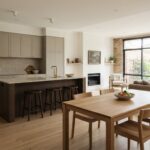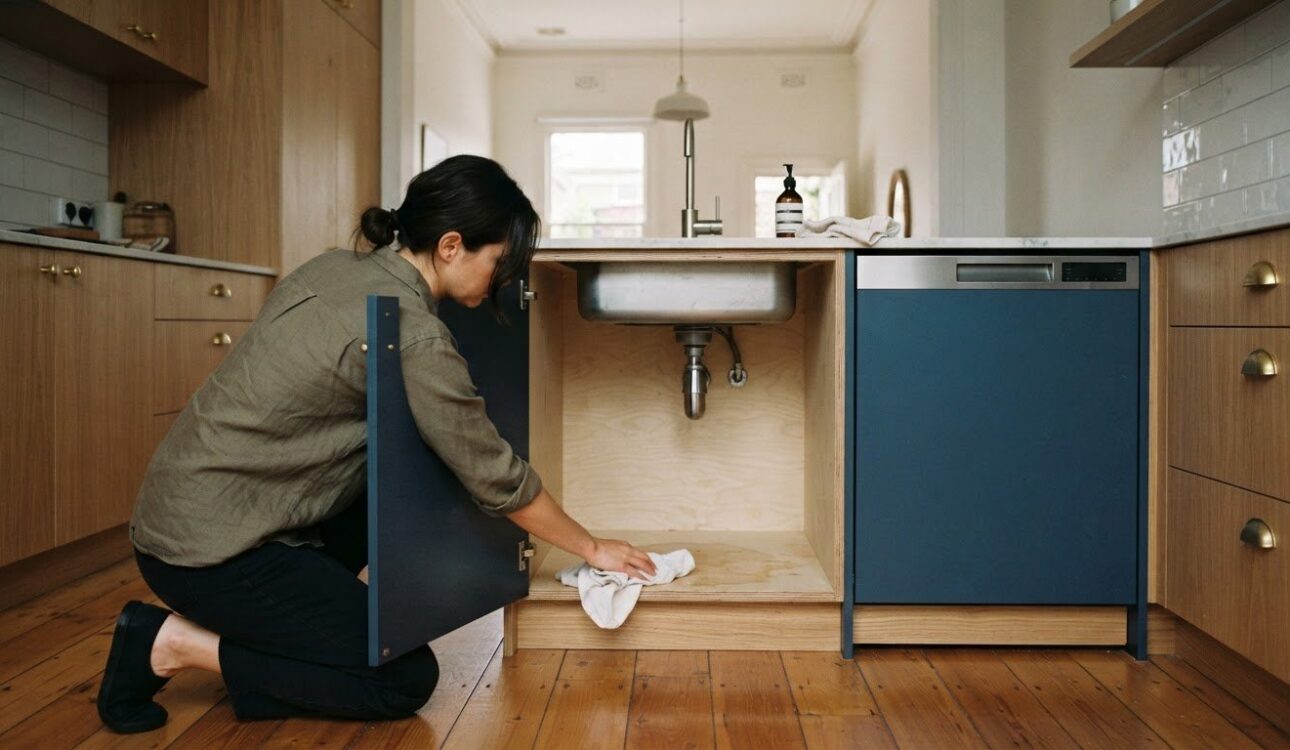
The most important decision about cabinet materials may be one you barely see. The carcass forms the structure, while the fronts shape the kitchen’s look and edging helps protect exposed panel edges. Choosing cabinet materials according to each part’s role can help a Melbourne, Victoria kitchen feel cohesive and work well for everyday use.
It’s easy to focus on colour and door style first, but appearance is only part of the decision. Moisture around sinks and dishwashers, daily wear, maintenance preferences and budget all influence which cabinet materials make sense for your home.
This guide compares common carcass and front options, from solid timber and plywood to MDF, particleboard, laminate and thermofoil. You’ll also learn how edging and finishes affect the result, helping you weigh appearance, durability, cost and moisture resistance when planning your kitchen.
Key Takeaways
- Choose the carcass, fronts and edging for their different roles rather than treating cabinetry as one material decision.
- Give moisture resistance extra weight around sinks and dishwashers, where exposed edges and internal panels can be vulnerable.
- Balance the finish you want with how much cleaning and upkeep you’re comfortable with.
- Compare timber, plywood and engineered boards by their appearance, durability and suitability for your kitchen’s daily use.
- Explore how a considered material palette can support a cohesive kitchen renovation in your Melbourne home.
Balancing appearance, durability and budget
Yes, laminate, melamine and veneer can all suit Australian kitchen cabinets. Their performance depends on the substrate, finish, edging and how each surface is used. Comparing cabinet materials on these features helps you distinguish a door’s appearance from the resilience of its core.
A kitchen cabinet combines parts with different jobs: the carcass provides structure, fronts shape the visible design, and edging covers exposed panel sides. For example, a melamine-faced panel can create a clean, consistent look, while timber veneer adds natural grain. Assess these cabinet materials together rather than choosing by colour alone.
Daily use also affects the balance. A family kitchen used for frequent cooking may need surfaces that are easy to wipe, while a display-focused space may prioritise a particular grain or sheen. Around a sink or dishwasher, moisture exposure makes the panel construction and edge protection especially important when choosing cabinet materials.
Plywood construction and water resistance
Plywood is made from thin wood layers bonded under heat and pressure to create a cross-layered panel. Its construction helps it resist dents and scratches, and it generally offers better water resistance than many other options. Plywood may be worth considering for kitchen areas where durability matters, but it isn’t waterproof. Drying spills promptly still helps protect exposed surfaces and joints.
For example, compare a plywood carcass with a coated engineered-board option by considering where each will sit and how it will be finished. Well-protected edges matter around plumbing and across the cabinet interior. The right combination can balance resilience with the look you want.
Finish care and durability
Cabinet finishes influence both a kitchen’s appearance and the care it needs. Gloss reflects light, which can help a compact room feel brighter, but fingerprints and fine scratches may stand out more. Matte finishes reduce glare and can help disguise fingerprints and small imperfections. Textured laminate adds visual depth while providing a durable surface.
For everyday care, wipe marks and spills with a soft cloth, then follow the finish maker’s cleaning guidance. Avoid treating every surface alike: timber veneer and laminate have different surface characteristics. Veneer can chip or peel over time, so gentle handling helps preserve its appearance.
Balancing appearance and budget
Appearance choices affect the overall material mix. Solid timber brings natural variation and a wide range of stains and finishes, while thermofoil offers varied colours and is easy to clean. Two-pack is a premium option known for its glossy finish. Each choice creates a different visual effect and maintenance profile.
Rather than using a premium finish everywhere, consider applying it selectively. A two-pack island paired with simpler cabinet fronts elsewhere can create a focal point without making every surface equally elaborate. The same principle applies to timber veneer: feature panels can add warmth alongside more uniform finishes.
- Prioritise moisture protection near sinks and dishwashers, including the exposed edges.
- Choose matte or gloss based on the kitchen’s light and how visible marks may be.
- Use a sample combination of carcass, front and edging to assess how finishes work together.
For a Melbourne renovation, these choices can be developed as part of cabinet-making in Melbourne. A coherent specification considers the carcass, fronts, edging and finish as one design, so the kitchen’s appearance and practical needs align.
Structural cabinet materials and moisture resistance
Moisture performance depends on the panel, its coating and how exposed edges are finished. In Australian kitchens, consider these details alongside the intended location and the product’s documented properties.
To assess sustainability or formaldehyde emissions, look for product-specific information about composition and emissions. Durability matters too: a panel that remains serviceable can avoid premature replacement. These criteria help compare cabinet materials without assuming all engineered panels have the same environmental profile.
Australian cabinet assemblies should meet AS/NZS quality expectations. This broad expectation does not specify an emissions limit or standard for every panel. Consider the selected product’s stated properties and the quality of its assembly when comparing cabinet materials.
MDF moisture vulnerability
Medium-density fibreboard, or MDF, is made by combining wood fibres with wax and resin binder. Its smooth, consistent surface suits painted cabinetry, but water can damage MDF if it isn’t properly sealed. This matters near sinks, dishwashers and plumbing, where leaks or repeated splashes can reach panel edges.
For example, an unsealed cut-out beneath a sink may be more exposed than a finished door face. Panel protection and careful treatment of joins help reduce vulnerable points in the cabinet structure.
Plywood and melamine moisture care
Plywood’s cross-layered construction generally gives it better water resistance than many cabinet options, while its visible layers can complement industrial or contemporary kitchens. It isn’t waterproof, so moisture control still matters. Melamine is usually bonded to particleboard or MDF, creating a finished face that’s practical to wipe clean.
A coated face doesn’t protect every edge or join equally. With either option, wipe spills promptly and pay attention to exposed panel sides. Timber veneer can add warmth, but needs protection from moisture and everyday knocks.
Protecting cabinets from moisture and heat
Protection starts with managing exposure: dry splashes, ventilate the kitchen and address leaks before moisture reaches internal panels. Heat needs attention too. Thermofoil, a vinyl layer moulded over MDF or engineered wood, can be susceptible to heat damage and difficult to repair if chipped.
Keep heat-producing appliances from directing sustained heat onto nearby fronts, and choose finishes suited to their position. Laminates can provide a durable surface, but their edges and joints still benefit from prompt spill clean-up and gentle care.
These distinctions help match each panel to its location rather than relying on one finish throughout. For instance, a moisture-resistant carcass can be paired with a different front material, while careful edging protects exposed sides. This considered specification supports both the cabinet structure and the intended aesthetic.
For a kitchen where appliance positions, sink areas and panel finishes need to work together, explore Melbourne cabinet-making as part of planning the material specification.
Panel edging thickness and application
Edging covers the exposed sides of cabinet panels, giving each door and carcass a finished appearance. In a Melbourne kitchen, it also matters where panel edges meet daily contact, splashes or cleaning. PVC edging is available in 0.4 mm, 1 mm and 2 mm thicknesses. A 2 mm minimum PVC edge is recommended for kitchen applications to reduce the risk of MDF edge swelling.
Thickness is only one consideration. The edge should suit the panel, finish and location. For example, a visible door edge can closely match the front’s colour, while an internal shelf edge may prioritise protection and a neat finish. Consistent edging across adjoining doors also creates cleaner lines across a bank of cabinets.
Laminate fronts, including Formica-style doors and panels, offer a wide range of colours, textures and woodgrain appearances. A laminate face doesn’t make an exposed panel edge identical to its surface, so the edging affects the finished look. On a pale cabinet front, a closely matched edge creates a restrained appearance; a contrasting edge can add a deliberate outline.
“AbsoluteMatte” describes a matte-style finish, but the name alone doesn’t establish the panel’s construction or edging. Matte surfaces reduce glare and can help conceal fingerprints and minor imperfections. Consider how the edge colour and sheen sit beside the door face, especially where light catches a cabinet run. Cleaning needs also depend on the finish, so follow care guidance suited to the actual surface.
Timber can bring warmth to a kitchen as a benchtop or feature panel. A timber surface needs proper sealing and protection, particularly where cooking, spills or regular cleaning are part of daily use. Pairing a timber feature with simpler cabinet fronts can make the grain stand out without making every surface compete for attention.
- Use edging that suits the panel’s exposure and the look of its front.
- Consider a 2 mm PVC edge for kitchen applications where reducing MDF edge-swelling risk matters.
- Coordinate laminate colour, edge finish and nearby timber details for a unified appearance.
Compare the finished combination, not just individual samples: place a cabinet front, its edging and any timber feature together. This shows how colour, texture and edge thickness shape the overall kitchen cabinet materials palette before it is repeated across the room.
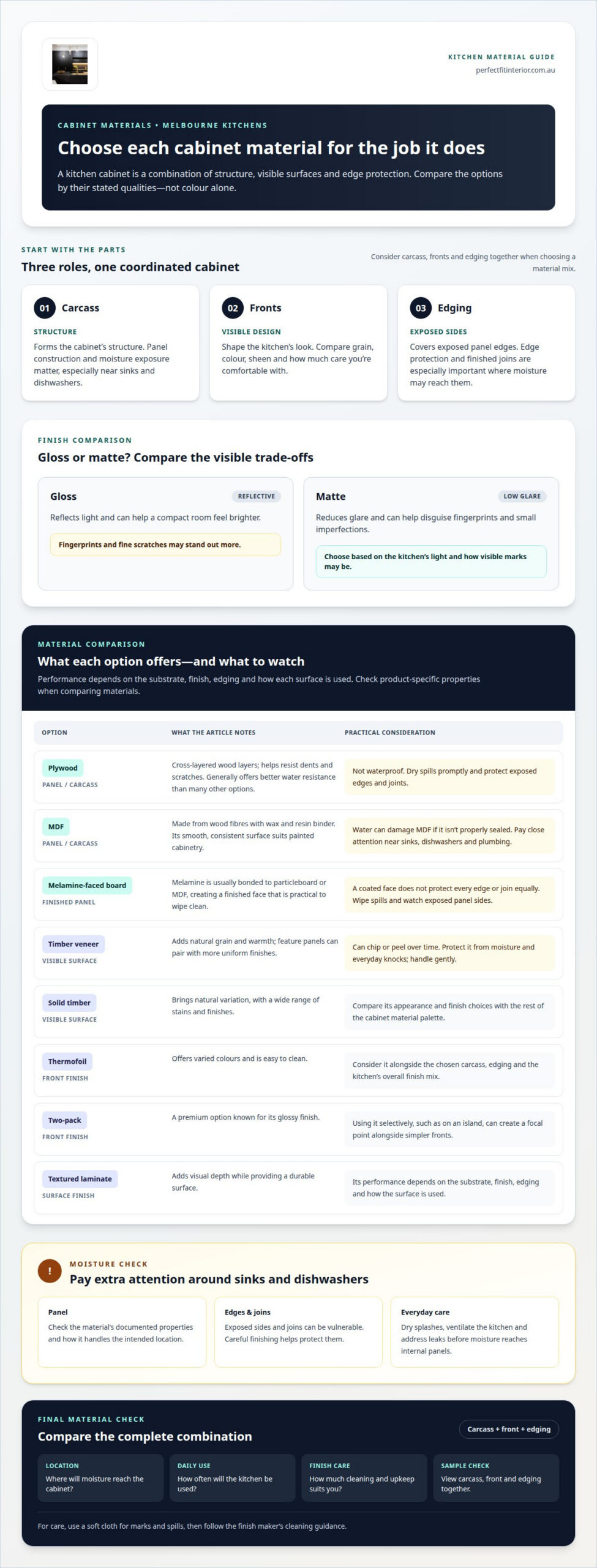
Cabinet carcass and front materials
The carcass forms each cabinet’s body, while the front is the visible door or drawer face. Choosing them separately lets homeowners balance structure, appearance and everyday performance.
Carcass and front material roles
A carcass supports shelves, hinges and stored items; fronts set the kitchen’s most prominent material and colour. They don’t need to use the same substrate or finish. For example, an engineered-board carcass can sit behind timber veneer fronts, pairing a stable structure with natural grain.
This distinction matters during installation because each component has different demands. A carcass needs to hold its shape around shelves and fixings, while fronts face frequent opening, contact and cleaning. Engineered cores with durable coatings are often preferred for contemporary doors because they resist movement and provide a consistent surface for the finish.
Homeowners can coordinate the two parts without matching them exactly. A neutral carcass behind painted or textured fronts keeps the interior visually quiet. A contrasting front can instead make an island or tall cabinet a feature, while the supporting structure remains consistent across the kitchen.
Comparing cabinet panel materials
Solid timber offers natural grain and can be stained in varied tones, but costs more than the other panel options described. It can also crack or attract insect damage, and hardwood may warp in humid conditions. That movement can affect the fit of doors as kitchen conditions change.
Plywood uses bonded wood layers and suits contemporary, industrial and ultra-modern designs. MDF combines wood fibres with wax and resin; its resistance to cracking makes it straightforward to paint. Compared with solid wood, MDF is less prone to warping, but still needs protection from water.
Particleboard is made from wood chips, sawdust and resin pressed together. It is commonly used beneath melamine, while MDF can also provide the substrate for painted or coated fronts. These engineered panels offer a consistent base, but their performance depends on the coating and protection of exposed edges.
Veneer provides another route to a timber appearance: a thin hardwood slice is bonded to a less expensive substrate, often plywood or particleboard. It weighs less than solid wood, reducing strain on hinges, but may chip, peel or discolour in excessive sunlight. It also handles scratches and heavy wear less readily than solid timber.
- Match the carcass to structural needs, including shelf support and hinge fixings.
- Choose fronts for their finish, colour and expected contact during daily use.
- Consider humidity, sunlight and the protection of panel edges in the intended location.
Material combinations shape how cabinets perform after installation, not just how they look in a sample. Assess the carcass and fronts as distinct choices, then coordinate their finishes for a considered kitchen design.
What is the difference between solid timber, plywood, MDF and particleboard cabinets?
The four options differ in how their panels are made, how they look and how they respond to kitchen conditions. Comparing those qualities helps match each material to the cabinet’s role, from a visible feature door to an internal shelf.
Solid timber is natural wood used in single, unbroken pieces. Oak, maple, cherry and hickory are examples used for kitchen cabinets. Timber brings distinctive grain and takes a range of stains and finishes, making it suitable for traditional and modern designs. It costs more than the other options described here. Humidity can cause hardwood to warp, and cracking and insect damage are also considerations. A timber door can create a strong natural feature, but the room’s conditions and the desired finish matter.
Plywood is formed from thin wood layers glued together under heat and pressure. Its layered construction creates a panel suited to cabinetry, with an appearance that can complement industrial, inner-city or ultra-modern kitchens. Plywood is generally more water-resistant than many alternatives, but it isn’t waterproof. For example, a plywood cabinet near a sink still benefits from protected edges and prompt spill clean-up. Its visible layered edges can also become part of the design rather than being concealed.
MDF, or medium-density fibreboard, is made from wood fibres combined with wax and resin binder. Its smooth, consistent surface is suitable for painted fronts, and its resistance to cracking makes it straightforward to paint. MDF is less prone to warping than solid wood and handles moisture better than solid timber, but unsealed MDF can be damaged by water. A painted MDF door therefore offers a different balance of finish and moisture care from a natural timber front.
Particleboard is made from wood chips, sawdust and resin bonded under pressure. It is commonly used as a substrate for melamine, which gives the panel a finished face. This construction provides a uniform base for cabinet components, while the coating supplies the visible colour or pattern. As with MDF, water exposure at unprotected edges can damage the panel, so placement and edge protection matter.
These materials can also be combined. For example, a plywood carcass can sit behind painted MDF fronts, or melamine-faced particleboard can provide a consistent interior. Choose by component: weigh the desired appearance for doors against the structural role, moisture exposure and finish of each panel. This approach gives Melbourne homeowners a considered specification rather than one material for every part.
For a coordinated renovation plan, compare these options alongside kitchen renovation services and Melbourne cabinet-making.
Perfect FIT Interior
Perfect FIT Interior helps bring material decisions into a considered renovation plan, coordinating design, measurements and installation around how each space will be used. If you’re weighing finishes alongside changes to the wider home, its Home Renovation service can help shape a cohesive result.
Material choices also affect how kitchens and bathrooms connect with adjoining spaces. Consider cabinet finish, storage and moisture exposure as part of the overall design, rather than as isolated selections. Perfect FIT Interior also offers Bathroom Renovation for projects where cabinetry decisions form part of a broader update.
Contact Perfect FIT Interior to discuss your renovation plans and the material choices you’re considering.
Shape a kitchen around the way you live
Your material decisions can do more than complete a room. They can establish the character of your home, from a calm, understated kitchen to a space with warm timber details. Think about the atmosphere you want to create and how the kitchen connects with the rest of your home. That broader vision gives your choices a clear design direction.
Perfect FIT Interior offers Kitchen Renovation Melbourne, Home Renovation and Bathroom Renovation. If your kitchen plans are part of a wider update, these services can help bring the home’s spaces together. A considered selection of cabinet materials becomes part of a cohesive renovation, rather than a series of disconnected finishes.
Bring your ideas and preferred look into a conversation about your renovation. You can contact Perfect FIT Interior to discuss the possibilities for your home.
Your ideal kitchen can begin with one thoughtful decision. Let your vision guide the details.
Frequently Asked Questions
What materials are commonly used for kitchen cabinets in Australia?
Australian kitchens commonly use solid timber, plywood, MDF and particleboard, often with a surface finish such as melamine, laminate, veneer or paint. These cabinet materials can be combined: for example, a plywood carcass may sit behind painted MDF doors. The choice depends on the desired appearance, moisture exposure, care preferences and the role of each component. Consider the carcass and fronts separately when comparing options.
How do cabinet materials compare for durability, moisture resistance and heat resistance?
Plywood is generally more water-resistant than many alternatives, while MDF can be damaged by water if it isn’t properly sealed. Hardwood is durable under heavy use, but can warp in humid conditions. Thermofoil is easy to clean, though it can be vulnerable to heat and difficult to repair if chipped. Coatings, protected edges and the cabinet’s position also affect its performance in daily kitchen use.
What are the pros and cons of cabinet materials for bathrooms and laundries?
In bathrooms and laundries, consider where cabinetry sits relative to basins, taps and appliances. Moisture-resistant panels and protected edges can help limit exposure to splashes, while smooth coated fronts are practical for wiping everyday marks. Timber veneer can add warmth, but needs appropriate protection. For instance, a cabinet beside a laundry tub faces different conditions from a tall storage unit away from water.
How much do different kitchen cabinet materials cost in Australia?
The price depends on the project and is provided after a quote request. Material choice is one factor; kitchen dimensions, cabinet layout, storage requirements, front style, finish and edging also shape the specification. A painted or premium finish can change the overall selection compared with a simple melamine face. Compare the complete combination of carcass, fronts and edging, not just the price of a panel.
Which cabinet materials are best for a budget renovation in Australia?
Melamine-faced engineered board is a practical starting point for a budget-conscious renovation, with colour and pattern options for different kitchen styles. A simple door profile and consistent finish can keep the design cohesive without using a premium surface on every cabinet. Prioritise moisture protection near sinks and dishwashers. Spending selectively on a feature area, such as an island front, can add visual interest while keeping other surfaces simpler.
Which cabinet materials are easiest to clean and maintain?
Thermofoil is easy to clean, and melamine’s coated face is practical for routine wiping. Use a soft cloth and follow the care guidance for the specific finish, especially on painted or veneer fronts. For example, cooking splashes on a cabinet beside the cooktop need prompt attention. Matte surfaces can make fingerprints and small imperfections less noticeable, while gloss may show them more clearly.
How can you tell the core material and finish of existing cabinets?
Examine an exposed panel edge, such as the inside of a door, a shelf or an area beneath a drawer. Plywood may show visible layers; particleboard can reveal compressed chips, while MDF has a finer, more uniform core. A thin real-wood layer over another substrate indicates veneer. The face finish offers further clues: a printed pattern or consistent coating looks different from natural timber grain.
What are the risks of using particleboard or MDF in humid areas?
Repeated moisture exposure can damage particleboard and MDF, particularly where water reaches an unsealed edge, joint or cut-out. Swelling can affect the panel’s surface and the fit of doors or drawers. In a laundry, for example, a leak beneath the tub can expose nearby cabinet interiors. Protect exposed edges, address spills promptly and don’t assume a coated face makes the whole panel waterproof.
Disclaimer
All right reserve for Perfect Fit Interior – InnovateX Group PTY LTD